
Doç. Dr. Cengiz Andan

adet düzensizliği

Why Does Menstrual Irregularity Occur? Underlying Hormonal Causes and Treatment Ways

The female body operates like a magnificent clock managed by hormones. The most concrete indicator of this clock is the menstrual cycle. Having regular periods is a sign not only of fertility but also of general body health.

However, sometimes this clock starts to falter. Periods are delayed, become too frequent, or the amount of bleeding increases excessively. In society, consulting a doctor is usually postponed by saying “it’s just the seasonal change” or “it’s due to stress.” However, menstrual irregularity is not a disease in itself, but the body’s way of saying “something is not going right.”

As Assoc. Prof. Dr. Cengiz Andan Clinic, we do not just treat menstrual irregularity symptomatically (meaning we don’t just give menstrual-inducing medication and send you away), but we offer permanent solutions by finding the underlying root cause.

What is a Normal Menstrual Cycle? When is it Considered “Irregular”?

To speak of menstrual irregularity, one must first know what is “normal.” Every woman’s cycle is unique to her, but medical boundaries are clear:

  • Duration: The time between the start of two periods should be between 21 and 35 days.
  • Bleeding Duration: Bleeding should last between 2 and 7 days.
  • Amount: Changing 3-4 pads or tampons a day is considered normal.

If your periods occur more frequently than every 21 days (Polymenorrhea) or less frequently than every 35 days (Oligomenorrhea), if your bleeding exceeds 7 days and is clotted (Menorrhagia), or if you experience spotting between periods (Metrorrhagia), a gynecologist’s evaluation is definitely required.

Why Does Menstrual Irregularity Occur?

The 4 Most Common Causes of Menstrual Irregularity

The menstrual cycle relies on sensitive communication between the brain (hypothalamus and pituitary gland), ovaries, and uterus. Any disconnection in this line leads to irregularity.

1. Hormonal Imbalances and Polycystic Ovary Syndrome (PCOS) By far the most common cause of menstrual delays in young girls and women of reproductive age is Polycystic Ovary Syndrome (PCOS). It is a condition where many small follicles accumulate in the ovaries and regular ovulation does not occur. In PCOS patients, androgen (male hormone) levels rise slightly. This leads to problems such as hair growth, acne, weight gain, and insulin resistance, along with inability to menstruate or very late menstruation.

2. Thyroid Hormone Disorders The butterfly-shaped thyroid gland located in the front of the neck regulates the body’s metabolic rate.

  • Hypothyroidism (Underactive Thyroid): When the thyroid works less, periods usually become heavier, longer, and more frequent.
  • Hyperthyroidism (Overactive Thyroid): When the thyroid works too much, periods become infrequent, the amount decreases, or they may stop completely. Diagnosis is made with a simple blood test (TSH), and periods correct themselves when the thyroid is balanced with medication.

3. High Prolactin (Milk Hormone) The prolactin hormone secreted from the pituitary gland in the brain normally ensures milk production during breastfeeding. However, due to stress, some medications, or benign microcysts (adenomas) in the pituitary gland, it can rise even when there is no pregnancy. High prolactin gives the brain the order “do not ovulate” and stops menstruation. Milk coming from the breasts (galactorrhea) may accompany this.

4. Structural Causes (Fibroids, Polyps, and Cysts) Not every irregularity is hormonal. Sometimes physical obstacles inside the uterus disrupt the bleeding pattern.

  • Fibroids: They enlarge the uterus, increasing the bleeding surface, causing intense and clotted bleeding.
  • Polyps: Small pieces of flesh inside the uterus; they are the most common cause of intermenstrual bleeding and spotting.
  • Ovarian Cysts: Simple cysts that secrete hormones can cause temporary delays.
Why Does Menstrual Irregularity Occur?

Diagnosis and Treatment Process: Do Not Use Random Medication!

The approach of “My neighbor took this pill and her period was fixed” is one of the most dangerous approaches in gynecology. Because while the cause of irregularity in one patient is the thyroid, in another, it may be uterine thickening or a cyst. Treatments are completely different.

The roadmap we follow for diagnosis in our clinic is as follows:

  1. Detailed Anamnesis: Your menstrual calendar is examined.
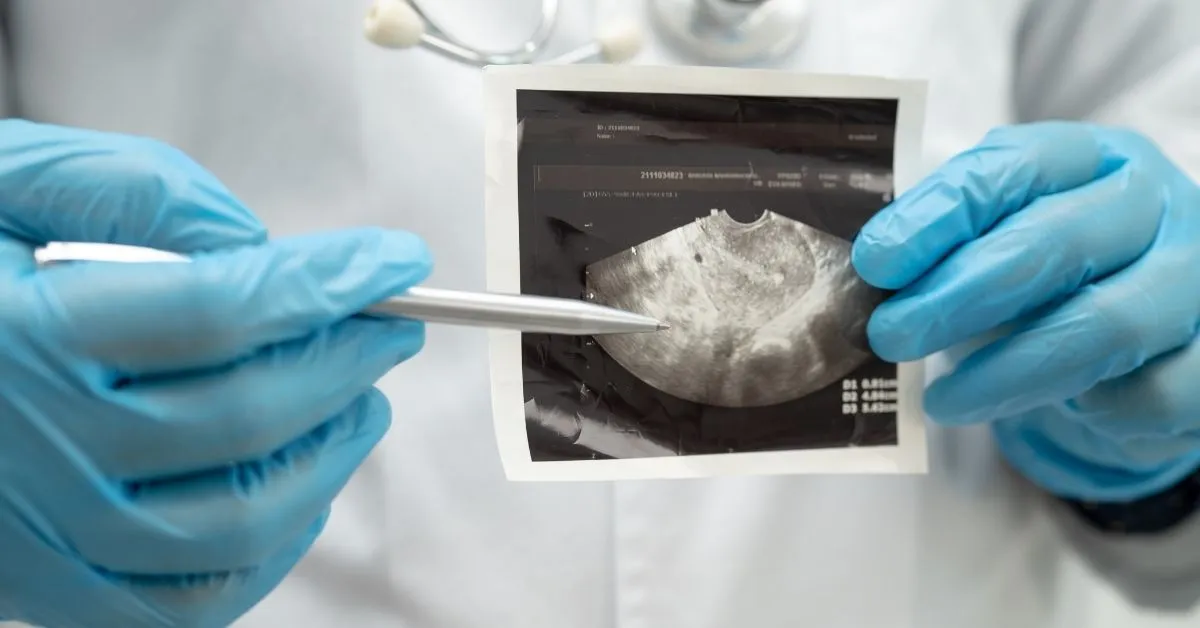
  2. Ultrasonography: The structure of the uterus and ovaries, presence of cysts or fibroids, and uterine wall thickness (endometrium) are checked.
  3. Hormone Profile: FSH, LH, Estradiol, Prolactin, TSH, and if necessary, AMH values are checked with a blood test performed on the 2nd or 3rd day of menstruation.

Treatment Approaches:

  • If there is PCOS: Lifestyle change (weight loss, sports) is the first treatment. Birth control pills or medications containing progesterone can be used to regulate periods.
  • If there is a Prolactin/Thyroid problem: Medication balancing the relevant hormone is given.
  • If there is a structural problem: In cases like fibroids or polyps, surgical solutions are applied with hysteroscopy or laparoscopy.
  • Transition to Menopause (Perimenopause): If there are complaints such as hot flashes, hormone replacement therapies (HRT) or herbal supports can be planned.

Remember; having regular periods is a woman’s health report card. Deviations happening 1-2 times a year can be considered normal, but irregularities that show continuity must be treated before paving the way for risks such as infertility or uterine cancer in the future.

Frequently Asked Questions (FAQ)

Do birth control pills cause infertility?

Absolutely not. This is a very common and wrong belief. Birth control pills temporarily suppress ovulation as long as they are used. From the moment you stop the pill, hormones are cleared from the body, and fertility returns to its former state within 1-2 months. Pills do not deplete ovarian reserve or cause permanent damage.

Yes, they do. The hypothalamus region in the brain is very sensitive to stress, weather changes, sudden weight gain or loss, intense sports, and insomnia. In such cases, experiencing menstrual delay or early menstruation 1-2 times a year can be accepted as a normal physiological reaction.

Some plants (parsley, onion cure, sage, etc.) may have stimulating effects on uterine muscles or estrogen-like effects. They may work in mild delays. However, if there is an underlying cyst, polyp, or serious hormonal disorder, these cures are a waste of time; they can sometimes even damage the stomach or increase bleeding disorders. Applying herbal cures continuously without medical diagnosis is not recommended.

It is not a direct obstacle, but it makes things difficult. It is hard to predict the “ovulation day” in women with irregular periods. Also, if the cause of irregularity is PCOS or thyroid, these diseases themselves can impair ovulation quality. However, when periods become regular with treatment or when ovulation monitoring is done, it is possible to get pregnant.

No, it is not normal. Changing more than 5-6 pads a day, waking up from sleep at night to change a pad, bleeding lasting longer than 7 days, and passing large clots are signs of “Menorrhagia.” This situation leads to serious anemia over time. Fibroids, polyps, or clotting disorders may be underlying causes; it must definitely be investigated.

Profile Picture
Doç. Dr. Cengiz ANDAN Online
×

Merhaba.
Size nasıl yardımcı olabilirim?
Hi.
How can I help you?