Deep Infiltrating Endometriosis: Organ-Sparing Laparoscopic Complete Excision in Istanbul
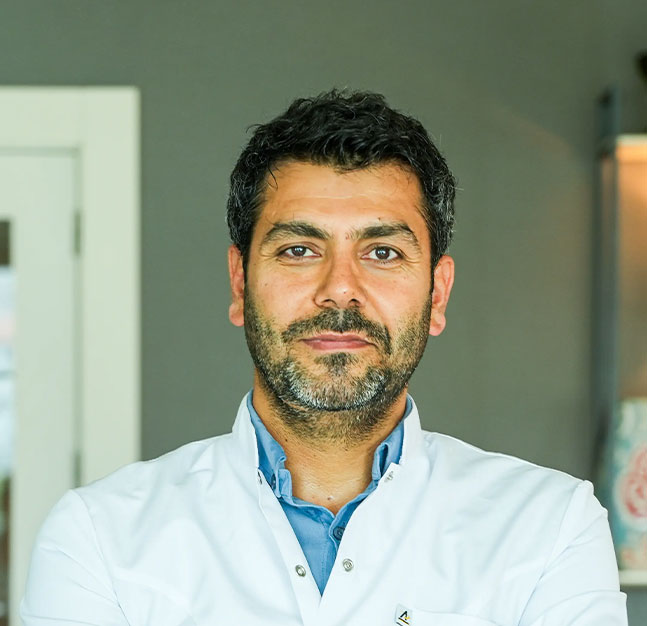
Many women with deep endometriosis have been told for years that their symptoms were just an irritable bowel, a recurring bladder infection, or "simply bad period pain." In reality, endometriosis tissue can grow deep into the bowel, bladder, ureter, or the tissue behind the uterus — and that is exactly what makes the right diagnosis and the right surgical technique so decisive. At the practice of Associate Professor Dr. Cengiz Andan in Istanbul (Şişli), we pursue a clear goal: to remove the lesions completely while sparing organs, nerves, and fertility as far as possible. For international patients, that means a plannable operation with a surgeon who personally takes responsibility for the entire procedure.

At a Glance
- What it is: Deep infiltrating endometriosis (DIE) grows more than 5 mm deep into organs such as the bowel, bladder or ureter and accounts for about 10–20 % of all endometriosis cases.
- Typical symptoms: pain during bowel movements (dyschezia), urination (dysuria) and intercourse (dyspareunia).
- Diagnosis: specialized ultrasound and MRI, confirmed by laparoscopy with Enzian classification.
- Treatment: laparoscopic complete excision of the lesions — organ- and fertility-sparing.
- From abroad: diagnosis and planning start online; with DIE the stay is a little longer than for simple procedures.
What is deep infiltrating endometriosis — and how does it differ from "normal" endometriosis?
Deep infiltrating endometriosis refers to lesions that do not just lie superficially on the peritoneum but grow more than 5 mm deep into organs and tissue. This sets it apart from superficial peritoneal endometriosis and from the endometrioma (the "chocolate cyst" on the ovary), even though these forms often occur together. It must also be clearly distinguished from adenomyosis, where the tissue grows into the wall of the uterus itself. Overall, the deep form accounts for about 10–20 % of all endometriosis cases and is often recognized only late.
Which organs does deep endometriosis affect — bowel, bladder or ureter?
DIE mainly affects the space between the uterus and the rectum, as well as the urinary tract. The most common site is the rectovaginal region, followed by the bowel — with the junction between rectum and colon involved in around 65 % of bowel cases, while the bowel overall is affected in about 5–12 % of all DIE cases. The bladder and ureter are involved less often, but the disease can become dangerous there, because involvement of the ureter obstructs urine drainage and can threaten kidney function. The pelvic wall, parametrium and nearby nerves can also be involved, which can make symptoms radiate into the leg or back.
Within the bowel, the rectosigmoid junction is most often affected; the ileocecal region is involved in about 20 % and the rectum in around 15 % of bowel cases.
| Location | Typical symptom | Possible consequence |
|---|---|---|
| rectovaginal / septum | pain during sex | deep dyspareunia |
| bowel (rectosigmoid) | pain on defecation | blood in stool, cramps |
| bladder | pain on urination | blood in urine |
| ureter | often few symptoms | urine retention, kidney damage |
| nerves / pelvic wall | radiating pain | leg/back pain |
How do I recognize deep endometriosis — and why is it often mistaken for IBS?
The leading symptoms of DIE are cycle-related pains that affect the bowel, bladder and sexuality. Typical are pain during bowel movements around the period, pain on urination, deep pain during intercourse and cyclical back pain. Because these complaints initially look like irritable bowel, a bladder infection or emotional strain, several years often pass before the correct diagnosis — even though endometriosis affects about 6–10 % of women of reproductive age. Anyone who wants their symptoms taken seriously and assessed in a targeted way is in the right place with a surgeon who specializes in endometriosis.
Important: signs of urine retention (flank pain, declining kidney function) or acute bowel problems should be assessed promptly and not postponed — that is a case for examination on the spot, not for later planning abroad.
How is deep infiltrating endometriosis diagnosed reliably?
The diagnosis rests on a combination of physical examination and imaging. On vaginal and rectal examination, firm nodules in the rectovaginal septum can often be felt, while a specialized transvaginal ultrasound and an MRI show deep lesions on the bowel, bladder and septum. A standardized classification is made with the Enzian system, a further development of the rASRM staging. Laparoscopy is regarded as the gold standard, because it both confirms the disease histologically and can treat it in the same procedure; if bladder or bowel involvement is suspected, cystoscopy or colonoscopy is added.
| Method | What it is suited for |
|---|---|
| Physical and speculum examination | feeling firm nodules in the septum |
| Specialized transvaginal ultrasound | lesions on the bowel, bladder, septum |
| MRI | extent and surgical planning |
| Laparoscopy | histological confirmation and treatment |
| Cystoscopy / colonoscopy | suspected bladder or bowel involvement |
Source: European Society of Human Reproduction and Embryology (ESHRE), Endometriosis Guideline
When does deep infiltrating endometriosis need surgery — and when can you wait?
Whether to operate depends on symptoms, organ function and the wish to conceive — not on the findings alone. Surgery is mainly worthwhile when pain severely limits quality of life, when the function of the bowel, bladder or kidney is threatened, or when there is an unfulfilled wish to conceive. With mild symptoms, a hormonal therapy to quieten the lesions can be tried first. Importantly: not every visible lesion has to be removed immediately, as findings with few symptoms do not automatically justify a major operation.
Complete excision instead of ablation — why surgical technique decides the outcome
In deep endometriosis, the surgical technique largely decides pain relief and recurrence risk. Completely excising the lesions also removes the deeply infiltrated portion, whereas mere ablation (coagulation) at the surface often leaves remnants from which the disease grows again. In specialized hands, complete excision of the lesions succeeds in around 90 % of cases, which lowers the recurrence risk and protects organ function in the long term. Equally important is sparing the nerves responsible for the bladder, bowel and sexual function.
Source: American Association of Gynecologic Laparoscopists (AAGL), recommendations on the surgical excision of deep endometriosis
How does a laparoscopic DIE operation work — even with bowel or bladder involvement?
The operation is performed minimally invasively through a few small ports, usually three to four incisions of a few millimeters. First, adhesions are released and the lesions dissected away from surrounding tissue; if the ureter is involved, it is freed from the scar tissue (ureterolysis), and with bladder involvement a partial resection of the bladder wall may be needed. On the bowel, the approach depends on the depth and size of the disease and ranges from superficial shaving to removal of a short bowel segment. Depending on location, such a procedure takes about 1–4 hours.
| Bowel technique | When used | Tissue preservation |
|---|---|---|
| Shaving | superficial disease | maximal |
| Disc resection | single, deep lesion | high |
| Segmental resection | large/multiple disease | bowel segment removed |
With bowel involvement, must a piece of bowel always be removed — and is a stoma a risk?
No — a piece of bowel is only removed when the disease is too deep or too extensive for gentler techniques. In many cases, superficial shaving or removal of a single spot is enough, so the bowel wall is preserved. A stoma (artificial bowel outlet) is rare with this surgery and, if needed at all, is usually only temporary to protect the suture line. This possibility is discussed openly before the procedure, so that no decision comes as a surprise.
How high are the risks and complications of this operation?
Surgery for deep endometriosis is demanding but well manageable in experienced hands. In large evaluations, the surgical morbidity is about 9 %, while serious events such as an anastomotic leak or a rectovaginal fistula are rare at around 1 % each.
Temporary bladder emptying problems are described in up to 25 % after extensive procedures and usually resolve on their own; more serious complications requiring a further procedure are reported in about 16 % of cases. In our practice, we always carefully weigh the benefit of an operation against these risks and explain them openly.
Source: American College of Obstetricians and Gynecologists (ACOG), information on the surgical treatment of endometriosis
What does the treatment approach of Associate Professor Dr. Cengiz Andan look like?
Our approach to deep endometriosis can be summed up in one sentence: remove it completely, but preserve as much organ, nerve and ovarian reserve as possible. We plan every procedure based on MRI, specialized ultrasound and — when there is a wish to conceive — the AMH value, and we work together with colleagues from urology and visceral surgery when the bowel or urinary tract is involved. We rely on clean excision of the lesions rather than wide-area ablation, because that lowers the recurrence rate and better protects the function of the pelvic organs. We perform every procedure ourselves from the first to the last step and also accompany our international patients after they return home.
Why are an experienced surgeon and a multidisciplinary team decisive in DIE?
Deep endometriosis in particular belongs in specialized hands, because the bowel, urinary tract and nerves can be affected in a very confined space here. Treatment is therefore ideally carried out where the necessary experience and the link to urology and bowel surgery are available. Associate Professor Dr. Cengiz Andan has 18 years of experience and has performed more than 500 endometriosis operations, embedded in over 2,000 laparoscopic procedures in total. This focus on complex minimally invasive gynecology is one of the reasons why international patients, too, choose treatment in Istanbul.
What does the operation mean for my wish to conceive?
For women who wish to conceive, the organ-sparing technique in DIE is especially important. After complete excision, the literature reports pregnancy rates of about 50–60 % and live-birth rates around 54 %, with part occurring spontaneously and part with the help of assisted reproduction. So that the ovarian reserve does not suffer, we pay particular attention to gentle surgery when removing endometriomas, since imprecise technique can measurably lower the AMH value. Whether the operation is better before or after a planned IVF depends on the findings and is decided individually.
Source: American Society for Reproductive Medicine (ASRM), information on endometriosis and fertility
Can endometriosis come back after surgery?
Even after a successful operation, endometriosis can recur — that is part of honest counselling. Depending on the severity and completeness of the excision, the recurrence rate over several years is about 10–30 %. Complete excision clearly lowers this risk compared with ablation alone, and a subsequent hormonal therapy can further delay symptoms and recurrences. Regular follow-up checks help to recognize a recurrence early.
How does recovery after a DIE operation go?
Recovery after a DIE operation usually takes a little longer than after a simple procedure, but it follows clear phases. The hospital stay is often 1–3 nights depending on the extent of surgery, and correspondingly longer after a bowel resection. A return to light everyday activities is often possible after about 1–2 weeks, while heavy strain and sport should pause for around 4–6 weeks. After a bowel resection, the diet is built up slowly to protect the suture line.
Your home country or Istanbul? Where lies the difference?
The medical quality is very high in both cases — the difference lies not in the method, but in waiting time, support and cost. In Istanbul, the same minimally invasive techniques and the same international guidelines are used as at home. Waiting times for a plannable appointment are often shorter, and the procedure is accompanied throughout by a single responsible surgeon. That the costs are lower has to do with the exchange rate and lower operating costs — not with cutting corners on the standard.
| Feature | Home country | Istanbul |
|---|---|---|
| Quality / standard | very high | very high |
| Waiting time for an appointment | often longer | usually shorter |
| Surgeon continuity | may change | one responsible surgeon |
| Cost | higher | lower |
What happens in case of complications once I am back home?
The biggest worry for many international patients is what happens in the rare event of a complication after returning home. Complications are rare with careful technique, and just in case we remain reachable after the operation and coordinate with the treating doctor in your home country where needed. You receive a complete operation report and the histology (tissue) findings, which your local doctor can use directly. This keeps the aftercare seamlessly organized even across borders.
What does a DIE operation cost in Istanbul?
The cost of surgery for deep endometriosis depends heavily on the extent of the procedure and can only be quoted reliably after reviewing the findings. The overview below is a rough, non-binding guide for private hospitals in the mid to upper segment in Istanbul, with an experienced surgeon and a multidisciplinary team. The figures are given in US dollars and deliberately rounded. A personal quote is only provided after reviewing your documents.
| Type of operation | Estimated price range |
|---|---|
| Laparoscopic excision of deep infiltrating endometriosis (without bowel/bladder involvement) | approx. $5,000 – $9,000 |
| Laparoscopy + bowel resection (with visceral surgery) | approx. $7,800 – $12,000 |
| Laparoscopy + bladder resection (with urology) | approx. $7,800 – $12,000 |
| Laparoscopy + ureterolysis + ureteral stent | approx. $8,000 – $13,000 |
| Multi-organ disease (bowel + bladder + ureter) | approx. $10,000 – $20,000 |
The price is influenced, among other things, by the location and extent of the disease, the duration of surgery, the hospital stay, the involvement of additional specialties and any necessary pre-examinations. The ranges given are not a binding offer; a personal quote is only provided after reviewing your documents.
For those with statutory or private insurance, a plannable treatment abroad is usually not covered automatically. Whether and to what extent reimbursement is possible should be clarified with your insurer in advance; obtaining prior cost approval is advisable. A blanket assurance is not possible, as the rules differ by insurer and country.
How do I organize travel, stay and aftercare from abroad?
The process for international patients is planned so that as little as possible has to be decided only on the spot. Diagnosis and surgical planning begin online, so that the procedure and the stay are settled before arrival; existing MRI and ultrasound findings from home are a great help here. For a DIE operation, the stay in Istanbul is a little longer than for simple procedures, especially with bowel involvement. Air travel is — depending on the procedure and medical clearance — usually possible again about 5–7 days after surgery; this interval lowers, among other things, the risk of travel-related thrombosis.
How do I get a medical second opinion — also online?
A well-founded second opinion can bring a lot of clarity before a planned operation, especially when a hysterectomy or a major bowel operation has already been recommended. If you send us your findings and your MRI, we look at them and assess whether an organ-sparing, minimally invasive route is an option. This online consultation is a paid medical service and does not replace an examination on the spot, but it helps with an informed decision. You can make contact easily via the form or WhatsApp.
Frequently Asked Questions
No, these are different forms that nevertheless often occur together. The chocolate cyst (endometrioma) is a lesion on the ovary filled with old blood, whereas DIE grows deep into organs such as the bowel or bladder. During surgery both forms are, where possible, treated in the same operation.
A specialized transvaginal ultrasound can already show many deep lesions on the bowel, bladder and septum. An MRI adds to the imaging, especially with extensive disease or for surgical planning. Final confirmation is achieved through laparoscopy with histological examination.
Hormones can ease symptoms and quieten the lesions, but they do not remove the deeply infiltrated tissue. With severe pain, threatened organ function or a wish to conceive, surgery is usually unavoidable. The decision depends on the findings and your life situation.
The duration depends heavily on location and extent and is often between roughly 1 and 4 hours. Procedures involving the bowel or bladder take longer than a localized rectovaginal lesion. An accurate estimate is only possible after reviewing the findings.
In the first weeks, altered bowel movements and a cautious return to a normal diet are normal. Most symptoms improve markedly over time, and many women report better long-term quality of life than before surgery. Lasting problems are possible but not the rule.
Pain during intercourse often clearly decreases after complete excision of rectovaginal lesions. In long-term evaluations, dyspareunia and lower abdominal pain improve over time. How much it improves depends on the initial findings.
After a localized procedure, a return to light activity is often possible after about 1–2 weeks. After a bowel resection, you should rather plan for 4–6 weeks. Individual clearance depends on how healing progresses.
When the ureter is involved, a thin internal stent (DJ catheter) is sometimes placed temporarily for safety. It protects urine drainage during healing and is removed again after a few weeks. Whether it is needed is decided based on the findings.
Yes, pregnancies are possible after removal of deep bowel lesions; in evaluations the pregnancy rate is around 60 %, partly spontaneous and partly with assisted reproduction. Complete removal of the lesions improves the starting point. Planning takes the wish to conceive into account from the outset.
Since the disease can return over the years in about 10–30 % of cases, a further operation is possible in the long term for some patients. A complete first operation and hormonal aftercare lower this likelihood. Regular check-ups help to react early.
Existing MRI and ultrasound findings, previous operation reports and histology results, and a short description of your symptoms are helpful. The more complete the documents, the more accurate the first assessment. Missing examinations can often be completed at home.
After your findings arrive, a first assessment follows promptly. For a detailed medical evaluation, a paid online appointment is arranged. You can make first contact via the form or WhatsApp.