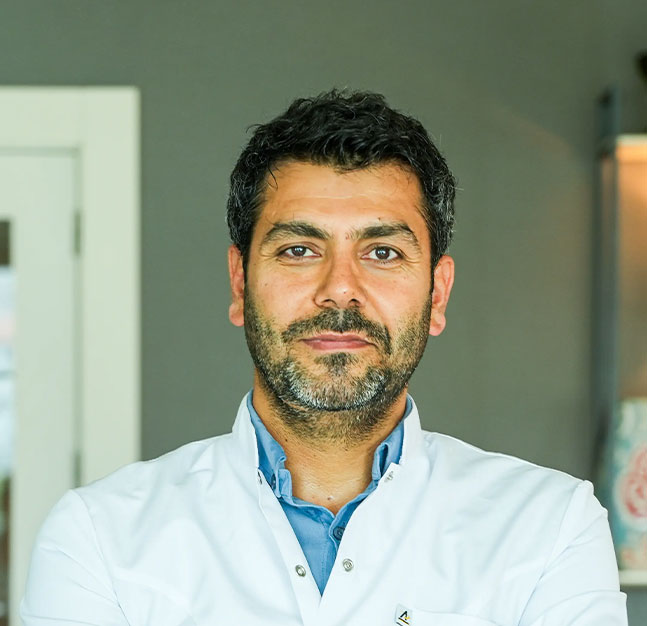
Doç. Dr. Cengiz Andan

Laparoscopic Myomectomy

Page Content

Laparoscopic Myomectomy in Turkey: Safe and Scarless Fibroid Removal

What is laparoscopic myomectomy? Learn about the uterus-sparing, painless surgical method for removing fibroids. Discover the fast recovery process in Istanbul with Dr. Cengiz Andan.

Get Rid of Fibroids While Protecting Your Uterus: Closed Fibroid Surgery

Uterine fibroids are the most common benign tumors in women, originating from the muscle layer of the uterus. When they cause bleeding, pain, or infertility, surgical removal becomes necessary. In the past, fibroid surgeries required large abdominal incisions. Today, thanks to Laparoscopic Myomectomy, it is possible to remove only the fibroids while preserving the integrity of the uterus.

Dr. Cengiz Andan, adhering to the principle of “Uterus-Sparing Surgery,” prioritizes saving the organ regardless of the patient’s age or desire for future children. This closed method resolves the patient’s aesthetic concerns (no large scars) and ensures a rapid return to daily life.

  1. Which Fibroids Can Be Removed Laparoscopically?

There is a common misconception among patients that “My fibroid is too big, keyhole surgery isn’t possible.” In reality, in laparoscopic surgery, the size or number of fibroids is rarely a barrier (except in extreme cases).

  • Subserosal Fibroids: Those growing outward from the uterus.
  • Intramural Fibroids: Those embedded within the uterine wall (The most common type and a frequent cause of infertility).
  • Large Fibroids: Even fibroids as large as 10-15 cm can be successfully removed laparoscopically.
  1. The Morcellator Technology: How Big Masses Fit Through Tiny Holes

So, how does a 10 cm fibroid come out of a 1 cm incision? This is where a special technology called a Morcellatorcomes into play. Once the fibroid is separated from the uterus, it is placed inside a special bag within the abdomen. The morcellator device then cuts the fibroid into long, thin strips (much like peeling an apple) to remove it through the small port. Thanks to this technology, there is no need to cut the abdomen open, even for giant fibroids.

  1. Recovery and Pregnancy After Surgery

After a laparoscopic myomectomy, the uterine wall is sutured (stitched) in multiple layers using a very strong technique. This is vital to prevent the uterus from rupturing during future pregnancies.

  • Recovery: Patients typically stay in the hospital for 1 day. Post-operative pain is significantly less compared to open surgery.
  • Pregnancy: To allow the uterine wall to heal completely, it is generally recommended to avoid pregnancy for 3 to 6 months after surgery. After this period, patients can safely conceive.

Dr. Cengiz Andan offers advanced diagnostic and surgical solutions for Uterine Fibroids in Istanbul, combining uterus-sparing techniques with world-class medical care for international patients.

Frequently Asked Questions (FAQ)

  1. Is there a risk of my uterus being removed during surgery?For experienced surgeons like Dr. Cengiz Andan, this risk is virtually non-existent. The goal of the surgery is to remove onlythe fibroid. While a hysterectomy (removal of the uterus) might be considered in extremely rare cases involving life-threatening uncontrolled bleeding, this rate is far below 1%.
  2. Will fibroids grow back after laparoscopic surgery?The method of removal (open or closed) does not change the risk of recurrence. Since fibroids have a genetic predisposition, there is a 10-15% chance of recurrence within 5 years. However, removing all visible nodules during surgery extends the fibroid-free period.
  3. Can this be done for virgins?Yes, absolutely. Laparoscopy is performed through the abdomen (navel and bikini line), not through the vagina. Therefore, it does not affect the hymen or virginity.
  4. Can I have a normal birth after surgery?If the fibroid was removed from deep within the uterine wall, a Cesarean sectionis usually recommended to prevent strain on the uterine scars during labor contractions. However, if the fibroid was superficial (subserosal), a vaginal birth may be attempted.
  5. How long does the surgery take?Depending on the number and size of the fibroids, the procedure takes an average of 60 to 90 minutes.

Other Laparoscopic Surgical Treatments

Contact Assoc. Prof. Dr. Cengiz Andan!
Years of Experience
0
Laparoscopic Surgery
+ 0
Endometriosis Surgery
+ 0
IVF
+ 0
BOOK AN APPOINTMENT NOW

Fill out the form to request a free consultation to get preliminary information about your treatment process or learn about treatment methods tailored to your specific needs.

To create your personalized treatment plan, please upload your current medical tests, imaging results, or reports. All files are kept strictly confidential and help us better understand your needs before your treatment journey.

RANDEVU VE İLETİŞİM
Profile Picture
Doç. Dr. Cengiz ANDAN Online
×
Merhaba.
Size nasıl yardımcı olabilirim?
Hi.
How can I help you?