Hysteroscopic Uterine Polyp Removal: precise, incision-free surgery that protects the uterus in Turkey
Many women are told they have a uterine polyp after an ultrasound for irregular bleeding or while looking into difficulty conceiving, and the natural worry is whether it is serious and whether surgery means a major operation — it does not. A uterine (endometrial) polyp is a benign overgrowth of the lining of the womb, and it can be removed precisely through the cervix with a thin camera, with no abdominal incision and a same-day return home. Working in Turkey, Associate Professor Dr. Cengiz Andan removes the polyp under direct vision while protecting the healthy lining, and we always send it for examination to be sure of the diagnosis. For women living abroad who are considering treatment in Turkey, we explain the whole process honestly and in an evidence-based way, without exaggeration.
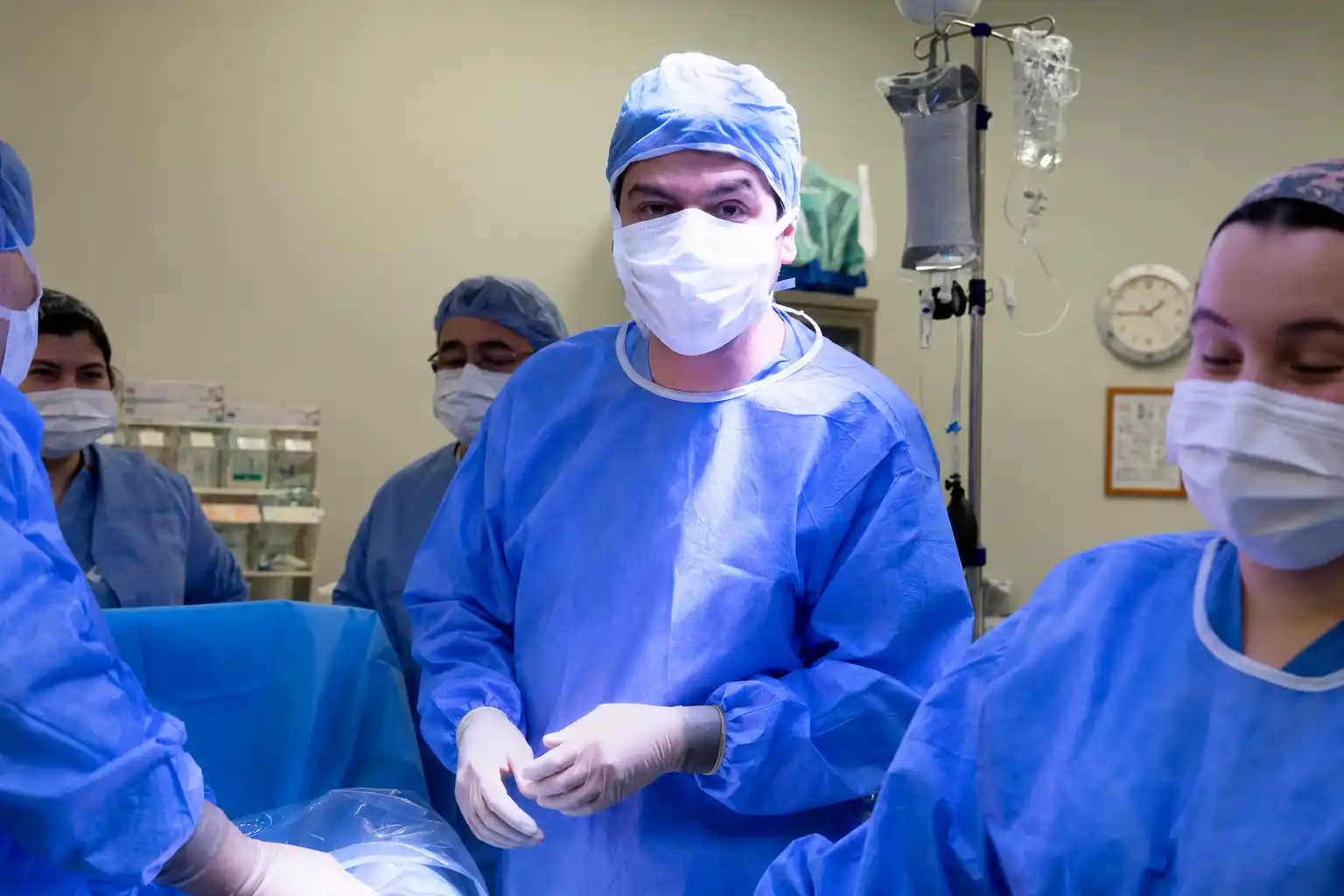
At a glance
- What it is: A uterine (endometrial) polyp is a benign overgrowth of the womb lining; most are harmless, but they can cause bleeding and reduce fertility.
- Incision-free treatment: The polyp is removed through the cervix with a hysteroscope under direct vision, with no abdominal cut.
- Fertility: Removing a polyp can improve the chance of conceiving and increase pregnancy rates in suitable women.
- Time in Turkey: A day-case procedure, with a total stay of about 3–5 days for international patients.
- Starting from abroad: The process begins with an online pre-consultation using your imaging; your histology report is prepared for your doctor at home.
What exactly is a uterine polyp, and what happens in the womb?
A uterine polyp, or endometrial polyp, is a benign, localised overgrowth of the lining of the womb made of glands, stroma and blood vessels. Polyps are common, found in roughly 6 percent of women before menopause and around 12 percent after it, and they range from a few millimetres to several centimetres. They can cause irregular bleeding and can make it harder for an embryo to implant, which is why they are often discovered during bleeding or fertility investigations. Most polyps are harmless, but because a small proportion can carry pre-cancerous or cancerous change, the removed tissue is always examined.
Is it a polyp or a fibroid — and why does the difference matter?

Polyps and fibroids are often confused, but they are different tissues and the right diagnosis decides the right operation. A polyp is an overgrowth of the lining (endometrium), while a fibroid is a benign muscle tumour of the uterine wall; a fibroid that bulges into the cavity (submucosal) can cause similar bleeding and can also be removed hysteroscopically. Both can affect fertility and both can be addressed through the cervix when they sit inside the cavity, but the technique and planning differ. Telling them apart with ultrasound and hysteroscopy is the first step, because it determines whether a simple polypectomy or a more involved resection is needed.
| Feature | Uterine polyp | Submucosal fibroid |
|---|---|---|
| Tissue | Womb lining | Muscle of the womb |
| Typical treatment | Hysteroscopic polypectomy | Hysteroscopic myomectomy |
| Effect on fertility | Possible | Possible |
Source: American College of Obstetricians and Gynecologists (ACOG), abnormal uterine bleeding
Which symptoms point to a uterine polyp?
The most common sign of a uterine polyp is abnormal uterine bleeding, which is why bleeding is the symptom that most often leads to the diagnosis. This can mean heavy periods, bleeding or spotting between periods, irregular cycles or, importantly, any bleeding after menopause. Some women have no symptoms at all and the polyp is found by chance on a scan or during fertility tests, while others notice difficulty conceiving or recurrent miscarriage. Any bleeding after menopause should always be assessed promptly, because it is the symptom most strongly linked to a higher risk of a worrying polyp.
| Symptom | What it may mean |
|---|---|
| Bleeding between periods | Common sign of a polyp |
| Heavy or irregular periods | Abnormal uterine bleeding |
| Bleeding after menopause | Assess promptly |
| Difficulty conceiving | Polyp affecting implantation |
| No symptoms | Found by chance |
How is a uterine polyp diagnosed?
A uterine polyp is usually first suspected on a transvaginal ultrasound and then confirmed with hysteroscopy, which gives the clearest view. Ultrasound is the first-line test, and adding saline into the cavity (saline infusion sonography) makes a polyp easier to see. Hysteroscopy is superior to the other methods because it shows the number, type and exact location of polyps directly, and it allows the polyp to be removed in the same look (see-and-treat). The definitive diagnosis is always made by examining the removed tissue under the microscope.
| Method | What it is for |
|---|---|
| Transvaginal ultrasound | First-line imaging |
| Saline infusion sonography | Outlines the polyp clearly |
| Hysteroscopy | Direct view and treatment |
| Histology | Definitive diagnosis |
Source: Royal College of Obstetricians and Gynaecologists (RCOG), endometrial pathology and hysteroscopy
Can a uterine polyp be cancer?
The great majority of uterine polyps are benign, and the risk of a pre-cancerous or cancerous polyp is low, though it is not zero. In premenopausal women that risk is around 1 percent, rising to roughly 3 to 5 percent after menopause and higher still with post-menopausal bleeding or older age. Larger polyps, obesity, multiple polyps and tamoxifen use also raise the risk a little. This is precisely why we remove and examine the polyp rather than simply watching it when these features are present, so that any abnormal change is caught early.
| Group | Approximate malignancy risk |
|---|---|
| Before menopause | ~1% |
| After menopause | ~3–5% |
| With post-menopausal bleeding | Higher |
How does hysteroscopic polyp removal actually work?
Hysteroscopic polypectomy removes the polyp through the natural opening of the cervix, with no cut in the abdomen and no scar. A thin telescope (hysteroscope) is passed into the womb, the cavity is gently expanded with fluid, and the polyp is removed under direct vision with a fine resectoscope or a tissue-removal device while the healthy lining is left intact. The procedure usually takes about 15 to 30 minutes, is done under anaesthesia and is almost always a day case. We use direct-vision removal because it allows the whole polyp to be taken cleanly, which both confirms the diagnosis and lowers the chance of it coming back.
Does every polyp need to be removed, or can some be watched?
Not every polyp has to be removed; the decision depends on symptoms, menopausal status, fertility plans and risk factors. Polyps that cause bleeding, that are linked to difficulty conceiving, or that appear after menopause are usually removed, because they cause problems or carry a higher risk. Small, symptom-free polyps in younger women may sometimes be watched, as a proportion can even regress on their own. We weigh these factors with you and recommend removal when the benefit is clear, rather than treating every polyp the same way.
Source: American Association of Gynecologic Laparoscopists (AAGL), hysteroscopic management of endometrial polyps
Do uterine polyps come back after removal?
Polyps can recur after removal, and how often this happens depends on the type of polyp and how long women are followed. Reported recurrence ranges widely, from a few percent up to around 40 percent over longer follow-up, and it is more likely when there are several polyps or when only part of a polyp is removed. Complete removal under direct vision lowers this risk compared with blind scraping, which is one reason hysteroscopy is preferred. Regular follow-up means that if a polyp does return, it can be found and dealt with early.
Polyps and fertility: can removal help me conceive?
For women whose only fertility obstacle is a polyp, removing it can improve the chance of conceiving and raise pregnancy rates. A polyp can interfere with implantation by bleeding into the cavity or by creating an unfavourable surface for the embryo, and clearing it restores a healthier lining. This is especially relevant before IVF (in vitro fertilisation), where a smooth, polyp-free cavity supports implantation, so we time the procedure and coordinate with the fertility plan. We raise the topic of conception early, so that polyp removal fits naturally into the wider treatment.
Source: European Society of Human Reproduction and Embryology (ESHRE), uterine cavity assessment before treatment
What is our approach to treating uterine polyps?
At the heart of our approach is precision with restraint: removing the polyp completely while protecting the healthy lining, and recommending surgery only when it genuinely helps. We assess each woman as a whole — her bleeding, her menopausal status, her fertility plans and any risk factors — and decide together whether to remove or to watch. Where removal is right, we prefer direct-vision hysteroscopic polypectomy so the polyp is taken cleanly and sent for examination, and for women trying to conceive we time it to support the fertility plan. As Associate Professor Dr. Cengiz Andan and our team, we believe that carrying the whole process through with one responsible surgeon makes a real difference to both trust and outcome.
Why does experience matter even in a "minor" procedure?
Although hysteroscopic polyp removal is a minor, incision-free procedure, the surgeon's experience still shapes how cleanly and safely it is done. Complete removal under direct vision lowers the chance of recurrence, while a careful technique reduces the small risks of this surgery, such as uterine perforation or cervical injury. The 18 years of experience of Associate Professor Dr. Cengiz Andan, with more than 2,000 laparoscopic and hysteroscopic procedures, reflects a high case volume in minimally invasive surgery, and the overall complication rate is kept low, around 2 percent. Even so, we want to be clear that every procedure carries some risk and that results can vary from person to person.
How does recovery and the return home work?
Recovery after hysteroscopic polyp removal is quick, because there is no abdominal wound and the procedure is a day case. Most women go home the same day, have only mild cramping and light spotting for a few days, and return to a normal routine within a day or two. As there is no abdominal incision, a flight home is usually possible within a few days, confirmed at the check-up. Complications are rare, but if a problem arises after you return we remain reachable, coordinate with your doctor at home, and handle the histology, report and follow-up remotely, and your operation note is prepared so you can give it to your own doctor.
Treatment in Europe or in Turkey — what is the difference?
For hysteroscopic polyp removal the difference between Europe and Turkey is not quality but access and cost. The same minimally invasive technique and the same international guidelines are followed in both; the gap comes from the exchange rate and lower operating costs, which lower the price rather than the standard. For many women an added difference is being able to complete the whole process quickly and with one and the same surgeon, instead of waiting weeks or months for a hysteroscopy slot.
| Criterion | Your home country (Europe) | Turkey |
|---|---|---|
| Surgical quality / standard | Very high | Very high |
| Waiting time for an appointment | Often long | Usually short |
| One-surgeon continuity | May change | One responsible surgeon |
| Cost | Higher | Lower |
How does the treatment process, accommodation and follow-up work from abroad?
For patients coming from abroad, the process begins with a digital assessment before travel and is completed with a short stay in Turkey. You first share your imaging (ultrasound) and reports, and discuss the treatment plan and approximate cost in an online pre-consultation. Because polyp removal is a day-case procedure, a stay of about 3–5 days in Turkey is usually enough, covering the assessment, the procedure and the first check-up. A flight home is usually possible within a few days, as there is no abdominal wound, and your histology result is shared with you and your own doctor once it is ready.
How does a second opinion and online pre-consultation work?
A second opinion is valuable when you are unsure whether a polyp needs removing, or when you have been advised to have a more extensive procedure such as a hysterectomy for bleeding. When you share your imaging and current reports, we assess your situation, tell you whether the polyp is best removed or watched and whether a simple hysteroscopic procedure is enough, and discuss it with you openly. These conversations take place as a paid online pre-consultation and let you clarify your expectations before travelling; they do not replace an in-person examination. You can make first contact easily through the form or WhatsApp.
Frequently Asked Questions
Most endometrial polyps are benign. The risk of a pre-malignant or malignant polyp is low — roughly 1 percent before menopause and a few percent after it — and rises with age and post-menopausal bleeding, which is why the removed polyp is always examined under the microscope.
Not always. Small, symptom-free polyps in younger women may be watched, while polyps that cause bleeding, affect fertility or appear after menopause are usually removed. The decision is made together after assessment.
There is no abdominal incision; the polyp is removed through the cervix with a hysteroscope. The procedure is done under anaesthesia, so it is not painful, and most women have only mild cramping afterwards.
After hysteroscopic polyp removal most patients can fly within a few days, as there is no abdominal wound. Final approval is given after the check-up; light spotting for a few days is normal.
In women whose only fertility problem is a polyp, removal can improve the chance of conceiving and increase pregnancy rates. The uterine lining is restored to a healthier state for implantation.
Recurrence is possible and reported rates vary widely, from a few percent up to around 40 percent over longer follow-up, and it is more likely with multiple polyps. Complete removal under direct vision lowers the risk, and follow-up helps catch any recurrence early.
Often yes. When hysteroscopy confirms a polyp, it can usually be removed in the same session (see-and-treat), which is decided according to its size and location.
Hysteroscopic polyp removal usually takes around 15 to 30 minutes, and most women go home the same day. A normal daily routine is typically resumed within a day or two.
In suitable cases yes. A submucosal fibroid or another intrauterine problem can sometimes be addressed in the same hysteroscopic session; suitability is decided by imaging and assessment.
For hysteroscopic polyp removal a stay of about 3 to 5 days is usually enough. This covers the preoperative assessment, the procedure and the first check-up.
Yes. Your operation note, histology result and findings are prepared so you can hand them to your doctor at home, and your follow-up can continue remotely.
The online pre-consultation is a paid service that lets you have your situation clearly assessed before travelling. Payment and process details are shared before the consultation.