Menstrual Pain (Dysmenorrhea) Treatment: finding the cause behind the pain in Turkey
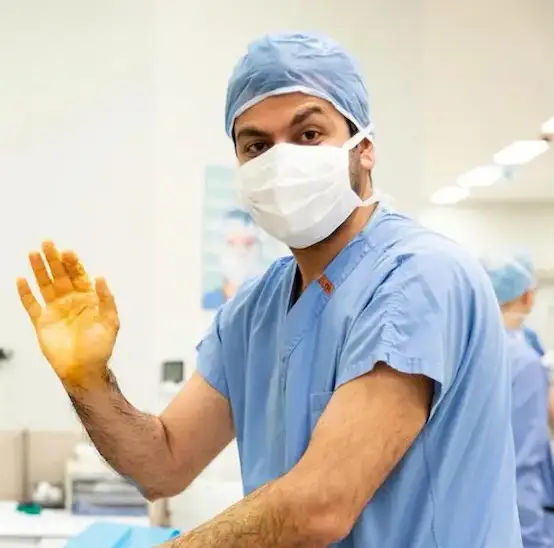
Many women with severe period pain are told to "take a painkiller and wait it out" — when in fact pain that disrupts your life is often a signal worth listening to, not simply enduring. After years of monthly pain that keeps them off work or school, frequently dismissed as something normal, many women discover there is a treatable cause behind it. Working in Şişli, Turkey, Associate Professor Dr. Cengiz Andan first looks for whether the pain is simple period cramps or a sign of a condition such as endometriosis, and then plans treatment around the cause, your symptoms and whether you wish to preserve fertility. For women living abroad and considering assessment or treatment in Turkey, we explain the whole process from start to finish, plainly and on the evidence.

At a glance
- What it is: dysmenorrhea is pain during menstruation; it is primary when there is no underlying disease and secondary when a condition such as endometriosis, adenomyosis or a fibroid is the cause.
- Cause first: the key step is telling primary pain from a treatable cause, because that decides whether medication or surgery is the right path.
- When surgery helps: minimally invasive laparoscopy is offered when a treatable cause such as endometriosis is found and medication has not been enough.
- Time in Turkey: assessment can be brief; if laparoscopic surgery is planned, a total stay of about 5 to 7 days is usual.
- Starting from abroad: the process begins with an online pre-consultation using your imaging and reports; your findings are prepared so you can give them to your doctor at home.
What exactly is dysmenorrhea, and how common is it?
Dysmenorrhea is the medical name for painful periods, ranging from mild cramps to pain severe enough to disrupt daily life. It is extremely common, affecting an estimated 50 to 90 % of women of reproductive age at some point, and it is one of the leading reasons for missed work and school days. The pain usually comes from the womb contracting under the influence of hormone-like chemicals called prostaglandins, but in some women it signals an underlying condition. Because the right treatment depends entirely on which type it is, the first task is always to identify the cause.
Primary or secondary dysmenorrhea — what is the difference?
Period pain falls into two groups, and telling them apart is the first condition for the right treatment. Primary dysmenorrhea has no underlying disease — it usually begins within a year or two of the first periods, follows a predictable pattern and responds to ordinary measures. Secondary dysmenorrhea is caused by a condition such as endometriosis, adenomyosis or a fibroid, often starts later in life, tends to worsen over time and may not respond to simple painkillers. Secondary causes are found in a meaningful share of women with severe pain, which is why worsening or treatment-resistant pain is investigated rather than simply medicated.
| Feature | Primary | Secondary |
|---|---|---|
| Underlying disease | None | Endometriosis, adenomyosis, fibroid |
| Typical onset | Soon after first periods | Later, years afterwards |
| Course over time | Stable | Often worsening |
Source: American College of Obstetricians and Gynecologists (ACOG), guidance on dysmenorrhea and pelvic pain
Which warning signs suggest a treatable cause?
Certain features of period pain point towards a secondary cause that deserves assessment rather than another month of painkillers. Pain that is severe enough to stop you functioning, that begins years after your periods started, that worsens steadily or that no longer responds to ordinary medication are all red flags. Pain accompanied by heavy bleeding, pain during sex, pain that lasts beyond the period, or difficulty conceiving raises the likelihood of a condition such as endometriosis, which is found in up to 70 % of women with chronic pelvic pain in some series. Recognising these patterns early matters, because the underlying cause can usually be treated.
| Warning sign | What it can suggest |
|---|---|
| Pain starting later in life | Secondary cause |
| Pain worsening year by year | Endometriosis, adenomyosis |
| Pain with heavy bleeding | Fibroid, adenomyosis |
| Pain during sex or difficulty conceiving | Endometriosis |
How is the cause of period pain found?
The cause of painful periods is identified through history, examination and imaging, often without any need for surgery at first. The history is frequently the most revealing part — when the pain began, how it has changed and what else accompanies it. Transvaginal ultrasound is the first-line test and can show fibroids, adenomyosis or an ovarian endometrioma, while magnetic resonance imaging (MRI) adds detail in complex cases. A normal scan does not always rule out endometriosis, so where suspicion remains, laparoscopy is the most definitive way to confirm and treat it in the same session.
| Method | What it is good for |
|---|---|
| History and examination | Distinguishing primary from secondary |
| Transvaginal ultrasound | First-line imaging |
| Magnetic resonance (MRI) | Complex or deep disease |
| Laparoscopy | Confirms and treats endometriosis |
What are the treatment options for menstrual pain?
There is no single answer for everyone; the choice depends on whether the pain is primary or secondary, its severity and whether you plan a pregnancy. In broad terms there are three routes: simple measures and pain relief, hormonal treatment to lighten or suppress periods, and surgery when a treatable cause is found. For most women with primary dysmenorrhea, medication and lifestyle measures are enough. When a secondary cause such as endometriosis or a fibroid is identified and pain persists despite medication, targeted minimally invasive surgery comes to the fore.
When are medication and hormones enough?
Medication is the first-line treatment for period pain and controls symptoms well in most women, especially in primary dysmenorrhea. Non-steroidal anti-inflammatories (NSAIDs) reduce the prostaglandins that cause cramps and relieve pain in around 70 to 80 % of women when taken correctly, while hormonal options such as the combined pill, progestins or a levonorgestrel intrauterine device lighten or suppress periods. A levonorgestrel intrauterine device can substantially reduce both pain and bleeding and is a good option for women who also want contraception. The limitation is that hormonal treatment controls symptoms rather than curing an underlying cause, so pain often returns when it is stopped if a condition such as endometriosis remains.
Source: National Institute for Health and Care Excellence (NICE), guidance on heavy menstrual bleeding and dysmenorrhea
When does surgery help with period pain?
Surgery is considered when a treatable cause is found and medication has not given enough relief, or when fertility is a concern. The most common situation is laparoscopy for endometriosis, where the disease can be confirmed and treated through a few small incisions in the same session, and where careful excision relieves pain in a high proportion of women. A submucosal fibroid causing pain and heavy bleeding may be removed hysteroscopically, while adenomyosis is treated according to its extent. The aim is always to treat the cause with the least invasive route, preserving the uterus and fertility wherever possible.
Source: American Association of Gynecologic Laparoscopists (AAGL), minimally invasive gynaecologic surgery
Endometriosis: the most common treatable cause of severe pain
Endometriosis is the condition most often behind severe, worsening period pain, and it is the one where finding and treating the cause changes the most. In this condition, tissue like the lining of the womb grows outside it, bleeding with each cycle and causing inflammation and pain; it affects roughly 10 % of women of reproductive age, yet diagnosis is often delayed by several years. Laparoscopic excision can relieve pain in around 70 to 80 % of suitable cases and, where fertility is a goal, can improve the chance of pregnancy. Because pain severity does not always match the amount of disease, the decision to operate rests on symptoms and findings together.
Source: European Society of Human Reproduction and Embryology (ESHRE), endometriosis guideline
Period pain and fertility: is there a link?
Pain itself does not reduce fertility, but some of the conditions that cause secondary dysmenorrhea can, which is one reason finding the cause matters. Endometriosis in particular is associated with reduced fertility, and it is present in a substantial share of women investigated for difficulty conceiving. Treating the underlying cause — for example by laparoscopic excision of endometriosis or removal of a submucosal fibroid — can both relieve pain and, in suitable cases, improve the chance of pregnancy. Where a fertility goal exists, we plan the timing carefully and coordinate with the IVF team rather than treating the pain in isolation.
Do lifestyle measures and self-care make a difference?
Simple measures genuinely help many women with period pain and are a sensible first step alongside medication. Local heat applied to the lower abdomen has been shown to reduce pain comparably to mild painkillers in some studies, while regular exercise, adequate sleep and stress reduction can lessen the severity of cramps over time. These measures do not treat an underlying condition, so they complement rather than replace assessment when the pain is severe or worsening. We discuss them openly because they are safe, low-cost and often underused, but we are equally clear about when they are not enough on their own.
What is our treatment approach to menstrual pain?
Our approach rests on one principle: find the cause first, then treat it with the least invasive route that works. We assess each woman as a whole — the history of her pain, her examination, her imaging and any pregnancy plan — and we distinguish primary from secondary dysmenorrhea before deciding on treatment. We treat primary pain medically and reserve surgery for a confirmed, treatable cause such as endometriosis where medication has not been enough, always preferring uterus- and fertility-preserving techniques. As Associate Professor Dr. Cengiz Andan and our team, we believe that carrying the process through with the same responsible doctor from start to finish makes a real difference to both trust and outcome.
Why does experience matter in treating painful periods?
One of the strongest determinants of outcome in secondary dysmenorrhea is the experience of the surgeon, because confirming the cause and treating it completely — especially endometriosis — takes both judgement and technical skill. Associate Professor Dr. Cengiz Andan brings 18 years of experience, more than 2,000 laparoscopic procedures and over 500 endometriosis operations, reflecting a high case volume in minimally invasive techniques. In experienced hands the complication rate can be kept low — around 2 % — and careful excision can relieve pain while preserving the uterus and fertility. Even so, we say clearly that every operation carries some risk and that results vary from person to person.
How does recovery and going home work after surgery?
Where surgery is needed, recovery after laparoscopic treatment is usually quick, and most women return to normal life within a few weeks. The hospital stay is generally 1 to 2 days, with a return to normal daily activity in about 2 to 4 weeks depending on what was treated. The question on most patients' minds is "what if a problem arises after I go home?": complications are uncommon, but if one occurs we remain reachable, coordinate with your doctor in your home country and follow the histology, the report and your recovery remotely together. Your operative report is also prepared so you can hand it directly to your doctor at home.
Should I be assessed and treated in my home country or in Turkey — what is the difference?
In treating painful periods the difference between your home country and Turkey is not quality but access and cost. The diagnostic tools, the minimally invasive techniques and the international guidelines used in Europe are the same ones applied in Turkey; the gap comes from the exchange rate and lower operating costs, which lower the price rather than the standard. For many women the added difference is being able to get to the bottom of years of pain quickly and with the same doctor throughout, instead of waiting months for an appointment and an operation.
| Criterion | Your home country | Turkey |
|---|---|---|
| Diagnostic / surgical quality | Very high | Very high |
| Waiting time for an appointment | Often long | Usually short |
| Single-doctor continuity | Can vary | One responsible doctor |
| Cost | Higher | Lower |
How does the treatment process, stay and follow-up work from abroad?
For patients coming from abroad, the process begins with a digital assessment before travel and is completed with a short stay in Turkey. First you share your imaging (ultrasound/MRI) and reports, and in an online pre-consultation we discuss the likely cause, the plan and the approximate cost. If only assessment is needed, a brief visit is enough; if laparoscopic surgery is planned, a stay of about 5 to 7 days in Turkey usually covers the pre-operative assessment, the procedure and a first check. A flight home — depending on the procedure and medical clearance — is often possible about 7 to 10 days after surgery, an interval that also lowers the risk of a clot during travel.
How does a second opinion and online pre-consultation work?
A second opinion is one of the most valuable steps, especially for women who have been living with severe period pain that has never been properly explained. When you share your imaging and existing reports, we assess your situation and tell you openly whether the pain is likely primary or secondary, whether a condition such as endometriosis is probable, and what the realistic options are. These discussions take place as a paid online pre-consultation and let you clarify your expectations before travelling; they do not replace an in-person examination. You can make the first contact easily by form or WhatsApp.
Frequently asked questions
Pain that is severe, that starts years after your first periods, that worsens over time or that does not respond to ordinary painkillers can point to a treatable cause such as endometriosis or a fibroid. Pain with heavy bleeding, pain during sex or difficulty conceiving also deserves assessment.
Some cramping is normal, but pain that stops you working, studying or sleeping is not something you simply have to live with. Severe or worsening pain should be investigated, because an underlying cause can often be treated.
Often yes. History, examination and ultrasound or MRI can identify many cases, although laparoscopy remains the most definitive way to confirm and treat it. A normal scan does not always exclude endometriosis, so the picture is judged as a whole.
Hormonal treatment such as the pill can greatly reduce pain by lightening or suppressing periods, but it controls symptoms rather than curing an underlying cause. When it is stopped, the pain often returns if a cause such as endometriosis remains.
After laparoscopic surgery most patients can fly within about 7 to 10 days, depending on recovery. Movement and fluids are advised on long flights to lower clot risk; final clearance is given after a check.
Pain itself does not reduce fertility, but some causes of secondary dysmenorrhea, especially endometriosis, can. This is one reason finding the cause of severe period pain matters, particularly if you are planning a pregnancy.
In many cases yes. Where a laparoscopy confirms endometriosis, suitable disease can be treated in the same session, which avoids a second operation. Suitability is judged from imaging and during surgery.
Pain that increases year by year suggests a secondary cause such as endometriosis or adenomyosis rather than simple period cramps. Worsening pain is a reason to seek assessment rather than to wait.
Many women are managed successfully with medication, especially in primary dysmenorrhea. Surgery is considered when a treatable cause is found and medication has not given enough relief, or when fertility is a concern.
If only assessment is needed, a short visit is enough. If laparoscopic surgery is planned, a stay of about 5 to 7 days usually covers the assessment, the procedure and a first check.
Yes. Your assessment, any operative report and findings are prepared so you can give them to your doctor in your home country, and your follow-up can continue remotely.
The online pre-consultation is a paid service that lets you assess your situation clearly before travelling. Payment and process details are shared before the consultation.