Placenta Previa: what it means, how it is managed, and how delivery is planned - Turkey
Being told the placenta is "low" or "covering the cervix" is worrying, but for most women the news is far more reassuring than it first sounds. A low-lying placenta found at the mid-pregnancy scan usually moves up and away from the cervix as the uterus grows, and even when a true previa persists, careful monitoring and a planned cesarean lead to good outcomes in the great majority of pregnancies. Working in Şişli, Turkey, Associate Professor Dr. Cengiz Andan looks after pregnancies affected by placenta previa with watchful monitoring and a prepared, unhurried delivery plan, and we explain each step so you feel informed rather than frightened. For women abroad who simply want their scans and diagnosis reviewed, we can do this online, calmly and clearly.
At a glance
- What it is: Placenta previa means the placenta lies over or close to the opening of the cervix, which can cause bleeding and usually requires a cesarean delivery.
- Reassurance: Most low-lying placentas seen at the mid-pregnancy scan move up on their own; only a minority remain a true previa at term.
- Warning sign: Vaginal bleeding without pain in the second half of pregnancy needs emergency care — do not wait to see if it stops.
- Delivery: For persistent previa, a planned cesarean around 36 to 37 weeks is usual, in a setting prepared for bleeding.
- From abroad: Your scans can be reviewed online; long-distance travel late in pregnancy with previa is generally not advised.
What exactly is placenta previa?
Placenta previa is a condition of pregnancy in which the placenta implants low in the uterus and lies over or very close to the internal opening of the cervix. Because the baby normally passes through the cervix at birth, a placenta in this position can bleed and makes a vaginal delivery unsafe. It affects roughly 1 in 200 pregnancies at term — about 0.5 % — and has become a little more common as cesarean rates have risen. Importantly, a placenta found low early in pregnancy is not the same as a previa at term, because most move up well before delivery.
What are the types, and what is a "low-lying" placenta?
The terms have been simplified in recent years to two clear categories, which matters because they guide how delivery is planned. A placenta previa means the placenta actually covers the internal opening of the cervix, while a low-lying placenta means its edge is close — within about 2 cm of the opening — but does not cover it. A true previa requires a cesarean, whereas a low-lying placenta that stays close may sometimes still allow a vaginal birth, depending on the exact distance. Your scan report will usually state which of these applies and the distance measured, and we explain what that means for you.
| Term | Placenta position | Delivery implication |
|---|---|---|
| Placenta previa | Covers the cervical opening | Cesarean needed |
| Low-lying placenta | Within ~2 cm, not covering | May allow vaginal birth |
| Normal position | Away from the cervix | Usual delivery options |
Source: Royal College of Obstetricians and Gynaecologists (RCOG), placenta praevia guideline
Will a low-lying placenta resolve on its own?
This is the most reassuring fact about placenta previa, and it is worth knowing early: most low-lying placentas move away from the cervix before delivery. As the lower part of the uterus grows and stretches through the second and third trimesters, the placenta effectively moves upward — a process often called placental migration. Around 90 % of placentas that look low at the mid-pregnancy scan are no longer a previa by the time of birth, which is why a low placenta at 20 weeks is followed up rather than treated as a fixed diagnosis. A repeat scan, usually around 32 weeks, confirms whether a true previa remains.
What are the symptoms and warning signs?
The classic sign of placenta previa is sudden, bright-red vaginal bleeding that is usually not accompanied by pain in the second half of pregnancy, although many cases cause no symptoms and are found on a routine scan. Any vaginal bleeding in the second half of pregnancy should be treated as an emergency and assessed straight away, even if it is not accompanied by pain and stops on its own — this is not something to watch and wait on at home. Bleeding can be light or heavy, and because the lower uterus does not contract well, it can occasionally become severe quickly. Seeking care immediately is the single most important step, and it is always the right call.
How is placenta previa diagnosed?
Placenta previa is diagnosed by ultrasound, which shows clearly where the placenta lies in relation to the cervix. It is often first noticed at the routine mid-pregnancy scan around 20 weeks, and when the placenta appears low a transvaginal ultrasound gives the most accurate measurement of the distance to the cervical opening. Because so many low placentas move up, a follow-up scan later in pregnancy is used to confirm the final position before delivery is planned. This imaging is safe, comfortable and the cornerstone of managing the condition well.
Source: American College of Obstetricians and Gynecologists (ACOG), placenta previa and low-lying placenta
What raises the risk of placenta previa?
Placenta previa is not caused by anything a woman does during pregnancy, but several factors make it more likely. The strongest is a previous cesarean delivery or other uterine surgery such as a myomectomy or repeated dilation and curettage, because scarring affects where the placenta implants, raising the previa risk to around 1 % to 5 % after a cesarean. Other factors include a previous previa, carrying more than one baby, older maternal age, a higher number of previous pregnancies, smoking, and pregnancies conceived through IVF. Knowing these factors helps us watch more closely where needed, but their absence does not rule the condition out.
| Risk factor | Why it matters |
|---|---|
| Previous cesarean / uterine surgery | Scarring affects implantation |
| Previous placenta previa | Higher chance of recurrence |
| Older age, multiple pregnancy, IVF | Each raises the risk modestly |
| Smoking | A modifiable risk factor |
Placenta previa or placental abruption — what's the difference?
Bleeding in later pregnancy has more than one cause, and telling them apart matters because the management differs. Placenta previa typically causes bleeding without pain from a placenta lying over the cervix, whereas a placental abruption — where the placenta separates early from the uterine wall — usually causes bleeding with abdominal pain and a tense, tender uterus. A third, rarer condition, vasa previa, involves fetal blood vessels crossing the cervix and is a separate emergency. Either way, the safe response to any bleeding is the same: seek urgent assessment so the cause can be identified properly.
| Feature | Placenta previa | Placental abruption |
|---|---|---|
| Bleeding | Usually without pain | Often with pain |
| Uterus | Soft, non-tender | Tense, tender |
| Cause | Placenta over cervix | Early placental separation |
How is placenta previa linked to placenta accreta?
One reason a previous cesarean matters so much is the link between placenta previa and placenta accreta spectrum, where the placenta attaches too deeply into the uterine wall. When a woman has both a previa and prior cesareans, the risk of accreta climbs steeply with each previous cesarean — reported at around 3 % with one prior cesarean, 11 % with two and roughly 40 % with three, rising toward 60 % to 67 % with four or more. This matters because accreta needs specialised, planned delivery in a fully prepared setting to manage bleeding safely. Identifying it before birth, with ultrasound and sometimes MRI, is exactly why careful review of your history and scans is so important.
Source: Society for Maternal-Fetal Medicine (SMFM), placenta accreta spectrum
How is placenta previa managed during pregnancy?
Management of a persistent previa is about watchful monitoring and preparation rather than any treatment that moves the placenta. We follow the placenta's position with scans, advise pelvic rest — avoiding intercourse — and limiting strenuous activity to lower the chance of bleeding, and plan where and when delivery should happen. If bleeding occurs, hospital assessment is needed, and an early admission may be advised for some women; where early delivery is a risk, steroids can be given to help the baby's lungs mature. Throughout, the aim is to reach a planned, calm delivery rather than an emergency one.
Why a cesarean, and when is the baby delivered?
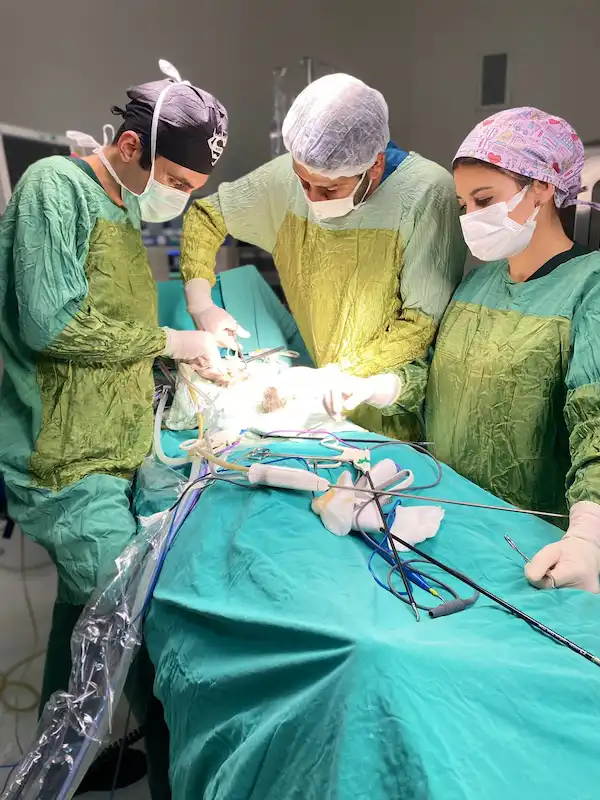
When the placenta covers the cervix, a vaginal birth is unsafe because labour would disturb the placenta and cause heavy bleeding, so a planned cesarean is the safe route. For an uncomplicated previa, delivery is usually scheduled around 36 to 37 weeks, a timing chosen to balance the risk of bleeding against the benefits of a few more weeks of maturity — the chance of an emergency bleed rises from roughly 5 % around 35 weeks toward about 30 % by 37 weeks. The cesarean is planned in a setting with blood products ready and the surgical approach adapted to the placenta's position. If significant bleeding happens earlier, delivery may be brought forward for safety.
Source: National Institute for Health and Care Excellence (NICE), antenatal care and bleeding in pregnancy
What are the risks to mother and baby?
The main risk of placenta previa is bleeding — before, during or after delivery — because the lower part of the uterus does not contract as well to close off blood vessels. For the baby, the principal risk is preterm birth if early delivery becomes necessary, which is why timing is planned so carefully. With modern monitoring, planned cesarean delivery and blood available, serious outcomes are uncommon and most mothers and babies do well. We are honest that the bleeding risk is real, while emphasising that good planning is exactly what keeps it manageable.
What is our approach to placenta previa?
Our approach is calm, prepared and honest: monitor closely, plan ahead, and avoid turning a manageable condition into a crisis. We follow the placenta's position with timely scans, review your history — especially any previous cesarean — for the risk of accreta, and set a clear delivery plan well before it is needed. Where signs point to accreta or a high bleeding risk, we plan delivery in a fully resourced setting with blood and an experienced team ready. We see our role as removing fear with information and preparation, so you understand what is happening and what the plan is at every stage.
Why does an experienced team matter here?
Placenta previa, and especially the possibility of accreta, is a situation where preparation and surgical experience make a real difference to safety. Associate Professor Dr. Cengiz Andan brings 18 years of practice, more than 2,000 laparoscopic operations and broad experience in complex obstetric surgery and the management of bleeding. That experience helps anticipate problems, plan a delivery in a prepared setting, and keep a complication rate low, at around 2 % across procedures. We are clear, too, that previa carries genuine risks and that the value lies in planning ahead rather than in any promise of a risk-free outcome.
Your home country or Turkey — what's the difference?
For placenta previa, where you give birth should be where you are being safely followed, so this is less a travel decision than a question of who reviews and plans your care. The same ultrasound diagnosis and the same international guidelines apply in Turkey, so the standard of monitoring and cesarean care is comparable; any cost difference reflects local economics, not a lower standard. The realistic value for women abroad is an expert review of their scans and a clear explanation of the plan — not relocating late in pregnancy, which is generally unsafe with previa.
| Aspect | Your home country | Turkey |
|---|---|---|
| Care quality / standard | Very high | Very high |
| Access to expert review | Varies | Prompt, including online |
| Where to deliver | Where you are followed | Where you are followed |
| Cost of consultation | Higher | Lower |
How does review and follow-up work from abroad?
For women abroad, the most useful step is usually an online review of the diagnosis rather than travel, because relocating late in pregnancy with previa is generally not advised. You share your ultrasound images and reports, and we review the placenta's position, the distance from the cervix, your history and any signs that need closer attention, then explain the plan in plain language. This helps you understand your diagnosis and the questions to raise with your local team, who remain well placed to deliver your baby safely. Where you are planning your wider pregnancy care in Turkey, monitoring and delivery can be arranged here from the outset.
How does a second opinion and online consultation work?
A second opinion is especially valuable when a previa diagnosis has left you anxious or facing decisions about timing and delivery you want to understand better. When you share your scans and reports, we review what they show, explain whether the placenta is likely to move, what the delivery plan should look like, and whether accreta needs to be considered. These consultations run as a paid online service and are designed to inform and reassure, working alongside — not replacing — the team providing your hands-on maternity care. You can make first contact easily through the form or messaging channels.
Frequently asked questions
Often, yes. Most low-lying placentas found at the mid-pregnancy scan move away from the cervix as the uterus grows, and only a minority remain a true previa at term.
It carries a real risk of bleeding, but with diagnosis, monitoring and a planned cesarean most pregnancies have good outcomes. Heavy bleeding is an emergency and needs immediate care.
Seek emergency care straight away for any vaginal bleeding in the second half of pregnancy, even if it is not accompanied by pain and stops. Do not wait to see whether it settles.
No. When the placenta covers the cervix, a vaginal delivery is unsafe, so a planned cesarean is needed. A low-lying placenta that has moved away may allow a vaginal birth.
For uncomplicated placenta previa, a planned cesarean is usually scheduled around 36 to 37 weeks to balance the risks of bleeding and prematurity. Earlier delivery may be needed if bleeding occurs.
Pelvic rest — avoiding intercourse — and limiting strenuous activity are usually advised to reduce the risk of bleeding. Your own activity plan is set with your doctor.
No. Placenta previa is not caused by anything you did. It is linked to factors such as previous cesarean or uterine surgery and is not preventable.
Yes. A prior cesarean raises the risk of previa and, when both are present, of placenta accreta, which is why your history is reviewed carefully and delivery planned in advance.
Placenta accreta is when the placenta attaches too deeply into the uterine wall. It is more likely with previa plus prior cesareans and needs specialised delivery planning.
Long-distance travel in late pregnancy with previa is generally not advised because of the bleeding risk. A second opinion can be done online without travel.
Yes. Your ultrasound images and reports can be reviewed in an online consultation so you understand your diagnosis and options, while your delivery stays with your local team.
The online consultation is a paid service that lets your scans and reports be reviewed before any visit. Payment and process details are shared beforehand.