
Doç. Dr. Cengiz Andan

Laparoscopic Hysterectomy

Laparoscopic Hysterectomy (Closed Womb Removal): Post-Operative Recovery and Comfort

At certain stages of a woman’s life, surgical removal of the uterus may be required due to various health problems. This procedure, called Hysterectomy in medical literature, is the second most frequently performed gynecological surgery in the world after Cesarean section.

When a woman is told that “her uterus needs to be removed,” she usually experiences great fear and anxiety. Questions such as “Will my body be incomplete?”, “Will I be unable to get out of bed for months?”, “Will my womanhood end?”occupy her mind.

However, thanks to the Laparoscopic Hysterectomy (Closed Method Uterus Removal) we apply today, these fearful scenarios have become history. As Assoc. Prof. Dr. Cengiz Andan, we apply the closed method, which is the gold standard, so that our patients can get through this process with minimum pain and maximum comfort.

What is Laparoscopic Hysterectomy? How Does It Differ from the Old Method?

In traditional open surgery (abdominal hysterectomy), a large incision (approximately 10-15 cm) is made in the abdominal area. This means cutting muscles and nerves, which prolongs the healing process and increases pain.

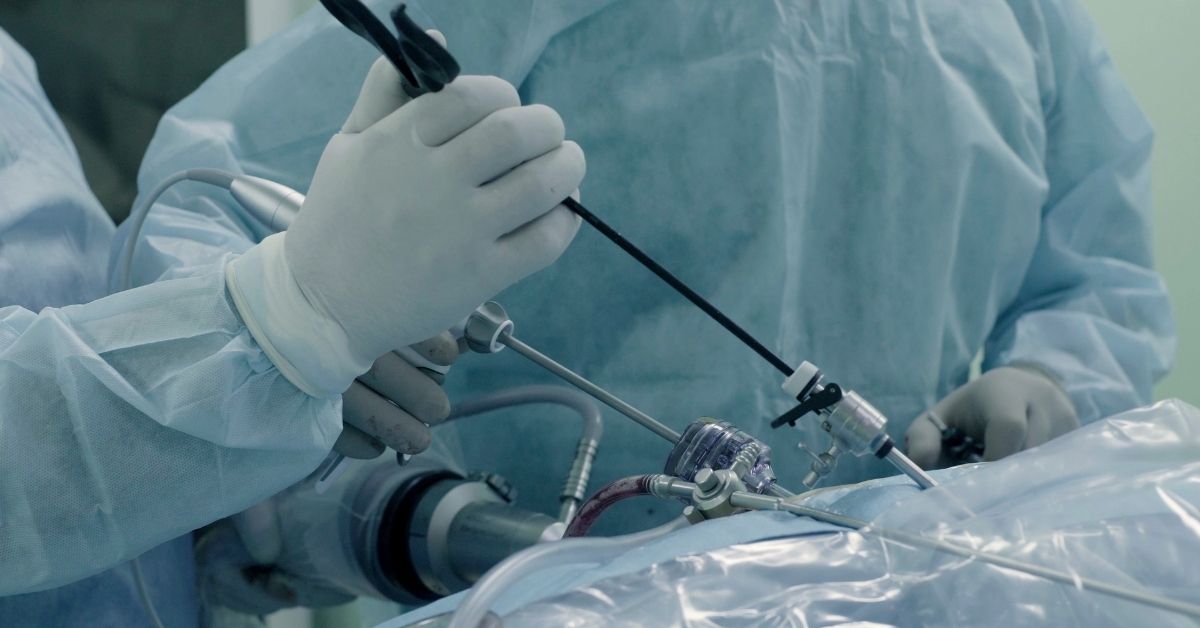
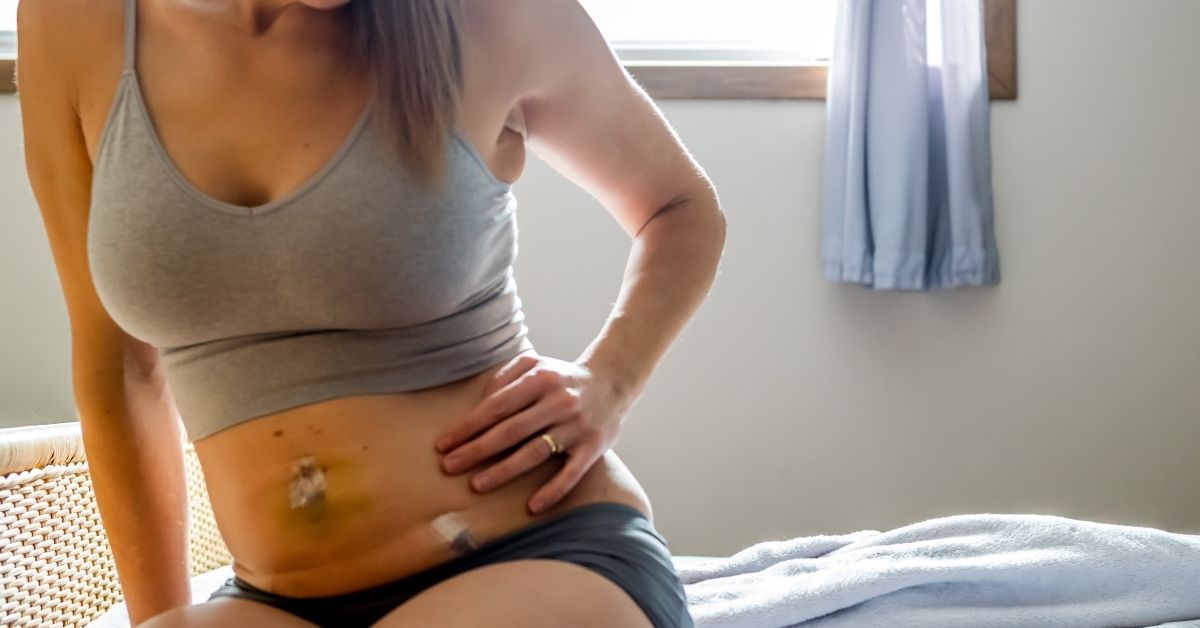
Laparoscopic Hysterectomy, on the other hand, is performed by entering through 3-4 tiny holes of 0.5 cm opened only from the navel and groin area, without making a large incision on the abdominal skin. The uterus is released from the surrounding tissues inside and is usually removed through the vaginal route. Since there is no large incision, scar marks, hernia risk, and infection probability are minimal.

laparoskopik histerektomi
Laparoscopic Hysterectomy (Closed Womb Removal): Post-Operative Recovery and Comfort

In Which Situations Is Uterus Removal Required?

The decision to remove the uterus is the final stage that needs to be discussed in detail between the physician and the patient. Generally, hysterectomy becomes a life-saving or quality-of-life-improving solution in the following situations that do not respond to drug treatment:

  • Fibroids (Uterine Fibroids): Benign tumors of the uterus. If they grow excessively and cause complaints such as bleeding, pain, or pressure, and if the patient no longer desires children, the definitive solution is hysterectomy.
  • Abnormal Uterine Bleeding: Stubborn bleeding that cannot be stopped despite hormone drugs or intrauterine devices.
  • Endometriosis and Adenomyosis: Situations where the uterus’s own tissue grows into the muscle layer, enlarging the uterus and causing severe pain.
  • Uterine Prolapse: The uterus sagging out of the vagina, making the patient’s life difficult.
  • Cancer and Pre-Cancerous Conditions: In cancers of the uterus (endometrium), cervix, or ovaries, or in lesions with a high risk of becoming cancerous.

Post-Operative Recovery Process: Comfort Beyond Expectations

The part that surprises our patients the most is the post-operative period. While a patient who has had open surgery waits for “recovery” for weeks, the process for our patients who have laparoscopic hysterectomy is as follows:

  • Hospital Stay: You are usually discharged 24 hours after surgery (the next day).
  • Pain Level: Since abdominal muscles are not cut, pain is very minimal. Most patients manage the process at home with simple painkillers.
  • Return to Daily Life: You can do your housework 3-4 days after surgery and return to your job within 1-2 weeks. Activities such as driving and climbing stairs are not restricted.
  • Aesthetic Result: There will be no large scar on your abdomen, only a few tiny dots that will fade over time.
Laparoscopic Hysterectomy (Closed Womb Removal): Post-Operative Recovery and Comfort

The Biggest Concern: “Does Womanhood End When the Uterus Is Removed?”

This is one of the biggest urban legends in society. Our scientific answer is clear: No, it does not end.

  • Menopause Status: The uterus is merely a “home” for the baby to grow and the organ where menstrual bleeding occurs. The organs that secrete hormones are the ovaries. If your ovaries are not removed during surgery (and we prefer to protect the ovaries in pre-menopausal patients), your hormonal balance does not change, and you do not enter menopause. You just do not menstruate and cannot get pregnant. You do not experience menopause symptoms such as hot flashes or sweating.
  • Sexual Life: Sexual life is not negatively affected after the uterus is removed. On the contrary; it has been proven by many scientific studies that the quality of sexual life increases because the bleeding, pain, or pressure sensation due to the mass experienced before surgery disappears. The length or structure of the vagina does not change, and there is no loss of sexual pleasure.

Why Assoc. Prof. Dr. Cengiz Andan?

Hysterectomy is an irreversible decision. Therefore, one must be sure about its “necessity,” and the surgery should be performed with the method that causes the least damage. In our clinic, in cases where the uterus needs to be removed, we adopt the most protective approach according to the patient’s age and ovarian reserve. With the principle of “Organ Preserving Surgery,” if possible, we aim to remove only the problem (fibroid, cyst), and if not possible, to remove the uterus with the closed method and get the patient back on her feet as soon as possible.

Frequently Asked Questions (FAQ)

Does a cavity form in the abdomen after the uterus is removed? Do organs sag?

No. The body has a tremendous ability to adapt. The intestines fill that small space formed after the uterus is removed. There is no such thing as a feeling of emptiness in the abdomen or sagging of other organs. Since the top of the vagina is suspended upwards with strong ligaments, vaginal prolapse is not expected either.

This depends entirely on the patient’s age and the health status of the ovaries. If the patient has not entered menopause (usually under 45-48 years old) and there is no suspicious cyst/cancer risk in the ovaries, the ovaries are strictly preserved. Thus, the patient does not enter early menopause, and the risk of osteoporosis and heart diseases does not increase.

After the uterus is removed, the top of the vagina (cuff) is closed with sutures. For this tissue to heal completely, sexual abstinence is usually recommended for 6-8 weeks (1.5 – 2 months). If healing is complete at the control examination, sexual life can be resumed.

There is no medical evidence that removing the uterus directly causes weight gain. If the ovaries are removed and menopause is entered, the metabolism may slow down slightly. However, removing only the uterus does not cause weight gain. On the contrary, since the pains causing stress and inactivity before surgery end, patients return to a more active life and control their weight more easily.

When performed by experienced hands (surgeons trained in laparoscopy), closed surgery is safer than open surgery. Because the image is magnified, bleeding control is better, and the risk of infection is less. The risk depends not on the method, but on the surgeon’s experience.

Profile Picture
Doç. Dr. Cengiz ANDAN Online
×
Merhaba.
Size nasıl yardımcı olabilirim?
Hi.
How can I help you?