Doç. Dr. Cengiz Andan

Online Second Opinion
Skip to content

Second Opinion · Hysterectomy Decisions

Second Opinion: Hysterectomy for Heavy Menstrual Bleeding

Have you been told the bleeding will only stop if the uterus is removed? Heavy menstrual bleeding has a defined list of causes — polyps, fibroids, adenomyosis, hormonal factors — and several of them are treatable without a hysterectomy. Before you consent, you can send your reports via WhatsApp for review by Assoc. Prof. Dr. Cengiz Andan.

The online consultation checks whether the cause of your bleeding was actually found, whether the recognized stepped treatments were genuinely tried, whether your anemia is being managed, and whether the proposed operation matches the problem — or replaces the missing investigation. The review follows the assessment approach of the Assoc. Prof. Dr. Cengiz Andan Clinic in Nişantaşı, Şişli, Istanbul.

Fast response, fast appointment: once your reports arrive on WhatsApp, your request is reviewed promptly and your online consultation is scheduled at the earliest suitable time.

  • Was the cause fully investigated?
  • Stepped treatments before surgery
  • Ablation, IUD or hysterectomy?
  • When surgery becomes reasonable

Online second opinion

Online Second Opinion with Assoc. Prof. Dr. Cengiz Andan

If you would like a specialist second opinion about the diagnosis, treatment or surgery proposed for “Hysterectomy for Heavy Menstrual Bleeding”, your ultrasound scans, MRI results, medical reports and other documents can be reviewed in detail by Assoc. Prof. Dr. Cengiz Andan.

During the online second-opinion consultation, our doctor:

  • Reviews your ultrasound scans, MRI results and other tests in detail.
  • Medically assesses the treatment or surgery that has been recommended to you.
  • Explains alternative treatment options when they are appropriate for your case.
  • Answers your questions in detail during a one-to-one video consultation.

There is no predetermined fixed time limit for the online consultation. The consultation ends after all submitted reports and test results have been reviewed, your questions have been answered and the doctor has completed the necessary explanations. The aim is not to fill a fixed appointment time, but to provide the information you need to understand your condition, treatment options and next steps.

Support also continues after the consultation. For one month after the online consultation, you may send follow-up questions through WhatsApp about the condition and treatment discussed during the appointment and receive written consultation support at no additional charge.

You can watch a short example of how the online second-opinion consultation works in the video beside this text.

Message us on WhatsApp for an online consultation
Online second-opinion video with Assoc. Prof. Dr. Cengiz Andan

This video shows a short example of an online video consultation between the doctor and a patient.

The decision you are actually facing

“The bleeding will only stop if the uterus goes” is a conclusion — the review checks the investigation behind it.

Heavy menstrual bleeding exhausts patients long before it endangers them, and by the time a hysterectomy is proposed, many simply want the bleeding to end. That urgency is understandable — and it is exactly when an irreversible decision deserves its most careful look. Heavy bleeding is a symptom with a list of causes: polyps, submucosal fibroids, adenomyosis, hormonal imbalance, clotting factors. Each has its own treatment, and several can be handled without removing the uterus.

Question 1

Was the cause actually found?

A hysterectomy for bleeding is only as justified as the work-up behind it. The review checks whether your file contains the cavity assessment, imaging and blood work that identify — or exclude — the treatable causes of heavy bleeding.

Question 2

Were the stepped treatments genuinely tried?

Tranexamic acid, hormonal treatment, the levonorgestrel IUD and hysteroscopic procedures form a recognized ladder before hysterectomy. The review looks at which rungs were used, for how long, and which were skipped.

Question 3

If surgery — is hysterectomy the right scale?

Even when surgery is reasonable, a targeted procedure — polyp removal, fibroid resection, in selected cases endometrial ablation — may match the problem better than removing the organ. The review checks whether scale and problem fit.

What should you send?

The reports that carry this decision

Bleeding decisions depend on how thoroughly the cause was chased. Send what you have — gaps in the work-up become visible before the consultation.

  • Ultrasound report: endometrium, fibroids, adenomyosis findings
  • Hysteroscopy or saline-infusion sonography report, if performed
  • Endometrial biopsy result, if performed
  • Recent blood work: hemoglobin, ferritin, thyroid values if tested
  • The doctor's letter naming the proposed operation
  • Your bleeding diary or notes: duration, clots, flooding, cycle length
  • Treatments already tried — medication, IUD — and their effect
  • A short summary of your age, fertility plans and priorities

Why anemia changes the conversation

Exhaustion pushes decisions. Iron does not argue — it just runs out.

Long-standing heavy bleeding often means long-standing anemia, and anemia makes any exit sound reasonable. Medically, severe anemia is first a condition to correct — before an operation, not by means of one. A recommendation made to an exhausted patient deserves re-reading once the numbers, and the patient, have recovered.

The recommendation is reviewed as a whole: the completeness of your bleeding work-up, the treatable causes in your imaging, your anemia, the treatments already tried, your age and your fertility plans — not just the severity of the bleeding.

What the review looks for

Findings that can change the recommendation

In heavy-bleeding second opinions, these patterns most often shift the decision — in either direction.

  • A polyp or submucosal fibroid that could be resected hysteroscopically
  • An endometrial cavity that was never directly assessed
  • Missing endometrial biopsy where age or risk factors call for one
  • The levonorgestrel IUD never tried, or removed before it could work
  • Thyroid or clotting factors that were never tested
  • Severe anemia that should be corrected before any operation
  • Adenomyosis driving the bleeding — which changes the options discussed
  • Failed stepped treatments with a completed work-up — where hysterectomy is confirmed as reasonable

Your options, side by side

The treatment ladder for heavy menstrual bleeding

Guidelines describe a stepped approach to heavy bleeding. Where you realistically stand on this ladder depends on your work-up — the online consultation locates your records on it.

StepTypically considered whenWhat the second opinion clarifies
MedicationFirst-line control of heavy bleedingWhether tranexamic acid or hormonal treatment was adequately tried and what it can still offer.
Levonorgestrel IUDLong-term control with the uterus preservedWhether your cavity findings make the IUD realistic and why it may have failed before.
Hysteroscopic procedureA polyp or submucosal fibroid is the driverWhether a targeted resection addresses your actual bleeding source.
Endometrial ablationFamily complete, cavity suitable, benign work-upWhether ablation is a realistic middle path in your case — and its limits.
HysterectomyThe ladder is exhausted or unsuitableWhether the indication truly holds — and if so, which type and route fit your situation.
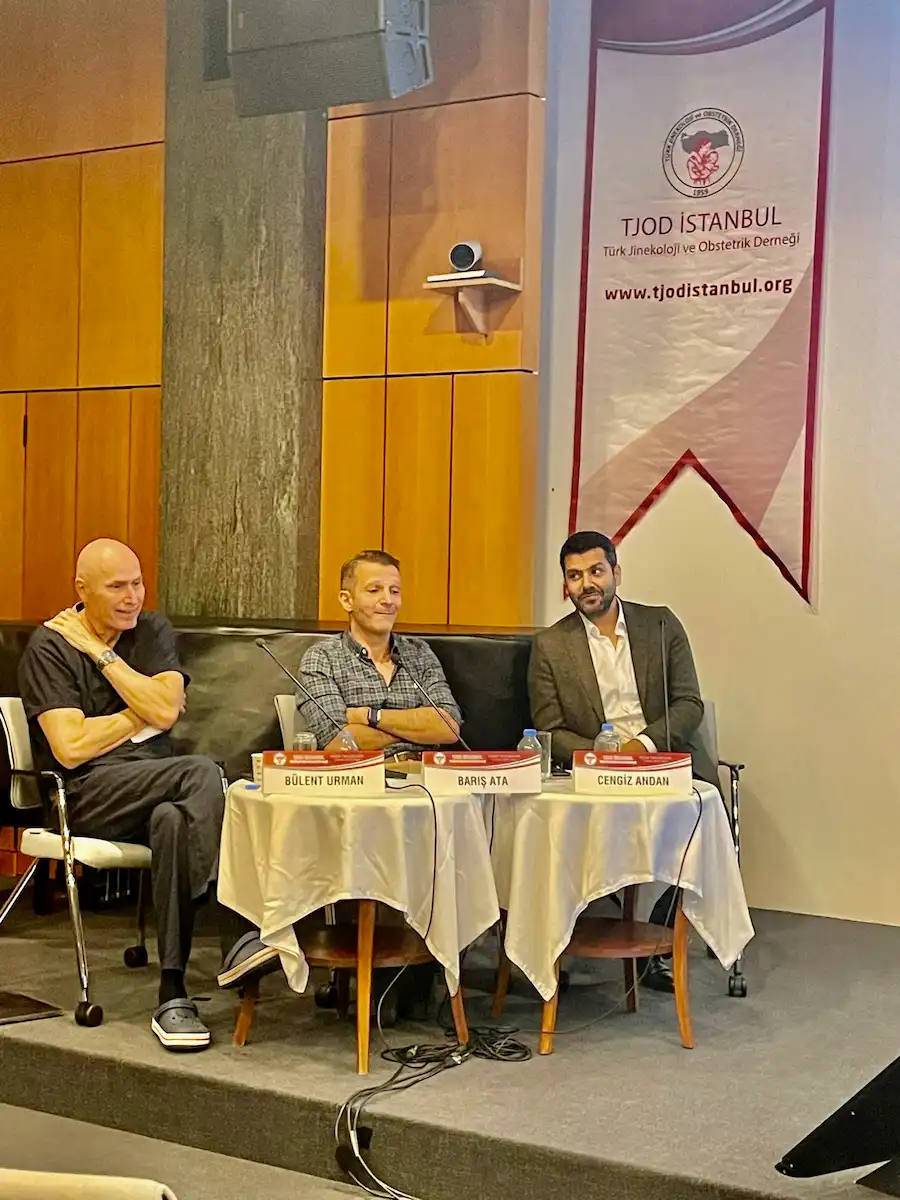
Assoc. Prof. Dr. Cengiz Andan reviewing a heavy bleeding work-up in an online second opinion
Reviewing a heavy-bleeding hysterectomy recommendation in an online consultation.

Doctor's approach

How is a bleeding recommendation evaluated in the online consultation?

In the online consultation with Assoc. Prof. Dr. Cengiz Andan, the review starts where bleeding decisions are won or lost: the work-up. Your imaging, cavity assessment, biopsy and blood results are checked for the treatable causes of heavy bleeding, and your treatment history is placed on the recognized ladder — step by step, with what was tried and what was skipped.

If the ladder genuinely ends at surgery, the consultation says so — and moves to the questions of type and route that are covered in depth on the hysterectomy second opinion page.

If your bleeding has not yet been fully investigated at all — irregular bleeding, bleeding between periods, or a work-up that never happened — the broader abnormal uterine bleeding second opinion reviews the diagnostic side of the problem first.

Frequently asked questions

The questions patients actually ask before a bleeding hysterectomy

I bleed through everything and I'm exhausted. Isn't a hysterectomy just the fastest way out?

It is the most final way out — which is exactly why it deserves the check. Many causes of heavy bleeding respond to far smaller measures once identified, and severe anemia itself should be corrected before any operation. The review confirms whether the fastest path in your case is truly the operating room or a treatable cause that was never addressed.

My cause was never really investigated — the answer was always “that's just how your periods are.” Is that acceptable?

Persistent heavy bleeding warrants a defined work-up: imaging of the uterus and endometrium, assessment of the cavity where indicated, blood work, and biopsy depending on age and risk factors. If a hysterectomy was proposed without that work-up, the recommendation is premature by definition — the review shows precisely which piece is missing.

What about endometrial ablation instead of a hysterectomy?

Ablation can be an effective middle path for the right patient: family complete, a cavity without distorting fibroids, and a benign work-up. It is less invasive than hysterectomy but not suitable for everyone, and bleeding can return. The review checks whether your findings genuinely fit the method rather than treating it as a universal alternative.

The hormonal IUD failed for me. Doesn't that mean surgery is next?

Not automatically. The review asks why it failed — position, expulsion, a cavity distorted by a fibroid, or insufficient time — because a failed IUD sometimes points to a specific treatable cause rather than to the operating room. If the failure genuinely reflects exhausted medical options, that is stated just as clearly.

Could my heavy bleeding be something dangerous?

That is exactly what a completed work-up answers. Depending on your age and findings, an endometrial biopsy may be part of it; imaging and blood work cover the rest. The review checks whether the reassuring boxes in your file are actually ticked — and states clearly if any of them still need to be.

Which documents do you need for this second opinion?

Your ultrasound report, any hysteroscopy or biopsy results, recent blood work including hemoglobin and ferritin, the doctor's letter with the proposed operation, your treatment history, and notes on your bleeding pattern. Send what you have — the gaps become visible before the consultation.

What happens if the second opinion agrees that a hysterectomy is reasonable?

Then you decide with a complete picture. The consultation explains why the recommendation stands, which type of hysterectomy and which route fit your situation, what happens with the cervix and the ovaries, and which questions to ask your surgeon before you consent.

Before your uterus is removed for heavy bleeding: send your reports and have the recommendation reviewed.

Write to us directly on WhatsApp and send the reports you already have. The online second opinion, provided through the Assoc. Prof. Dr. Cengiz Andan Clinic in Nişantaşı, Şişli, Istanbul, clarifies whether the cause of your bleeding was fully investigated, which steps of the treatment ladder remain realistic, and whether a hysterectomy truly is the sensible step now.

Send your reports and request a consultation
Doç. Dr. Cengiz Andan
Doç. Dr. Cengiz ANDANOnline
Merhaba.
Size nasıl yardımcı olabilirim?