Doç. Dr. Cengiz Andan

Online Second Opinion
Skip to content

Second Opinion · Ovarian Cyst Decisions

A Dermoid Cyst: Usually an Operation — On Your Timeline, To a Standard

Your scan found a dermoid — and possibly your search results found the unsettling details: hair, teeth, the internet's favorite cyst to sensationalize. The medical version is calmer: a dermoid is a benign germ-cell cyst that grows slowly, never dissolves on its own, carries a real but modest torsion risk, and holds a genuinely small malignant-change probability that rises mainly with age and size. Those properties usually add up to surgery — eventually, electively, and to a standard. You can send your reports via WhatsApp for review by Assoc. Prof. Dr. Cengiz Andan.

The online consultation puts the dermoid decision on its proper footing: how confidently your imaging has made the diagnosis — dermoids carry one of ultrasound's most recognizable signatures — how much timing latitude your size and situation actually allow, including the small-stable cases where structured watching is defensible, what the containment standard demands of the operation — because dermoid contents spilled into the abdomen cause a chemical irritation worth engineering against — and how much ovary careful technique routinely spares. The review follows the assessment approach of the Assoc. Prof. Dr. Cengiz Andan Clinic in Nişantaşı, Şişli, Istanbul.

Fast response, fast appointment: once your reports arrive on WhatsApp, your request is reviewed promptly and your online consultation is scheduled at the earliest suitable time.

  • Why dermoids usually end in surgery
  • The timing latitude most cases have
  • Spill prevention: the technique standard
  • The ovary, spared by design

Online second opinion

Online Second Opinion with Assoc. Prof. Dr. Cengiz Andan

If you would like a specialist second opinion about the diagnosis, treatment or surgery proposed for “A Dermoid Cyst: Usually an Operation — On Your Timeline, To a Standard”, your ultrasound scans, MRI results, medical reports and other documents can be reviewed in detail by Assoc. Prof. Dr. Cengiz Andan.

During the online second-opinion consultation, our doctor:

  • Reviews your ultrasound scans, MRI results and other tests in detail.
  • Medically assesses the treatment or surgery that has been recommended to you.
  • Explains alternative treatment options when they are appropriate for your case.
  • Answers your questions in detail during a one-to-one video consultation.

There is no predetermined fixed time limit for the online consultation. The consultation ends after all submitted reports and test results have been reviewed, your questions have been answered and the doctor has completed the necessary explanations. The aim is not to fill a fixed appointment time, but to provide the information you need to understand your condition, treatment options and next steps.

Support also continues after the consultation. For one month after the online consultation, you may send follow-up questions through WhatsApp about the condition and treatment discussed during the appointment and receive written consultation support at no additional charge.

You can watch a short example of how the online second-opinion consultation works in the video beside this text.

Message us on WhatsApp for an online consultation
Online second-opinion video with Assoc. Prof. Dr. Cengiz Andan

This video shows a short example of an online video consultation between the doctor and a patient.

The decision you are actually facing

With a dermoid, the question is rarely “whether” — it is “when, how, and sparing what.”

The “whether” resolves from the dermoid's nature: it will not regress, it grows slowly but persistently, its torsion risk is real at mobile sizes, and decades of carrying one accumulate the small transformation probability — which is why most guidelines and most surgeons land on elective removal for most dermoids. What that consensus does not license: urgency theater for a stable finding, open surgery where laparoscopy is standard, oophorectomy where cystectomy is achievable, or an operation designed without a containment plan. The three real questions — timing, technique, preservation — each have standards, and the review holds your plan to all three.

Question 1

How solid is the diagnosis — and does anything argue for watching?

Dermoid signatures on ultrasound are among imaging's most reliable, and MRI settles the atypical minority. Small, stable, asymptomatic dermoids in selected patients — near menopause, high surgical risk, strong preference — have defensible watching protocols. The review grades your diagnosis and states whether the watching exception genuinely applies.

Question 2

What timing does your dermoid actually demand?

Most dermoids grant elective latitude — weeks to months of scheduling freedom around your life, fertility plans and logistics. Size, growth rate, symptoms and torsion mathematics set the honest limits of that latitude. The review names yours, so the calendar is yours to use.

Question 3

Does the plan meet the technique and preservation standards?

Laparoscopic cystectomy with containment — the cyst removed inside a bag, spill engineered against — and the ovary reconstructed and retained is the standard operation for most dermoids. The review checks your proposed plan against exactly that sentence, word by word.

What should you send?

The reports that carry this decision

The diagnosis's confidence and the plan's standards are both readable from documents. Send the set.

  • Ultrasound reports in full wording — the signature's documentation
  • The dermoid's measurements across any previous scans
  • Pelvic MRI report and images, if performed
  • The other ovary's description — dermoids run bilateral in a minority
  • Your symptoms, if any: pressure, pain episodes
  • Tumor markers if drawn — with their limited role here
  • Your age, fertility plans and surgical history
  • The proposed operation and route, as described to you

Why the other ovary gets checked on purpose

Dermoids are bilateral often enough that the second ovary earns a deliberate look.

A meaningful minority of dermoid patients carry one on each side — sometimes the second small enough to hide from a casual scan. The consequences are practical: the pre-operative imaging should interrogate both ovaries explicitly, the operation should inspect the contralateral side, and the preservation stakes double when both are involved. A work-up that never mentioned your second ovary skipped a standard step; the review restores it.

The recommendation is reviewed as a whole: the diagnosis's imaging confidence, the timing latitude your findings genuinely grant, the containment and route standards in the proposed plan, the ovary-sparing design, and the second ovary checked on purpose — the whole dermoid standard, applied.

What the review looks for

Findings that can shape the plan

In dermoid reviews, these are the patterns that most often set the specifics.

  • A textbook signature — diagnosis confident, the conversation moving to design
  • An atypical appearance — where MRI precedes any scheduling
  • Small, stable, and a situation where watching is honestly defensible
  • Size and mobility where torsion mathematics compress the latitude
  • A plan missing its containment strategy — the standard's core, absent
  • Oophorectomy proposed where cystectomy is the achievable standard
  • A second dermoid on the deliberate look at the other ovary
  • Fertility timing that sequences the operation around your plans

The plan, held to standard

The dermoid operation's standards, itemized

The table lists the standards a dermoid plan should meet — the consultation checks yours against each row.

StandardWhat it meansWhat the second opinion clarifies
Confirmed diagnosisSignature on ultrasound, MRI for the atypicalWhether your imaging has earned the confidence the plan assumes.
Honest timingElective latitude, bounded by size and behaviorYour actual scheduling freedom — and what would compress it.
Laparoscopic routeThe standard door for most dermoidsWhether anything in your case genuinely argues for open surgery.
Containment techniqueRemoval inside a bag; spill engineered againstWhether the plan names its containment strategy explicitly.
Ovary preservationCystectomy with reconstruction, not removalWhether the ovary-sparing design is stated — and bounded in consent.
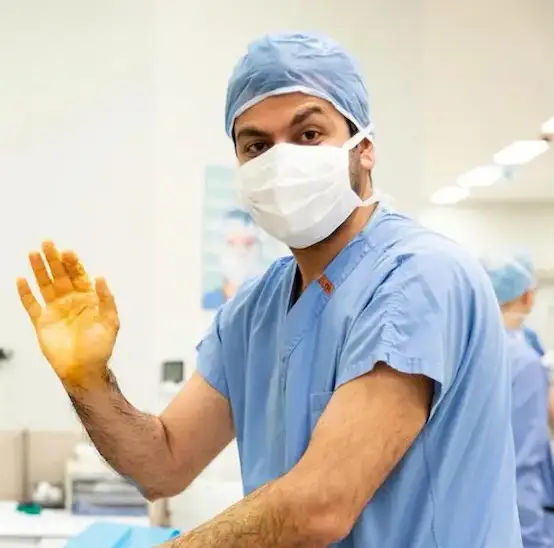
Assoc. Prof. Dr. Cengiz Andan reviewing a dermoid cyst surgical plan
Holding a dermoid plan to its standards in an online consultation.

Doctor's approach

How is a dermoid plan evaluated in the online consultation?

In the online consultation with Assoc. Prof. Dr. Cengiz Andan, the plan is checked against the dermoid standard item by item: diagnosis confidence, timing latitude, route, containment and preservation — with the second ovary's deliberate check included, and the consent's wording bounded so the ovary-sparing design survives into the operating room.

The route and technique questions — laparoscopy's feasibility for your size and history, what containment involves in practice — connect to the broader ground reviewed on the laparoscopic surgery second opinion page.

And the dermoid's place in your wider ovarian picture — alongside any other findings, your reserve, your plans — is reviewed on the ovarian cyst second opinion page, where this operation joins its context.

Frequently asked questions

The questions patients actually ask about dermoids

What actually is a dermoid — and why does it contain the things it contains?

A dermoid is a benign tumor of germ cells — the cells built to be able to form any tissue — which explains the notorious contents: skin elements, hair, sometimes tooth or bone material, all growing disorganized inside a cyst. Unsettling to read about, biologically mundane in practice: it is one of the most common benign ovarian tumors, especially in younger women, with decades of well-understood surgical management behind it.

If it's benign, why does everyone recommend removing it?

Because of its trajectory rather than its present: dermoids never regress, grow slowly but persistently, twist ovaries at meaningful rates when mobile, and carry a small transformation probability that accumulates over decades of carrying one. Elective removal trades a standardized operation now against those compounding possibilities. The recommendation is sound — and it is elective, which means the timing belongs to you within honest bounds.

Can a small dermoid just be watched instead?

In selected situations, defensibly yes: small, stable, asymptomatic dermoids in patients near menopause, at elevated surgical risk, or with strong informed preference have published watching protocols — scheduled imaging, growth thresholds, exit triggers. It is a genuine option, not a loophole, and its conditions are specific. The review states whether your case meets them or whether the watching offer would be borrowing against the trajectory.

What is this 'spill' everyone engineers against?

Dermoid contents — the sebaceous material especially — irritate the abdominal lining chemically if released during removal, producing an inflammatory reaction worth avoiding. The answer is engineering, not fear: containment bags, careful dissection, controlled extraction, and copious washing if any leak occurs. Experienced teams manage this routinely; the standard is that the plan names its containment strategy before the operation, not improvises it during.

Will my ovary work normally after the dermoid is removed?

Usually yes — dermoids tend to displace ovarian tissue rather than destroy it, and cystectomy with reconstruction leaves a functioning ovary in the great majority of cases, with reserve impact generally milder than endometrioma surgery's. The condition is the design: cystectomy as the stated goal, oophorectomy bounded in consent to genuine findings only. The review secures exactly that wording.

Which documents do you need for this second opinion?

Your ultrasound reports in full wording, measurements across scans, MRI if performed, the other ovary's description, your symptoms and plans, and the proposed operation with its route. The diagnosis's confidence and the plan's standards are both in those documents — send the set.

What happens if the review confirms my surgical plan as proposed?

Then you schedule it with the standards verified: diagnosis confident, timing honestly yours, route and containment named, ovary-sparing bounded into the consent, second ovary on the checklist — and the short list of confirming questions for your surgeon. A dermoid operation done to standard is one of gynecology's most reliably satisfying procedures; the review's job is making sure yours is exactly that.

An operation, yes — on your timeline, to the standard: send your reports and have the plan checked.

Write to us directly on WhatsApp and send your scans and the proposed plan. The online second opinion, provided through the Assoc. Prof. Dr. Cengiz Andan Clinic in Nişantaşı, Şişli, Istanbul, grades the diagnosis's confidence, names your honest timing latitude, and holds the operation to the dermoid standard — laparoscopic, contained, ovary-sparing, with the second ovary checked on purpose.

Send your reports and request a consultation
Doç. Dr. Cengiz Andan
Doç. Dr. Cengiz ANDANOnline
Merhaba.
Size nasıl yardımcı olabilirim?