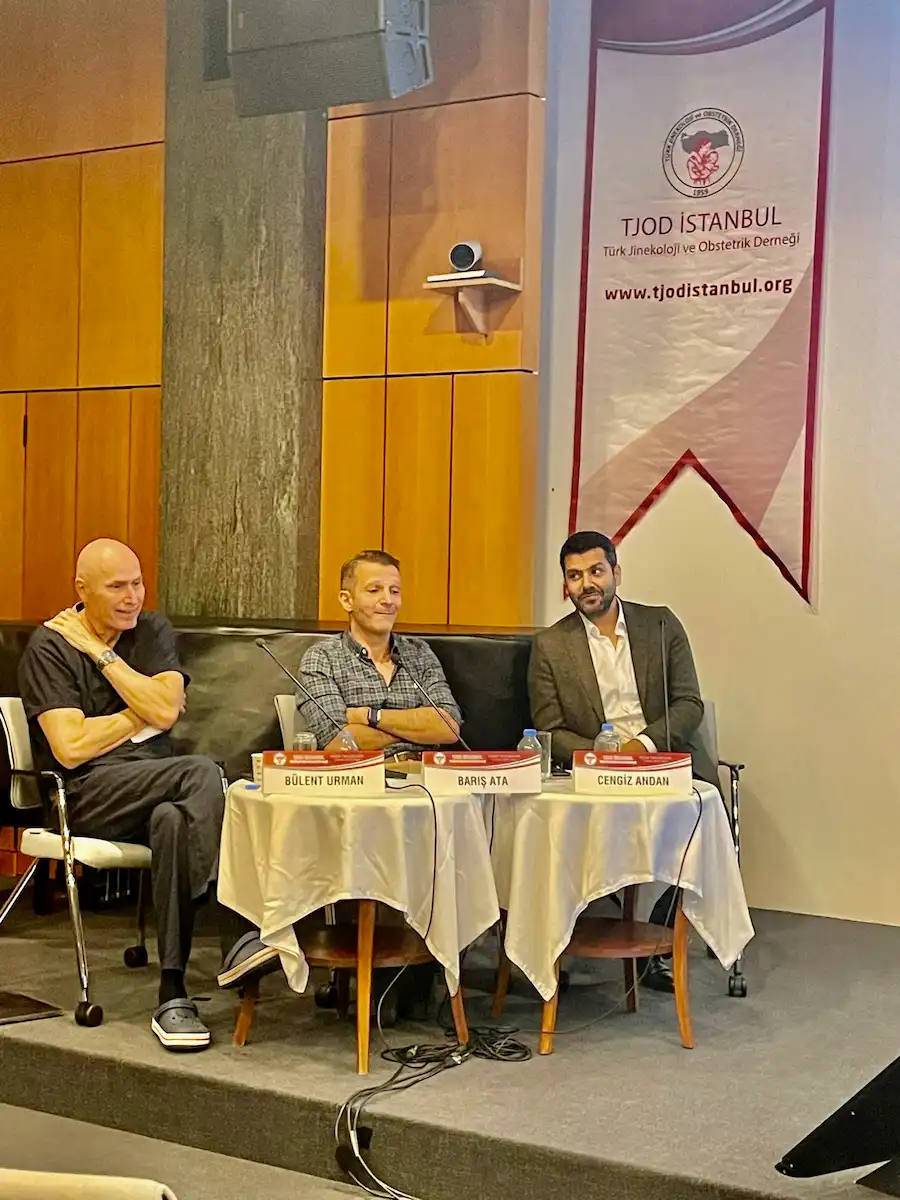
Doç. Dr. Cengiz Andan

Online Second Opinion
Skip to content

Second Opinion · Ovarian Cyst Decisions

“Complex Ovarian Cyst”: A Description Waiting for a Diagnosis

Did one word on your report change the temperature of everything — “complex” — followed by markers, referrals, and a fear no one quite named? Here is what the word technically means: not simple — anything beyond a plain fluid-filled sac. That definition sweeps in hemorrhagic functional cysts, endometriomas and dermoids — benign entities with recognizable signatures — alongside the genuinely indeterminate masses that earn escalation. The word starts the work; it does not conclude it. You can send your scans via WhatsApp for review by Assoc. Prof. Dr. Cengiz Andan.

The online consultation does the work the word demands: reading your cyst's specific features against the recognized benign signatures — because a large share of “complex” cysts are masqueraders with textbook appearances — grading what remains genuinely indeterminate by the criteria that actually stratify risk, placing markers in their honest, limited role, and sequencing the work-up so that decisions follow characterization rather than fear. The review follows the assessment approach of the Assoc. Prof. Dr. Cengiz Andan Clinic in Nişantaşı, Şişli, Istanbul.

Fast response, fast appointment: once your reports arrive on WhatsApp, your request is reviewed promptly and your online consultation is scheduled at the earliest suitable time.

  • What “complex” actually covers
  • The features that stratify risk
  • The benign masqueraders
  • From description to decision, properly

Online second opinion

Online Second Opinion with Assoc. Prof. Dr. Cengiz Andan

If you would like a specialist second opinion about the diagnosis, treatment or surgery proposed for ““Complex Ovarian Cyst”: A Description Waiting for a Diagnosis”, your ultrasound scans, MRI results, medical reports and other documents can be reviewed in detail by Assoc. Prof. Dr. Cengiz Andan.

During the online second-opinion consultation, our doctor:

  • Reviews your ultrasound scans, MRI results and other tests in detail.
  • Medically assesses the treatment or surgery that has been recommended to you.
  • Explains alternative treatment options when they are appropriate for your case.
  • Answers your questions in detail during a one-to-one video consultation.

There is no predetermined fixed time limit for the online consultation. The consultation ends after all submitted reports and test results have been reviewed, your questions have been answered and the doctor has completed the necessary explanations. The aim is not to fill a fixed appointment time, but to provide the information you need to understand your condition, treatment options and next steps.

Support also continues after the consultation. For one month after the online consultation, you may send follow-up questions through WhatsApp about the condition and treatment discussed during the appointment and receive written consultation support at no additional charge.

You can watch a short example of how the online second-opinion consultation works in the video beside this text.

Message us on WhatsApp for an online consultation
Online second-opinion video with Assoc. Prof. Dr. Cengiz Andan

This video shows a short example of an online video consultation between the doctor and a patient.

The situation you are actually in

Between “complex” and any decision stands one job: turning a description into a characterization.

Ultrasound reports describe; characterization interprets. The interpreting toolkit is established: pattern recognition first — hemorrhagic cysts, endometriomas and dermoids each carry near-signature appearances an experienced reader identifies confidently; feature stratification second — wall thickness, septations, solid components, papillary projections and blood flow, weighed by criteria refined across decades; escalation third — MRI for the genuinely indeterminate, expert referral for the genuinely suspicious. Most complex cysts resolve into named benign entities somewhere along this pathway. The ones that do not have earned their escalation honestly — which is precisely the system working.

Question 1

Does your cyst wear a benign signature?

Hemorrhagic functional cysts show their lace-like clot patterns; endometriomas their ground-glass uniformity; dermoids their characteristic bright echoes. Each signature, confidently read, converts “complex” into a named diagnosis with its own calm pathway. The review reads yours against all three.

Question 2

If genuinely indeterminate — what do the features weigh?

The stratifying features are specific and unequal: thin septations weigh little; solid components with blood flow weigh much; papillary projections count by number and character. The review grades your report's actual findings against the criteria — replacing the word's blanket anxiety with the features' specific verdict.

Question 3

What is the right next test — and what would be excess?

A signature-bearing cyst may need only a follow-up scan; an indeterminate one earns MRI; a feature-heavy one earns expert referral with markers in context. Each level has its honest trigger. The review names yours — protecting you equally from under-work-up and from the escalation spiral.

What should you send?

The reports that carry this decision

Feature-reading needs the report's exact language — and the images themselves where possible.

  • The ultrasound report in its complete wording — every adjective matters
  • The image files themselves, if obtainable — signatures live in pictures
  • The cyst's size and the description of any solid parts or septations
  • Blood-flow findings, if the report mentions them
  • Tumor markers if drawn — CA-125 and others, with dates
  • Your age and menopausal status — the criteria's anchor variable
  • Any previous scans of the same ovary — behavior over time
  • Your symptoms and cycle context at the scan's timing

Why markers follow imaging, not the reverse

CA-125 beside a complex cyst answers less than everyone hopes — in both directions.

In cycling women the marker rises with endometriosis, fibroids, infection and menstruation itself — making mild elevations common noise beside benign masqueraders — while some genuinely concerning masses leave it normal. Its honest utility concentrates after menopause and within combined risk assessments, as one input among features. A work-up steered primarily by the marker has the sequence inverted; the review restores imaging to the front.

The review examines the whole picture: the benign signatures checked first, the stratifying features graded by real criteria, the markers placed in their honest supporting role, your age anchoring every threshold — and the next step matched to the characterization, not the word.

What the review looks for

What the feature-reading most often finds

In complex-cyst reviews, these are the resolutions the pathway most commonly reaches.

  • A hemorrhagic functional cyst — signature readable, follow-up scan the whole answer
  • An endometrioma wearing its ground-glass uniform — a named, managed entity
  • A dermoid's characteristic echoes — benign, with its own surgical conversation
  • Thin septations alone — the feature that sounds worse than it weighs
  • Solid components with flow — the finding that genuinely escalates
  • A report too vague to stratify — where re-imaging precedes everything
  • A postmenopausal complex cyst — thresholds properly lowered across the board
  • Features meeting referral criteria — where the expert pathway is the honest next step

From description to decision

The characterization pathway, step by step

The table shows the pathway the word “complex” should trigger — the consultation walks your cyst through it.

StepWhat it resolvesWhat the second opinion clarifies
Signature readingThe benign masqueraders, namedWhether your features match a recognized benign pattern.
Feature stratificationThe indeterminate, gradedWhat your specific findings weigh on the real criteria.
Interval re-scanThe transient, clearedWhether time is a legitimate diagnostic tool for your pattern.
MRI characterizationThe stubborn, described in tissue detailWhen the next imaging level genuinely earns its place.
Expert referralThe feature-heavy, properly escalatedWhich findings trigger it — and what the pathway then looks like.
Assoc. Prof. Dr. Cengiz Andan reading the features of a complex ovarian cyst
Turning a description into a characterization in an online consultation.

Doctor's approach

How is a complex cyst evaluated in the online consultation?

In the online consultation with Assoc. Prof. Dr. Cengiz Andan, the pathway runs in its designed order: signatures checked before anxiety, features graded before decisions, markers weighted honestly, and the next step — re-scan, MRI, or referral — named with its trigger, so the word that raised the temperature is replaced by a characterization that sets it correctly.

Where the features genuinely meet the escalation criteria — the solid components, the flow, the postmenopausal context that changes thresholds — the pathway continues with its proper seriousness on the gynecologic cancer suspicion second opinion page.

And where the characterization lands on a named benign entity with its own decisions ahead — an endometrioma, a dermoid, a persistent simple cyst — the whole decision tree is reviewed on the ovarian cyst second opinion page.

Frequently asked questions

The questions patients actually ask about complex cysts

Does 'complex' mean they think it's cancer?

No — it means the cyst is not a plain fluid sac, a category that includes several entirely benign entities alongside the minority that need escalation. Statistically, most complex cysts in premenopausal women resolve into hemorrhagic functional cysts, endometriomas or dermoids: named, benign, manageable. The word is the start of a sorting process, and the sorting — not the word — carries the answer.

What features would actually be worrying?

The stratifying criteria concentrate on a few findings: solid tissue components, especially with detectable blood flow; papillary projections growing from the wall; thick irregular septations; and size combined with these. Isolated thin septations or the debris of an old bleed weigh far less than their sound. Your report's exact wording, read against these criteria, produces a specific verdict rather than a general fear — which is the review's central deliverable.

Should I just have it removed to be sure?

Surgery for certainty has its place — after the non-invasive pathway has been used, not instead of it. Signature reading, interval scanning and MRI resolve most complex cysts without an operation, and each avoided surgery is an ovary spared its toll. Where features genuinely defeat characterization, diagnostic surgery becomes the honest step — planned to the standard the open question deserves. The review tells you which side of that line you occupy.

My CA-125 is elevated. Doesn't that settle it?

It rarely settles anything alone — in cycling women the marker responds to endometriosis, fibroids, infection and the cycle itself, producing elevations beside completely benign findings, while its genuine utility concentrates postmenopausally and in combined assessments. An elevated value beside an endometrioma-signature cyst is practically expected. The review places your number in its honest context rather than letting it steer the work-up.

How urgent is all this? Can characterization wait weeks?

For most complex cysts, the pathway's timescale is weeks and is designed that way — interval scans deliberately use time as a diagnostic tool, and MRI scheduling within a reasonable window loses nothing. The exceptions announce themselves: acute severe pain needs same-day local care for torsion or rupture, and feature-heavy postmenopausal findings deserve prompt rather than leisurely escalation. The review sets your specific tempo.

Which documents do you need for this second opinion?

The ultrasound report in its complete wording — the features are the material — the images themselves if you can obtain them, markers with dates, your age and cycle context, and any previous scans of the ovary. If the report is too vague to stratify, the review's first output is exactly what the repeat study must describe.

What happens if the review finds my cyst needs the expert pathway?

Then you enter it characterized rather than merely worried: the specific triggering features named in writing, the appropriate referral level identified, markers and imaging assembled in the order the pathway expects — arriving as a prepared file rather than a frightened question. Proper escalation is the system working; the review makes sure yours works properly.

One word raised the temperature — the features can set it correctly: send your report.

Write to us directly on WhatsApp and send your scan reports, images if possible, and markers. The online second opinion, provided through the Assoc. Prof. Dr. Cengiz Andan Clinic in Nişantaşı, Şişli, Istanbul, checks your cyst against the benign signatures, grades its features by the criteria that actually stratify, and returns the characterized answer — with the right next step, at the right tempo.

Send your reports and request a consultation
Doç. Dr. Cengiz Andan
Doç. Dr. Cengiz ANDANOnline
Merhaba.
Size nasıl yardımcı olabilirim?