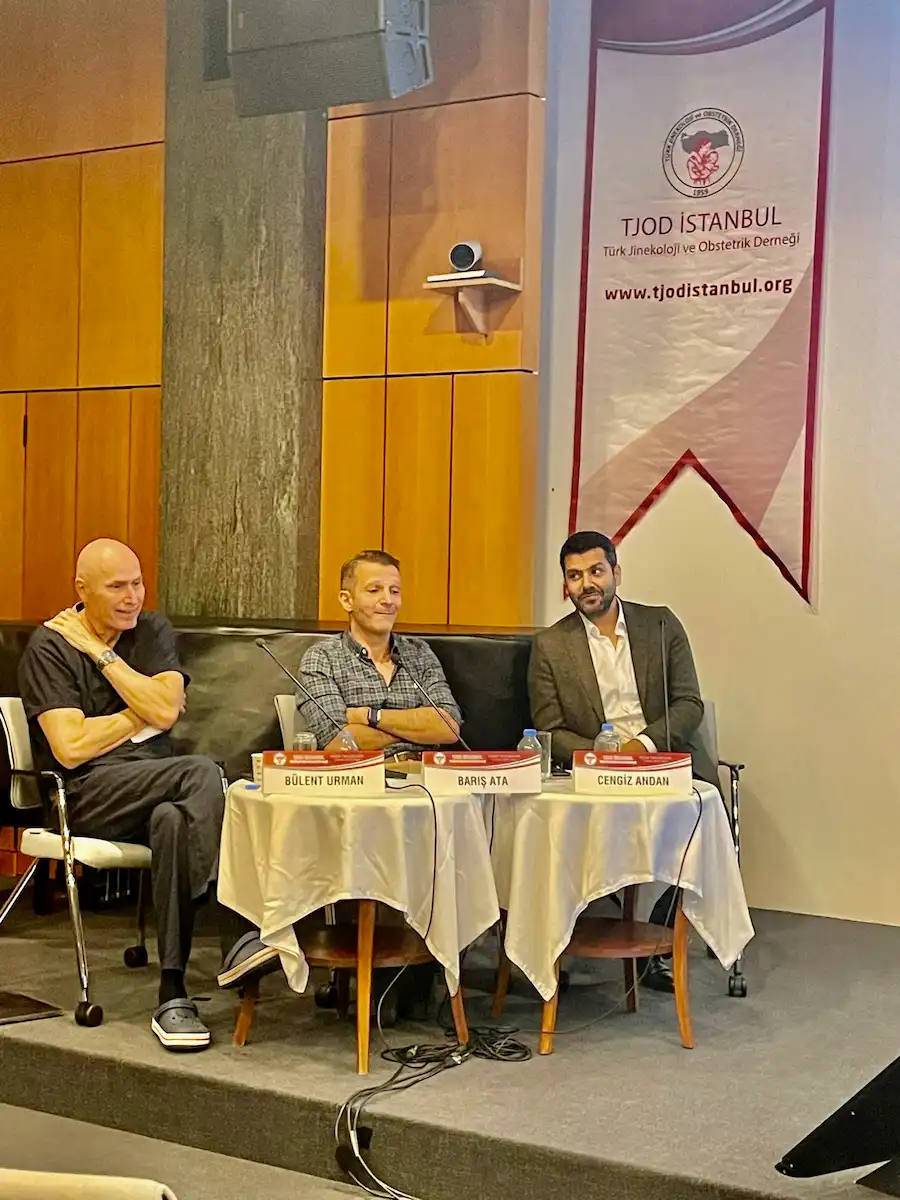
Doç. Dr. Cengiz Andan

Online Second Opinion
Skip to content

Second Opinion · Hysterectomy Decisions

Alternatives to Hysterectomy: A Second Opinion on Keeping Your Uterus

Do you want to keep your uterus — and keep hearing that removal is the practical answer? Wanting to preserve an organ is not sentimentality; it is a legitimate preference that modern gynecology can often accommodate. Which alternatives genuinely exist depends on one thing: the diagnosis behind your recommendation. You can send your reports via WhatsApp for review by Assoc. Prof. Dr. Cengiz Andan.

There is no single alternative to hysterectomy — there is a map. Fibroids, adenomyosis, heavy bleeding and prolapse each open different uterus-preserving paths, with different success patterns and different limits. The online consultation places your findings on that map and tells you honestly which paths are realistic for you, which are unlikely to hold, and what each would ask of you in follow-up. The review follows the assessment approach of the Assoc. Prof. Dr. Cengiz Andan Clinic in Nişantaşı, Şişli, Istanbul.

Fast response, fast appointment: once your reports arrive on WhatsApp, your request is reviewed promptly and your online consultation is scheduled at the earliest suitable time.

  • Alternatives mapped by diagnosis
  • What preserving the uterus requires
  • Where alternatives reach their limits
  • An honest map, not a promise

Online second opinion

Online Second Opinion with Assoc. Prof. Dr. Cengiz Andan

If you would like a specialist second opinion about the diagnosis, treatment or surgery proposed for “Alternatives to Hysterectomy: A Second Opinion on Keeping Your Uterus”, your ultrasound scans, MRI results, medical reports and other documents can be reviewed in detail by Assoc. Prof. Dr. Cengiz Andan.

During the online second-opinion consultation, our doctor:

  • Reviews your ultrasound scans, MRI results and other tests in detail.
  • Medically assesses the treatment or surgery that has been recommended to you.
  • Explains alternative treatment options when they are appropriate for your case.
  • Answers your questions in detail during a one-to-one video consultation.

There is no predetermined fixed time limit for the online consultation. The consultation ends after all submitted reports and test results have been reviewed, your questions have been answered and the doctor has completed the necessary explanations. The aim is not to fill a fixed appointment time, but to provide the information you need to understand your condition, treatment options and next steps.

Support also continues after the consultation. For one month after the online consultation, you may send follow-up questions through WhatsApp about the condition and treatment discussed during the appointment and receive written consultation support at no additional charge.

You can watch a short example of how the online second-opinion consultation works in the video beside this text.

Message us on WhatsApp for an online consultation
Online second-opinion video with Assoc. Prof. Dr. Cengiz Andan

This video shows a short example of an online video consultation between the doctor and a patient.

The decision you are actually facing

The alternative to a hysterectomy is not one treatment — it is the right treatment for the diagnosis that made removal seem necessary.

When patients search for alternatives, they usually meet a shapeless list: medication, IUD, ablation, embolization, myomectomy. The list means little until it is sorted by your diagnosis — because each alternative answers one problem well and others poorly. A second opinion does that sorting: it starts from what your uterus actually has, and returns the shortlist that genuinely applies, ranked by how well it fits your findings, your symptoms and your plans.

Question 1

What is the diagnosis behind the recommendation?

Fibroids, adenomyosis, bleeding without structural cause and prolapse each have their own alternative paths. The review confirms your diagnosis first — because an alternative aimed at the wrong problem fails by design.

Question 2

Which alternatives fit your specific findings?

A submucosal fibroid invites hysteroscopic resection; diffuse adenomyosis narrows the surgical options but not the hormonal ones; prolapse opens repair paths that never touch the uterus. Your imaging decides the shortlist — not the general list.

Question 3

What does each alternative honestly cost?

Preserving the uterus usually means accepting follow-up, possible recurrence and sometimes a second procedure later. These are fair prices for many patients — but they belong in the decision openly, so the alternative is chosen with clear eyes.

What should you send?

The reports that carry this decision

The map of your alternatives is drawn from your diagnosis and imaging. Send what defines both.

  • Ultrasound report: fibroids, adenomyosis, endometrium, ovaries
  • Pelvic MRI report and images, if available
  • The doctor's letter naming the proposed hysterectomy and its reason
  • Notes on your main symptom: bleeding pattern, pain, pressure
  • Recent blood work: hemoglobin and iron status
  • Treatments already tried — medication, IUD — and their effect
  • Previous uterine procedures or operations
  • A short summary of your age, fertility plans and priorities

Why honesty is the service here

A real second opinion will also tell you when the alternatives are unlikely to hold.

Some findings genuinely narrow the field: diffuse severe adenomyosis, a uterus distorted by many large fibroids, or advanced multi-compartment prolapse can make preservation a short-lived victory. When that is the honest reading of your imaging, you deserve to hear it plainly — with the reasons — rather than to spend years discovering it through failed treatments.

The recommendation is reviewed as a whole: your confirmed diagnosis, the alternatives your imaging genuinely allows, the follow-up each would require, your fertility plans and your priorities — an honest map, not a menu.

What the review looks for

Findings that shape your map of alternatives

These are the findings that most often decide which alternatives are realistic — and which are not.

  • A submucosal fibroid where hysteroscopic resection may resolve the bleeding
  • A fibroid pattern where myomectomy preserves the uterus realistically
  • Bleeding without structural cause — where the IUD and medication lead the list
  • Adenomyosis where hormonal control is realistic and surgery can wait
  • A prolapse where pessary or uterus-preserving repair fits
  • Fertility plans that reorder the entire list
  • Age near menopause — where bridging beats operating
  • Findings that honestly narrow the field — named plainly, with reasons

The map, by diagnosis

Alternatives to hysterectomy, sorted by what your uterus actually has

The table sorts the main alternatives by diagnosis — the consultation marks which rows apply to your findings and in which order they are worth trying.

DiagnosisUterus-preserving alternativesWhat the second opinion clarifies
FibroidsHysteroscopic resection, myomectomy, medication, embolization in selected casesWhich option matches your fibroid map — location, size, number — and your fertility plans.
AdenomyosisHormonal treatment, levonorgestrel IUD, adenomyomectomy in focal diseaseWhether symptom control is realistic and whether focal disease opens a surgical preserving path.
Heavy bleedingMedication, levonorgestrel IUD, hysteroscopic treatment, ablationWhether the cause was found — the alternative is chosen by the cause, not the symptom.
ProlapsePelvic floor therapy, pessary, uterus-preserving repairWhether support can be rebuilt with the uterus in place for your compartments and stage.
Combined findingsAn individually sequenced planIn which order the problems should be addressed — and which single treatment covers several.
Assoc. Prof. Dr. Cengiz Andan mapping the alternatives to a recommended hysterectomy
Mapping the realistic alternatives in an online consultation.

Doctor's approach

How are your alternatives evaluated in the online consultation?

In the online consultation with Assoc. Prof. Dr. Cengiz Andan, the work runs in the honest direction: first your diagnosis is confirmed against your imaging, then the general list of alternatives is cut down to the ones your findings genuinely support, and each survivor is weighed for durability — how likely it is to still be working for you in several years, not just next month.

If the map shows that a hysterectomy remains the most sensible path, the consultation says so and explains why — and the decisions inside that operation are reviewed on the hysterectomy second opinion page.

When fibroids are the diagnosis behind your recommendation — the most common case by far — the dedicated uterine fibroids second opinion reviews the fibroid treatment question in its full depth.

Frequently asked questions

The questions patients actually ask about alternatives

Is wanting to keep my uterus a medically valid reason, or just emotional?

It is valid on both counts. Organ preservation is a recognized treatment goal in modern gynecology, and your preference legitimately shapes the plan wherever the findings allow it. What the review adds is the boundary: where your imaging supports preservation, and where insisting on it would trade one operation for years of failing treatments.

My doctor says the alternatives just delay the inevitable. Is that true?

Sometimes — and sometimes it describes a practice pattern more than your uterus. For certain findings, alternatives genuinely bridge to menopause or resolve the problem outright; for others, recurrence makes eventual surgery likely. The review reads your specific findings and tells you which of those two stories your imaging actually supports.

What about uterine artery embolization for my fibroids?

Embolization can shrink fibroids and reduce bleeding for selected patients without surgery, but it has defined limits: fertility questions remain debated, certain fibroid types respond poorly, and pain after the procedure is real. Whether it belongs on your shortlist is an imaging question — the review answers it for your fibroid map rather than in general.

Can I just wait until menopause solves it?

For some findings, yes — fibroids typically shrink and bleeding settles after menopause, and bridging the remaining years with symptom control is a legitimate strategy. Its feasibility depends on your age, your symptom severity and your anemia. The review calculates whether the bridge is realistically walkable in your case.

If I choose an alternative and it fails, have I lost anything?

Usually time and, with some options, a procedure — which is why the review weighs durability up front. For most benign findings, a failed alternative does not worsen the eventual surgery. The exceptions are specific and the review names them, so any risk you take is taken knowingly.

Which documents do you need for this second opinion?

Your ultrasound and any MRI reports, the doctor's letter with the proposed hysterectomy and its reason, your treatment history, recent blood work, and a short note on your fertility plans and priorities. The diagnosis behind the recommendation is the key piece — everything else sorts around it.

What happens if the second opinion concludes the alternatives are weak in my case?

Then you proceed to surgery without the doubt that would otherwise follow you into it. The consultation explains exactly why the alternatives fall short for your findings — and turns to making the operation itself as good as it can be: type, route, cervix and ovaries.

Before you accept that there is no alternative: send your reports and see your actual map.

Write to us directly on WhatsApp and send the reports you already have. The online second opinion, provided through the Assoc. Prof. Dr. Cengiz Andan Clinic in Nişantaşı, Şişli, Istanbul, maps which uterus-preserving alternatives your diagnosis genuinely allows, what each would require of you, and where the honest limits lie.

Send your reports and request a consultation
Doç. Dr. Cengiz Andan
Doç. Dr. Cengiz ANDANOnline
Merhaba.
Size nasıl yardımcı olabilirim?