Should an Ovarian Cyst Be Removed Before IVF?
Before IVF, the question of removing a cyst has a real tension in it: removal can help in some ways but cost ovarian reserve in others. The answer is genuinely individualized.
Short answer. It depends — the decision is individualized. Some cysts may warrant removal before IVF, but there's a crucial trade-off: surgery can lower ovarian reserve by removing or affecting healthy ovarian tissue, which matters greatly for IVF. So the decision carefully weighs potential benefit against cost to reserve, considering the cyst type, size, and whether it would interfere with the IVF cycle. Many cysts — especially functional ones — don't need removal before IVF. Where removal is considered, protecting reserve is central.

The trade-off at the heart of the decision
The decision to remove a cyst before IVF carries a genuine tension. On one hand, certain cysts might interfere with the IVF process or warrant removal on their own merits. On the other, ovarian surgery — particularly for cysts like endometriomas — can reduce ovarian reserve by removing or affecting healthy ovarian tissue, and reserve is precisely what IVF depends on. So removing a cyst to help IVF could, in some cases, harm the very thing IVF needs. This trade-off is the heart of the decision within ovarian cyst care: it is not simply whether the cyst can be removed, but whether removing it helps or harms the overall goal of a successful IVF outcome, weighed case by case.
Source: RCOG — ovarian surgery and reserve before IVF.
When removal may be considered
Certain situations tip toward removing a cyst before IVF.
| Situation | Why removal may be considered |
|---|---|
| A cyst that would interfere with the IVF cycle | May warrant removal to allow the process |
| A large or symptomatic cyst | May need addressing on its own merits |
| Genuine concern about the cyst's nature | May prompt assessment and removal |
| A cyst where benefit outweighs reserve cost | The balance favours removal |
Learn more: Can an Ovarian Cyst Prevent Pregnancy?
Source: ACOG — adnexal cysts and assisted reproduction.
When cysts are left alone before IVF
Just as often, the right decision is to leave a cyst alone before IVF. Functional cysts, being part of the normal cycle, frequently don't need removal and may resolve on their own; operating on them would risk reserve for no benefit. Even for some persistent cysts, the cost to ovarian reserve from surgery can outweigh any advantage, particularly where the cyst wouldn't interfere with the IVF cycle — in which case proceeding with IVF without removing the cyst is often the wiser course, sometimes via ovary-sparing laparoscopic ovarian cyst surgery only if removal is genuinely warranted. Where an endometrioma is involved, the decision is especially careful, since these cysts and their surgery both carry reserve implications, and the effect of removal on reserve is a specific consideration, as covered in whether cyst removal lowers AMH. The balanced message is that removing a cyst before IVF is neither routinely needed nor routinely avoided: it is an individualized decision that weighs the potential benefit of removal against its cost to ovarian reserve, with many cysts left alone and removal reserved for where it genuinely helps the overall goal — always with protecting reserve, the foundation of IVF success, kept firmly in view.
| Cyst situation | Usual approach before IVF |
|---|---|
| Functional cyst | Often left alone; may resolve |
| Cyst that won't interfere with IVF | Often proceed without removal |
| Endometrioma | Especially careful, weighing reserve |
Patients also ask: Does Cyst Removal Lower Your AMH?
At our clinic in Türkiye, whether to remove a cyst before IVF is decided case by case — weighing any benefit against the cost to ovarian reserve, leaving many cysts alone, and protecting reserve as the foundation of IVF success.
Second opinion. If cyst removal has been raised before your IVF and you want the reserve trade-off weighed, an independent review can help; you can request an online second opinion for an ovarian cyst.
How the calculation is actually made
Four variables dominate. Reserve: a woman with low AMH can afford little tissue loss, tipping strongly against surgery. Size: cysts beyond roughly 4 to 5 cm interfere more with egg collection access. Symptoms: pain that affects daily life is an indication in its own right. And diagnostic certainty: a cyst that cannot be confidently classified must be resolved before treatment proceeds.
Weighing these together explains why two women with identical scans receive different advice — and why the answer should always be explained rather than asserted.
Timing between surgery and the IVF cycle
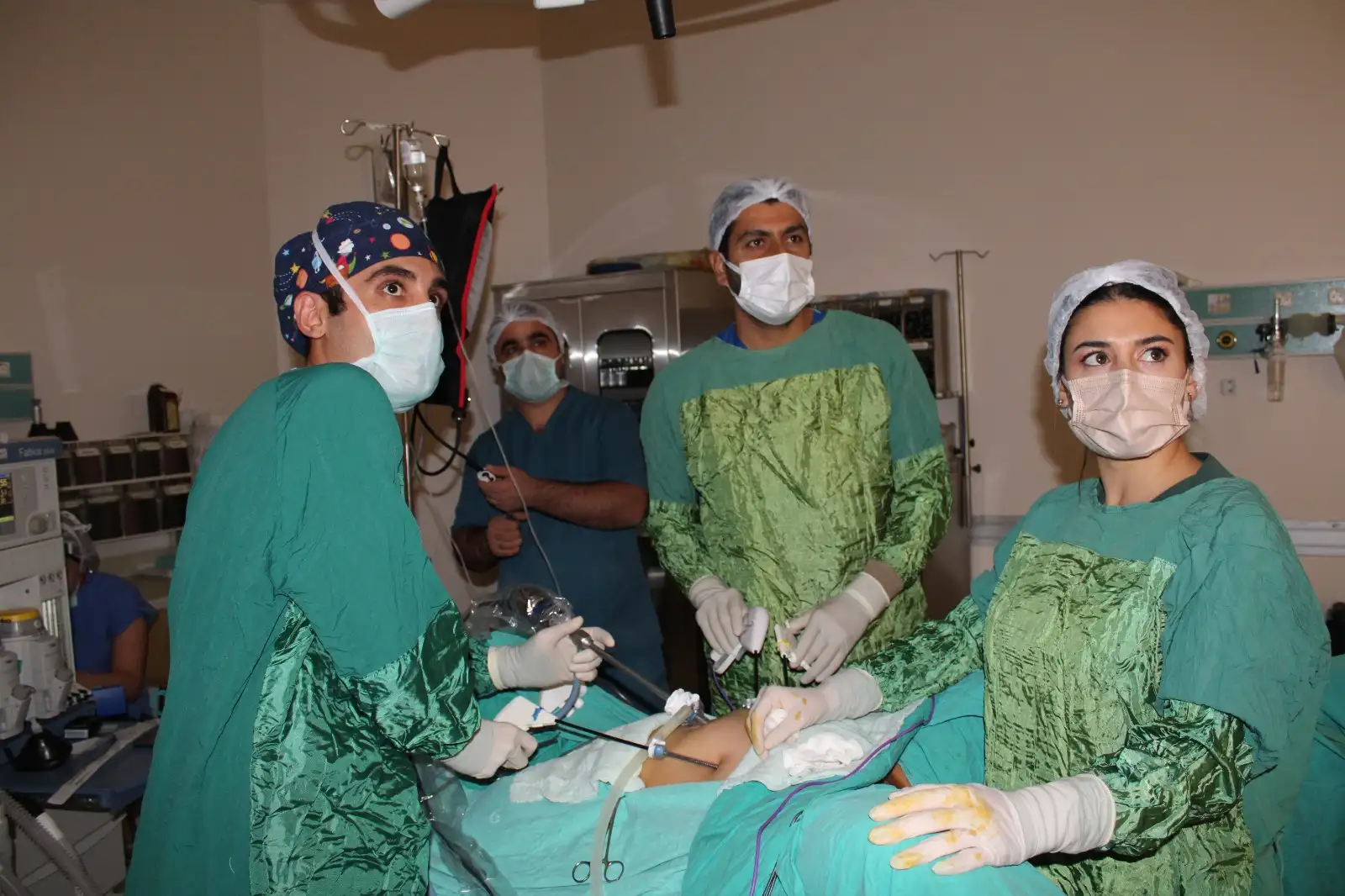
Where removal is chosen, most centres allow the ovary two to three months to recover before stimulation, and repeat AMH testing after that interval gives a realistic picture rather than the artificially low value seen immediately post-operatively.
For women with diminished reserve, an increasingly common strategy reverses the order: collect and freeze eggs or embryos first, then operate. It preserves the material that surgery might otherwise cost, and it is worth raising explicitly if nobody has.
Alternatives when excision is unattractive
Between operating and doing nothing sit several options. Aspiration of an endometrioma before egg collection is used in some protocols, accepting recurrence in exchange for access. Hormonal suppression can reduce pain and inflammation without touching the ovary. Sometimes the cyst is simply worked around during collection, with the needle path planned to avoid it.
Each choice trades something, and the reserve cost that drives the whole discussion is quantified in does cyst removal lower AMH.
Frequently Asked Questions
Usually not. Many cysts are simply monitored through stimulation, and egg collection is planned around them. Cancellation is uncommon and generally relates to very large or suspicious cysts.
The evidence is mixed. Endometriomas are associated with lower egg yield in some studies, but removing them does not reliably improve live birth rates and does cost reserve, which is why routine excision before IVF is no longer recommended.
It is deliberately avoided where possible, particularly with endometriomas, because of infection risk and contamination of the collected fluid. Where puncture is unavoidable, antibiotic cover is used.
Often it is left in place unless large or awkwardly positioned, since dermoids do not affect egg quality or implantation. Access for collection is the practical consideration rather than fertility itself.
Then it is resolved before proceeding. Starting a treatment cycle with an uncharacterised mass is avoided, and MRI or surgical removal comes first.
Considerably. At 41 with limited reserve, months spent on surgery and recovery carry a real cost that the same operation would not carry at 31. Time is part of the calculation, not a side note.
Before IVF, removing a cyst can be the right move or exactly the wrong one, because the same surgery that clears a cyst can cost the ovarian reserve IVF relies on. So I weigh it case by case — leaving many cysts alone, especially functional ones, and removing only where the benefit genuinely outweighs what it costs the ovary.