Can a Large Fibroid Be Removed Laparoscopically?
You were told the fibroid measures 10 centimeters and that “it may be too big for keyhole surgery.” Is size really the deciding line?
Short answer. Often, yes — large fibroids, including those around 10 cm, can be removed laparoscopically by teams experienced in advanced keyhole surgery. Size is only one input: the fibroid's location, the number of fibroids and a safe extraction route matter just as much.
Is size really the limit for keyhole surgery?
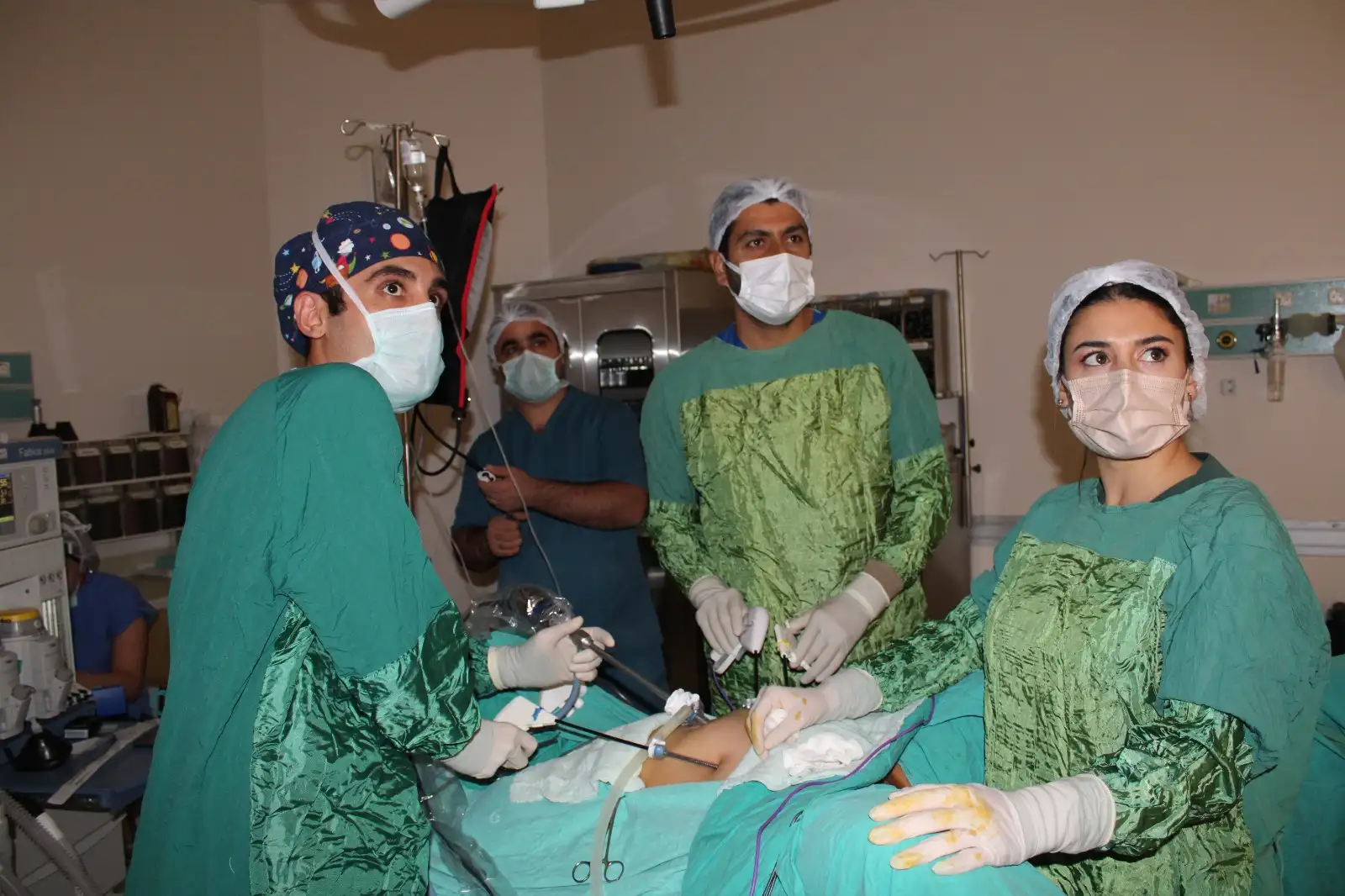
Centimeters alone do not close the laparoscopic door. In uterine fibroid surgery, what determines feasibility is whether the camera and instruments have working space, whether the fibroid's plane can be developed safely, and whether the uterine wall can be sutured securely afterwards. A well-positioned large fibroid can be an easier laparoscopic case than several small, deep ones.
Source: ACOG — uterine leiomyomas: surgical management.
What makes a large fibroid suitable for laparoscopy?
Surgeons weigh a short list of anatomical questions before choosing the route. When most answers point the same way, keyhole removal is a realistic plan even for a bulky fibroid.
| What is assessed | Why it matters |
|---|---|
| Location in the uterus | Fibroids on the front or top wall are usually easier to reach than deep posterior ones |
| Working space in the abdomen | The uterus plus fibroid must still leave room for instruments |
| Number of additional fibroids | One dominant fibroid is simpler than many scattered ones |
| Suturing access | The defect must be repairable in layers through the keyhole route |
Learn more: Multiple Fibroids: Can the Uterus Be Saved?
Source: RCOG — laparoscopic surgery in gynaecology.
How does a 10 cm fibroid come out through small incisions?
Removal and extraction are two separate steps. The fibroid is first freed from the uterus; it is then reduced into smaller pieces inside a containment bag, or delivered through a small dedicated incision. Both techniques are designed so tissue is retrieved in a controlled, contained way.
| Extraction method | How it works |
|---|---|
| Contained in-bag morcellation | The fibroid is placed in a retrieval bag and divided within it |
| Mini-laparotomy extraction | A short incision is opened only for retrieval at the end |
| Conversion to open surgery | Chosen upfront or during surgery when safety requires it |
Patients also ask: Gas Pain After Laparoscopic Myomectomy
At our practice in Türkiye, we decide the route on the MRI and the anatomy — not on the centimeter figure alone — and we explain before surgery which extraction method is planned and why.
Second opinion. If you have been told your fibroid is too large for laparoscopy and you would like an independent surgical review of your imaging, you can request an online second opinion for uterine fibroids.
How is a large fibroid prepared before surgery?
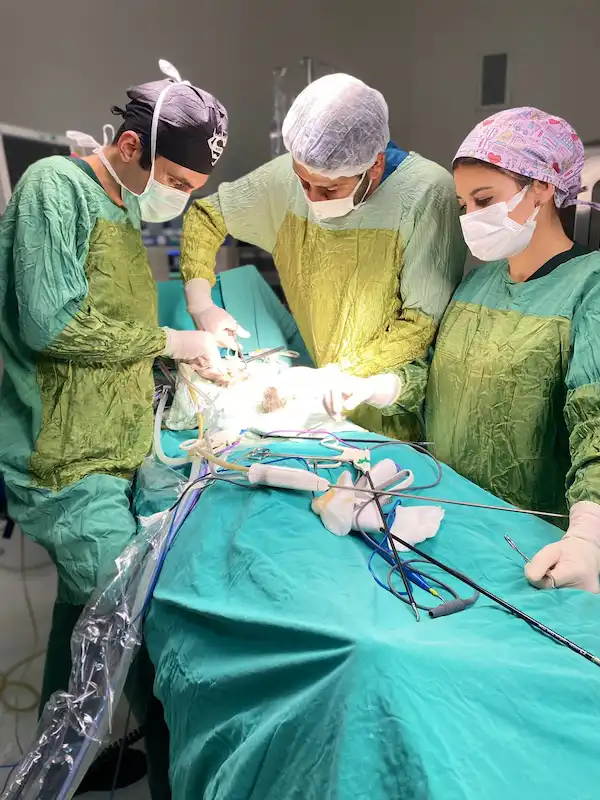
Part of what makes a 10 cm fibroid operable through small incisions happens before anyone enters the operating room. If heavy bleeding has drained the iron stores, the count is rebuilt first — with intravenous iron when tablets are too slow. In selected cases a short course of hormone injections shrinks the fibroid beforehand; a volume reduction in the range of 30-50% over about three months can turn a borderline case into a comfortable laparoscopic one and reduces bleeding during the dissection. Finally, up-to-date MRI is worth its cost with bulky fibroids: it defines the plane between fibroid and healthy muscle, flags any suspicion of atypical tissue, and lets the extraction route be chosen before the first incision rather than during it.
How does recovery compare with open surgery?
The recovery difference is the main prize of keeping a big fibroid laparoscopic. After keyhole removal most women are walking the same evening, home within one to two days, and back at a desk in about two weeks; an open operation for the same fibroid typically means a longer hospital stay and a four-to-six-week return. Wound complications and adhesion formation are also less frequent when the abdomen is not opened widely — a detail that matters to anyone who may want pregnancy or further surgery later. None of this makes open surgery a failure: when anatomy demands it, a well-performed open myomectomy remains a good operation. The point is only that size, by itself, should not be what forfeits the faster recovery.
Which risks are specific to size?
Honest counseling for a large fibroid names three size-related issues. Bleeding risk rises with fibroid volume, which is exactly why vessel-constricting medication and, where useful, preoperative shrinkage are built into the plan. Conversion to open surgery — deciding mid-operation that the keyhole route is no longer the safe one — happens in a small percentage of cases and is a safety decision, not a complication. And the uterine repair after a deep 10 cm removal is substantial, which is why a healing interval before pregnancy and a discussion about delivery mode belong in the same consultation as the surgery itself. A team that raises these three points unprompted is a team that has removed many large fibroids.
Frequently Asked Questions
No universal cut-off exists. Fibroids of 10 cm and beyond are removed laparoscopically in experienced centers. Feasibility is judged on location, working space and a safe extraction route — the centimeter figure is an input to that judgment, not a verdict.
Not inherently. In practiced hands the laparoscopic route offers less blood loss and fewer wound problems than opening the abdomen. What genuinely changes risk is team experience with large fibroids — a fair question to ask openly before choosing where to have surgery.
It doesn't — it is divided first. After being freed from the uterus, the fibroid is placed in a containment bag and reduced into pieces inside it, or delivered through a short dedicated incision. Either way, retrieval is controlled and contained.
Yes, in a small minority of cases. If visibility, bleeding or anatomy makes the closed route unsafe, converting is the responsible call. Ask your surgeon when that decision would be made and how often it has happened in their large-fibroid cases.
Sometimes. A three-month hormone course can shrink volume by roughly 30-50%, easing the dissection and correcting anemia beforehand. It is a case-by-case decision: the injections have menopause-like side effects, so they are used with a purpose, not routinely.
Generally, yes — home in one to two days and desk work in about two weeks, versus four to six weeks after an open operation. Individual healing varies, but the gap is consistent enough that it is worth protecting when the anatomy allows.
A large fibroid does not automatically mean a large incision. What I study on the MRI is not just the centimeters but where the fibroid sits and how it can be extracted safely; when those conditions are met, I prefer to keep the surgery closed.