Endometriosis Leg Pain — Is It a Real Symptom?
Leg pain sounds like a job for orthopedics, not gynecology. When it keeps time with the period, the specialty was wrong all along.
Short answer. Yes — it's real, and its timing is the tell. Endometriosis can irritate or involve pelvic nerves — the sciatic nerve most notably — producing leg pain that is often cyclical and one-sided, flaring with the period and easing after. Because leg pain screams orthopedics, it typically tours the wrong specialties for years. The clue that redirects the whole search is simple: pain that keeps rhythm with menstruation is rarely a disc problem.

How endometriosis reaches the leg
The pathway runs through the nerves. Endometriosis in the deep pelvis can lie against — or occasionally involve — the nerves that supply the leg, the sciatic nerve chief among them, along with the sacral nerve roots feeding into it. Disease that irritates or compresses these nerves refers pain down their territory: the buttock, the back of the thigh, sometimes the whole leg. This is a form of deep, sometimes nerve-involving disease, and recognizing that endometriosis has this reach is part of complete endometriosis care — the leg pain is not a coincidence beside the pelvic disease; it can be the pelvic disease, speaking through a nerve.
Source: ESHRE — endometriosis guideline: extrapelvic and nerve involvement.
Why cyclical timing is the key clue
The single feature that separates this from an orthopedic problem is the calendar.
| Feature | What it points to |
|---|---|
| Leg pain flaring with each period | Hormonally driven — the signature of an endometriosis cause |
| One-sided, following a nerve's territory | Nerve irritation rather than a general muscular ache |
| Accompanied by pelvic endometriosis symptoms | A consistent deep-disease picture, not an isolated leg issue |
| Normal back and orthopedic work-ups despite real pain | Redirects the search toward the pelvis |
Learn more: Endometriosis Back Pain and Hip Pain Explained
Source: NHS — endometriosis: less common symptoms.
Why it's missed for years
The delay follows a predictable route. Leg pain sends a woman to orthopedics, physiotherapy or neurology, where the pelvis is not the first suspect and the menstrual pattern may never be asked about. Imaging of the back can be normal — because the problem was never there — which paradoxically prolongs the search rather than ending it. And the cyclical nature, the one detail that would redirect everything, often goes unmentioned because no one thinks to connect a leg to a period. The corrective is a single question that belongs in every unexplained leg-pain history in a menstruating woman: does it come with your period? A yes reroutes the entire investigation toward where the disease actually is.
| Reason it's missed | The corrective |
|---|---|
| Leg pain points to the wrong specialties | Ask whether the pain is cyclical |
| Normal back imaging prolongs the search | A normal spine does not exclude a pelvic nerve cause |
| No one links the leg to the period | Connect the timing — it redirects everything |
Patients also ask: Can Endometriosis Cause Back Pain and Leg Pain?
At our clinic in Türkiye, we ask about the timing of leg and back pain as routinely as we ask about periods — because cyclical nerve pain is one of the disease's most misrouted symptoms.
Second opinion. If you have cyclical leg pain that orthopedic work-ups keep calling normal, an independent review can consider the pelvic cause; you can request an online second opinion for endometriosis.
How rare it is — and how specific
Sciatic nerve involvement by endometriosis is genuinely uncommon, reported in well under 1% of cases, and it favors the right side in most published series. Rarity cuts both ways here. It explains why the diagnosis is rarely considered — most clinicians will see very few cases in a career — but it also makes the cyclical presentation exceptionally specific: pain following a nerve's territory that flares reliably with menstruation has few other explanations. Rare and distinctive is a combination that rewards the person who knows to ask the right question.
How it is actually confirmed
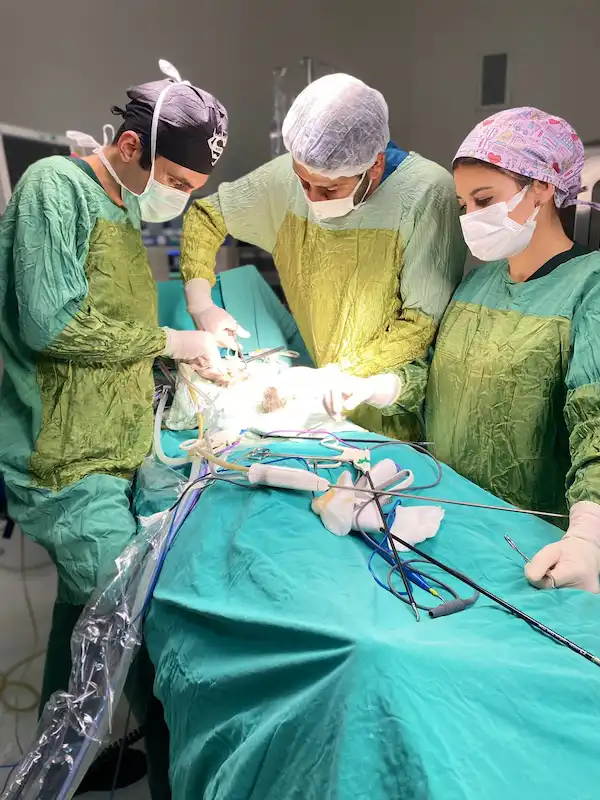
The work-up is targeted once suspicion exists. MRI of the pelvis with attention to the sciatic nerve and sacral plexus is the primary tool, and it requires the radiologist to be told what is being looked for — a standard pelvic protocol may not cover the nerve's course. Nerve conduction studies and electromyography can document nerve involvement, though they do not identify its cause. Spinal imaging is often already normal by this point, and that normality is informative rather than dismissive. Laparoscopy by a team experienced in nerve-involving disease provides definitive assessment.
Why acting early matters here
This is one of the few endometriosis symptoms where delay carries a specific, irreversible cost. Prolonged nerve compression can produce lasting damage — persistent numbness, weakness, or muscle wasting that does not fully recover even after the disease is removed. Reported cases include women who developed foot drop or measurable calf wasting after years of misdirected investigation. Function preserved at the time of surgery is protected; function already lost may not return. That asymmetry is the entire argument for asking the cyclical question early rather than after another year of physiotherapy.
Frequently Asked Questions
Genuinely rare — well under 1% of cases, with a right-sided predominance in most series. That rarity explains the diagnostic delay; the cyclical pattern is what makes it recognizable despite it.
MRI of the pelvis with specific attention to the sciatic nerve and sacral plexus, and the request should say what is being looked for. A standard pelvic protocol may not cover the nerve's course adequately.
Prolonged compression can, producing lasting numbness, weakness or muscle wasting. That risk is why cyclical leg pain deserves prompt investigation rather than years of orthopedic and physiotherapy referrals.
Because the problem was never in your spine. A normal back MRI in someone with cyclical leg pain is informative — it argues for looking in the pelvis rather than repeating spinal imaging.
It can reduce the cyclical flares by quieting disease activity, and it is often used while surgery is planned. Established nerve compression usually needs the disease removed rather than suppressed.
A team experienced in deep and nerve-involving endometriosis, often working with a neurosurgeon or specialist in pelvic nerve surgery. This is not routine gynecological surgery and is worth traveling for.
A woman with cyclical sciatica has often collected a stack of normal spine scans before anyone asks the one question that matters — does it come with your period? When the answer is yes, the search finally turns toward the pelvis, where it should have started.