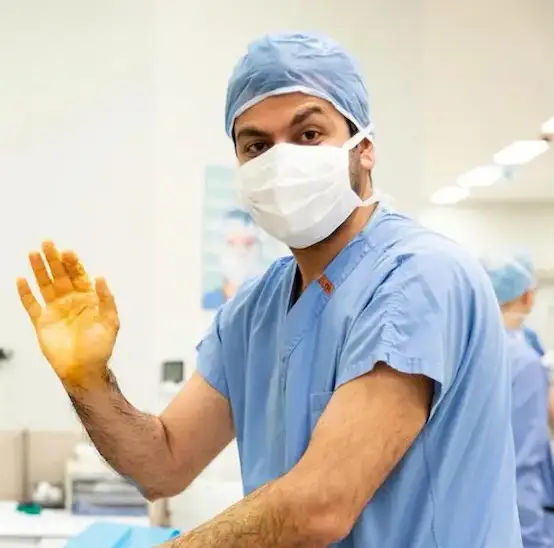
Deep Infiltrating Endometriosis (DIE) Surgery in Istanbul: Expert Care for Complex Cases
Deep Infiltrating Endometriosis (DIE) is the most severe form of endometriosis, often behaving like an iceberg. What is visible on the surface is only a fraction of the problem. In DIE, endometrial-like tissue penetrates more than 5mm beneath the peritoneal surface, deeply invading the walls of pelvic organs, nerves, and ligaments.
This advanced stage transforms endometriosis from a purely gynecological issue into a multi-organ disease that can affect the bowel, bladder, and ureters.
At Dr. Cengiz Andan’s Clinic in Istanbul, Turkey, we specialize in managing these complex cases. Many of our international patients seek us out after years of being misdiagnosed with Irritable Bowel Syndrome (IBS) or Chronic Urinary Tract Infections (UTIs), only to discover that deep endometriosis nodules were the true cause of their chronic suffering.
Understanding the Symptoms: Beyond Standard Period Pain
Deep Infiltrating Endometriosis causes specific, severe symptoms that are far more intense than standard menstrual cramps, depending on which organs are invaded.
- Bowel Endometriosis (Rectovaginal Involvement): If nodules invade the rectum or sigmoid colon, patients frequently experience excruciating pain during bowel movements (dyschezia), rectal bleeding that coincides with their menstrual cycle, and alternating patterns of constipation and diarrhea.
- Bladder and Ureter Involvement: Endometriotic nodules on the bladder cause painful urination, increased frequency, and sometimes blood in the urine. A silent and dangerous complication is the blockage of the ureters (the tubes carrying urine from the kidneys), which can lead to silent kidney damage or even loss if not addressed.
- Severe Painful Intercourse (Deep Dyspareunia): Nodules located in the deep space between the vagina and rectum (pouch of Douglas) or on the uterosacral ligaments cause sharp, deep-seated pain during sexual intercourse.
- Nerve Involvement (Sciatic-like Pain): Rarely, the disease can press directly on pelvic nerves, causing radiating leg pain similar to sciatica, impacting mobility and quality of life.
If you recognize one or more of these symptoms, a standard gynecological check-up is insufficient. You require a specialized Endometriosis Surgeon evaluation.
Diagnosis of a “Frozen Pelvis” for International Patients in Turkey
In severe DIE cases, chronic inflammation causes the pelvic organs (uterus, ovaries, fallopian tubes, and bowel) to stick together firmly, losing their natural mobility. This severe anatomical distortion is medically termed a “Frozen Pelvis.”
Diagnosing DIE is challenging because conventional abdominal ultrasounds often miss these deep, infiltrating nodules.The Gold Standard for Diagnosis and Surgical Mapping includes:
- Expert Transvaginal Ultrasound (TVUS): Performed by a specialist to accurately map the size and location of deep nodules.
- Pelvic MRI (Magnetic Resonance Imaging): Essential for precise surgical planning, as it visualizes the depth of invasion into the bowel or bladder wall.
Dr. Cengiz Andan performs detailed pre-operative “mapping” to ensure that the surgical team knows the exact extent of the disease, preventing surprises in the operating room and ensuring a complete excision.
Advanced Laparoscopic Excision Surgery: The Definitive Treatment
Medical treatments such as hormone therapy can suppress the symptoms of Deep Infiltrating Endometriosis but cannot cure it. For permanent pain relief, restoration of fertility potential, and organ preservation, Advanced Laparoscopic Excision Surgery (Minimally Invasive Surgery) is mandatory. These procedures are among the most technically demanding in gynecological surgery.
Our Surgical Principles in Istanbul:
- Complete Excision of Deep Nodules: The primary goal is to remove not just endometriomas (cysts) but all deep,hard nodules. For nodules infiltrating the bowel, we utilize techniques like “Shaving” (removing the nodule without opening the bowel) or a segment Resection (removing a segment of the bowel) when necessary.
- Nerve-Sparing Surgery: The pelvic area is a complex web of nerves controlling the bladder, bowel, and sexual function. Dr. Andan uses specialized Nerve-Sparing Techniques to meticulously clean the disease while protecting these vital functions.
- Restoring Normal Anatomy: We perform adhesiolysis to release the “Frozen Pelvis,” separate all adhered organs, and restore the normal, functional anatomy of the pelvis.
Performing this via Laparoscopy (Keyhole Surgery) offers international patients distinct advantages: less post-operative pain, minimal blood loss, smaller scars, and a much faster overall recovery compared to traditional open surgery.
Dr. Cengiz Andan adopts a truly multidisciplinary approach for DIE, aiming to free patients not just from chronic gynecological pain but from the multi-organ dysfunction caused by the disease. We provide world-class expertise in Deep Infiltrating Endometriosis surgery in Istanbul, offering hope and definitive relief for complex international cases.
FAQ: Traveling to Turkey for DIE Surgery
- Will I need a stoma (colostomy bag) for bowel endometriosis? This is a major concern for patients. A temporary stoma is very rarely needed. With advanced laparoscopic techniques like “shaving” and discoid excision, we can remove deep bowel nodules in over 95% of cases without resorting to a stoma. It is only considered in the most extreme cases to ensure the bowel heals safely.
- What is the typical recovery period for this complex surgery? Despite the highly technical nature of the surgery,recovery is surprisingly fast due to the minimally invasive laparoscopic approach. Patients usually stay in the hospital for 2-3 days. If a bowel resection is performed, we monitor the patient until normal bowel function returns before discharge. Most patients are able to return to work and travel within 2 to 3 weeks.
- What happens if I postpone surgery for DIE? Deep Infiltrating Endometriosis is a progressive disease. Without definitive excision surgery, the pain will become chronic and resistant to standard medication. More importantly,silent nodules can block the ureters, leading to irreversible kidney failure, or cause life-threatening bowel obstructions. Timely intervention is crucial for organ preservation.
- Will the surgery cure painful sex (deep dyspareunia)? Yes, the success rate for improving or resolving deep painful intercourse is very high. This pain is often caused by the nodules located behind the vagina and on the uterosacral ligaments. Removing these nodules significantly improves sexual quality of life in 80-90% of patients.
- Can any gynecologist perform this surgery? No. Deep Infiltrating Endometriosis surgery demands highly advanced laparoscopic skills, combined with a deep, specialized knowledge of pelvic and retroperitoneal anatomy,far beyond the scope of standard gynecology training. This level of surgery is the domain of internationally recognized Endometriosis Excision Specialists like Dr. Cengiz Andan. Incomplete surgery often results in persistent pain and rapid disease recurrence.