Scar Endometriosis Treatment: complete excision that preserves healthy tissue in Turkey
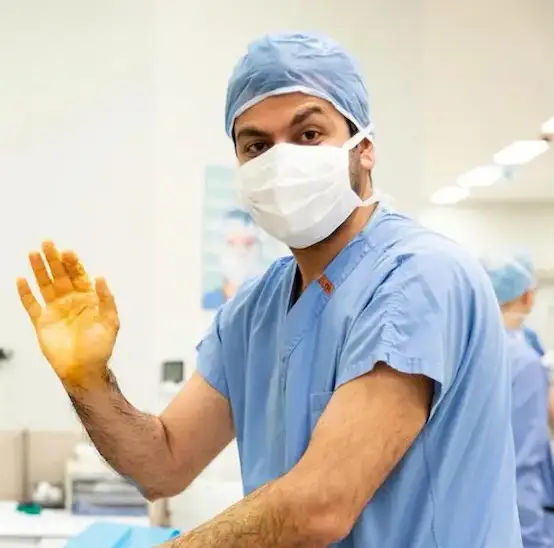
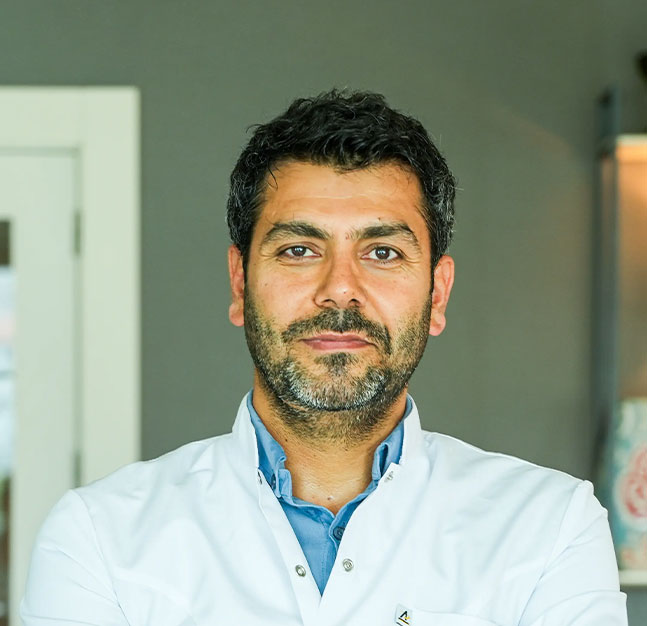
Many women with a painful lump in their caesarean scar are first told it is "just scar tissue" or "a hernia" — when in fact it is one of the most overlooked forms of endometriosis. After living for years with a nodule that swells and hurts with every period, often dismissed across several specialties, a clear answer and a complete cure are usually within reach. Working in Şişli, Turkey, Associate Professor Dr. Cengiz Andan first confirms the diagnosis and then plans a complete excision tailored to the size of the lesion, the depth in the abdominal wall and whether you wish to preserve fertility. For women living abroad and considering treatment in Turkey, we explain the whole process from start to finish, plainly and on the evidence.
At a glance
- What it is: scar endometriosis is endometrial tissue settled inside a surgical scar — most often a caesarean scar in the abdominal wall — forming a benign nodule; it does not turn into cancer.
- Definitive treatment: complete surgical excision of the nodule with a clear margin of healthy tissue, preserving as much of the abdominal wall as possible.
- Low recurrence: when the lesion is removed fully, recurrence is uncommon; incomplete removal is the main reason it returns.
- Time in Turkey: a hospital stay of usually 1 to 2 days and a total stay of about 5 to 7 days.
- Starting from abroad: the process begins with an online pre-consultation using your imaging and reports; your surgical report is prepared so you can give it to your doctor at home.
What exactly is scar endometriosis, and what is happening in the scar?
Scar endometriosis is a benign condition in which tissue like the lining of the womb settles inside a surgical scar and grows there. Because this tissue bleeds within the scar with each menstrual cycle, a firm nodule forms that swells, hardens and becomes painful in step with the period. It is seen most often after a caesarean section, and less commonly after other gynaecological or abdominal operations. Like other forms of endometriosis it is oestrogen-driven, so it tends to ease after menopause when oestrogen falls.
Is it a hernia, a lipoma, or scar endometriosis?
A lump in a caesarean scar is often mistaken for a hernia, a lipoma or a suture granuloma, and getting the distinction right is the first condition for the right operation. The clue that sets scar endometriosis apart is timing: a hernia or lipoma does not change with the cycle, while a scar endometriosis nodule swells and hurts around the period. Scar endometriosis can also exist alongside endometriosis inside the pelvis, so the abdominal wall and the pelvis are assessed together. Although the three are distinct, they overlap often enough that accompanying pelvic disease is found in a meaningful share of cases.
| Condition | Where the lump sits | Typical treatment axis |
|---|---|---|
| Scar endometriosis | Inside the surgical scar | Complete excision |
| Hernia | Defect in the abdominal wall | Hernia repair |
| Lipoma / granuloma | Within fat or suture line | Excision if symptomatic |
Source: American College of Obstetricians and Gynecologists (ACOG), evaluation of abdominal wall masses
Which symptoms point to scar endometriosis?
The classic picture is a painful lump in or near a caesarean scar that grows and aches with the menstrual cycle. Cyclical pain at the scar is reported by around 80 to 90 % of patients, and a palpable mass is found in roughly 80 to 96 %; the pain becomes constant rather than cyclical in about 20 to 30 % as the nodule enlarges. The lesion is usually small, commonly around 2 to 4 cm, though larger nodules occur, and the time from the original surgery to diagnosis often runs to several years. Occasional bleeding or brownish discharge from the scar is reported in a small share of cases.
| Symptom | Frequency | What it can mean |
|---|---|---|
| Cyclical scar pain | ~80-90 % | Hormone-responsive nodule |
| Palpable lump | ~80-96 % | Defined lesion to excise |
| Constant (non-cyclical) pain | ~20-30 % | Larger or long-standing lesion |
| Bleeding from the scar | Less common | Tissue reaching the surface |
Can it be diagnosed without surgery, and how?
Scar endometriosis can usually be recognised before any operation through history, examination and imaging. The history is often decisive on its own — a caesarean scar nodule that swells with the period strongly suggests the diagnosis. Ultrasound is the first-line tool to map the nodule and its depth, while magnetic resonance imaging (MRI) gives the clearest picture of the borders and the relation to the fascia and muscle, which matters for planning the margin. A needle biopsy can confirm the tissue in unclear cases, and histology after removal gives the definitive diagnosis.
| Method | What it is good for |
|---|---|
| Examination and history | Cyclical scar nodule recognised |
| Ultrasound | First-line imaging, depth |
| Magnetic resonance (MRI) | Borders and surgical planning |
| Histopathology | Definitive tissue diagnosis |
What are the treatment options for scar endometriosis?
There is no single answer for everyone; the choice depends on the size of the nodule, the severity of symptoms, its depth in the abdominal wall and whether you plan a future pregnancy. In broad terms there are two routes: hormonal medication to ease symptoms, and surgical excision to remove the nodule for good. Medication can quieten the cyclical pain in women with mild symptoms or those close to menopause, but it does not dissolve the lesion. For a defined, symptomatic nodule, complete surgical excision is the definitive treatment and the route most often chosen.
When are medication and hormones enough?
Hormonal treatment does not remove scar endometriosis but can suppress the cyclical pain and, in selected women, delay surgery. Non-steroidal anti-inflammatories help with pain, while hormonal options such as the combined pill, progestins or a levonorgestrel intrauterine device can reduce the cyclical activity of the tissue. A levonorgestrel intrauterine device may be a reasonable bridge for women who want to postpone surgery. The limitation is that symptoms generally return once the medication is stopped, so for a growing or clearly symptomatic nodule, surgery comes to the fore.
Source: European Society of Human Reproduction and Embryology (ESHRE), endometriosis guideline
Complete surgical excision: what does the operation involve?
The definitive treatment for scar endometriosis is wide local excision — removing the whole nodule together with a thin margin of healthy tissue. Removing the lesion completely is what keeps recurrence low, so the margin matters more than the size of the scar. Where the defect left behind is small, the layers are closed directly; where it is larger, the fascia is repaired and, in a minority of cases, a mesh is used to reinforce the abdominal wall. Any accompanying pelvic endometriosis is assessed at the same time and, in suitable cases, treated laparoscopically in the same session.
Source: American Association of Gynecologic Laparoscopists (AAGL), minimally invasive gynaecologic surgery
Will the nodule come back after surgery?
When scar endometriosis is removed completely with a clear margin, it usually does not return; recurrence is reported in roughly 4 to 5 % of fully excised cases. The main reason a nodule comes back is incomplete removal, which is why a wide, deliberate excision is preferred over a narrow one. Where the disease is extensive or the margin is uncertain, adding hormonal treatment afterwards can lower the chance of recurrence further. We discuss the expected outcome for your specific lesion openly, because honest expectations matter more than promises.
Scar endometriosis and pregnancy: what should I know?
Scar endometriosis sits in the abdominal wall rather than inside the womb, so by itself it does not usually reduce fertility. The main consideration is timing: a nodule can be removed before a planned pregnancy, or the situation can be managed if it is noticed during one, with surgery planned for a suitable moment. Because accompanying pelvic endometriosis is present in a share of patients and that pelvic disease can affect fertility, we assess the pelvis as well and, where a fertility goal exists, coordinate the plan with the IVF team. After a wide abdominal-wall excision, your obstetrician will plan the timing and mode of a future delivery according to the repair.
Source: National Institute for Health and Care Excellence (NICE), endometriosis: diagnosis and management
What happens with large defects — is a mesh needed?
Most scar endometriosis nodules are small enough to close directly, but a large or deep lesion can leave a defect that needs reinforcement. When the excision removes a wide area of fascia, the abdominal wall is repaired layer by layer, and in a minority of cases — more likely with nodules above roughly 5 cm — a mesh is added to restore strength. This is planned in advance from the MRI rather than decided as a surprise during surgery, so you know beforehand whether a repair beyond simple closure is likely. The aim throughout is to combine complete removal with a sound, durable abdominal wall and a tidy cosmetic result.
| Defect size | Repair approach | Mesh likelihood |
|---|---|---|
| Small (layered closure) | Direct closure | Rarely needed |
| Moderate | Fascial repair | Occasional |
| Large (> ~5 cm) | Fascial repair + reinforcement | More likely |
What is our treatment approach to scar endometriosis?
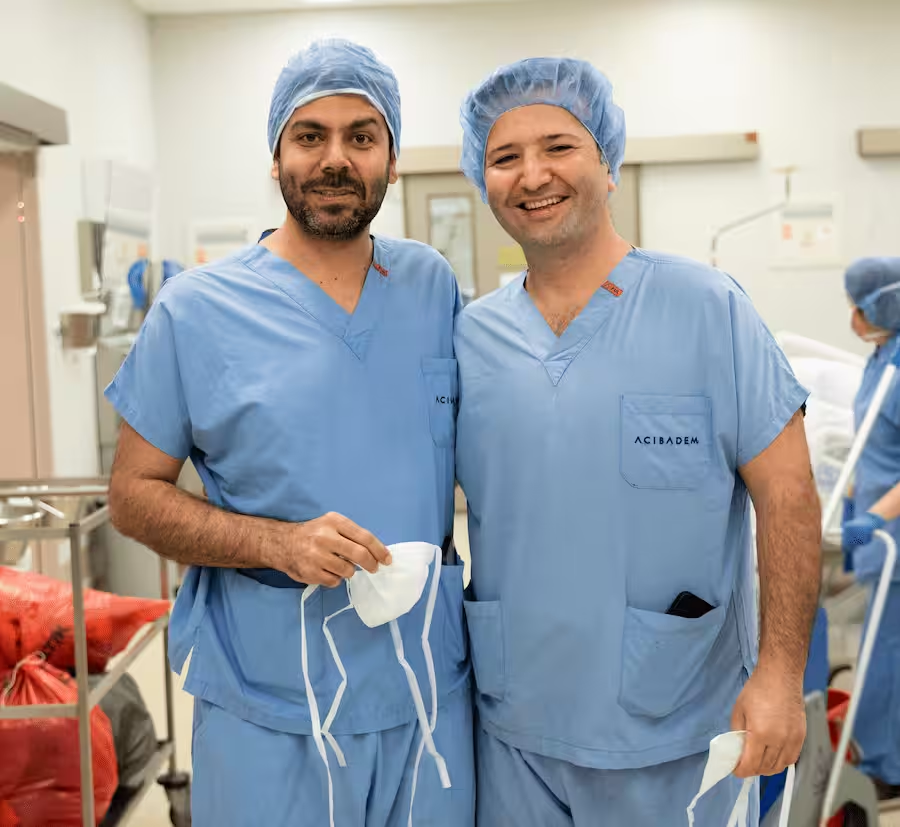
Our approach rests on one principle: confirm the diagnosis first, then remove the nodule completely while preserving as much healthy abdominal wall as possible. We assess each patient as a whole — imaging, symptom severity and any pregnancy plan — and we map the lesion on MRI before surgery so the margin and any repair are planned in advance. We prefer a single, definitive excision over a narrow removal that risks recurrence, and where pelvic endometriosis coexists we address it laparoscopically in the same session. As Associate Professor Dr. Cengiz Andan and our team, we believe that carrying the process through with the same responsible surgeon from start to finish makes a real difference to both trust and outcome.
Why does surgical experience matter in scar endometriosis?
One of the strongest determinants of outcome in scar endometriosis surgery is the surgeon's experience, because removing the diseased tissue completely while protecting the abdominal wall takes technical skill. Associate Professor Dr. Cengiz Andan brings 18 years of experience, more than 2,000 laparoscopic procedures and over 500 endometriosis operations, reflecting a high case volume in minimally invasive techniques. In experienced hands the complication rate can be kept low — around 2 % — and a complete, tissue-preserving excision can be performed with greater confidence. Even so, we say clearly that every operation carries some risk and that results vary from person to person.
How does recovery and going home work after surgery?
Recovery after scar endometriosis excision is usually straightforward, and most patients are back to normal within a few weeks. The hospital stay is generally 1 to 2 days, with a return to normal daily activity in about 2 to 4 weeks depending on the size of the excision and any abdominal-wall repair. The question on most patients' minds is "what if a problem arises after I go home?": complications are uncommon, but if one occurs we remain reachable, coordinate with your doctor in your home country and follow the histology, the report and your recovery remotely together. Your surgical report is also prepared so you can hand it directly to your doctor at home.
Should I be treated in my home country or in Turkey — what is the difference?
In scar endometriosis surgery the difference between your home country and Turkey is not quality but access and cost. The minimally invasive techniques and international guidelines used in Europe are the same ones applied in Turkey; the gap comes from the exchange rate and lower operating costs, which lower the price rather than the standard. For many women the added difference is being able to complete the process quickly and with the same surgeon throughout, instead of waiting months for an appointment and an operation.
| Criterion | Your home country | Turkey |
|---|---|---|
| Surgical quality / standard | Very high | Very high |
| Waiting time for an appointment | Often long | Usually short |
| Single-surgeon continuity | Can vary | One responsible surgeon |
| Cost | Higher | Lower |
How does the treatment process, stay and follow-up work from abroad?
For patients coming from abroad, the process begins with a digital assessment before travel and is completed with a short stay in Turkey. First you share your imaging (ultrasound/MRI) and reports, and in an online pre-consultation we discuss the treatment plan and the approximate cost. Once surgery is planned, a stay of about 5 to 7 days in Turkey is usually enough, covering the pre-operative assessment, the procedure and a first check. A flight home — depending on the procedure and medical clearance — is often possible about 7 to 10 days after surgery, an interval that also lowers the risk of a clot during travel.
How does a second opinion and online pre-consultation work?
A second opinion is one of the most valuable steps, especially for women who have been told a lump is "just scar tissue" but sense something more. When you share your imaging and existing reports, we assess your situation and tell you openly whether it is scar endometriosis, whether the disease is focal or extensive, and whether complete excision is the right path. These discussions take place as a paid online pre-consultation and let you clarify your expectations before travelling; they do not replace an in-person examination. You can make the first contact easily by form or WhatsApp.
Frequently asked questions
Because scar endometriosis is an oestrogen-dependent condition, symptoms often ease after menopause. In women close to menopause with mild complaints, watchful waiting can sometimes be preferred, but a growing or painful nodule is usually best removed.
It is benign and does not usually become cancer. Malignant transformation has been reported only very rarely in the literature, which is one more reason a persistently growing nodule should be assessed and removed.
After excision most patients can fly within about 7 to 10 days, depending on the size of the procedure and recovery. Movement and fluids are advised on long flights to lower clot risk; final clearance is given after a check.
When the nodule is removed completely with a clear margin, recurrence is uncommon. Incomplete removal is the main reason for return, which is why a wide, complete excision is the priority.
Hormonal medication may ease the cyclical pain but does not remove the nodule, and symptoms usually return when it is stopped. For a defined, symptomatic scar nodule, surgical excision is the definitive treatment.
Yes, the great majority of cases arise in a caesarean-section scar, and it can also follow other gynaecological or abdominal operations. It is the most common cause of a cyclically painful lump in a caesarean scar.
In many cases yes. Where pelvic endometriosis also exists, suitable cases can be addressed in the same operation, with the pelvic disease treated laparoscopically alongside the scar excision.
The endometrial tissue inside the scar responds to the same hormones as the lining of the womb, so it swells and bleeds with each cycle. This is why the lump becomes more painful and more swollen around the period.
The aim is to remove the nodule completely while preserving as much healthy tissue as possible. Where a larger defect remains, the fascia is repaired and, rarely, a mesh is used; the cosmetic result is planned together with the excision.
For this surgery a stay of about 5 to 7 days is usually enough. This covers the pre-operative assessment, the procedure and a first check.
Yes. Your surgical report, histology result and findings are prepared so you can give them to your doctor in your home country, and your follow-up can continue remotely.
The online pre-consultation is a paid service that lets you assess your situation clearly before travelling. Payment and process details are shared before the consultation.