Many women suffer for years with severe digestive issues, bloating, and painful bowel movements, often misdiagnosed as Irritable Bowel Syndrome (IBS) or hemorrhoids. However, when these symptoms worsen during menstruation, the true cause is often Bowel Endometriosis.
Bowel Endometriosis Surgery in Turkey: Expert Care for Complex Cases
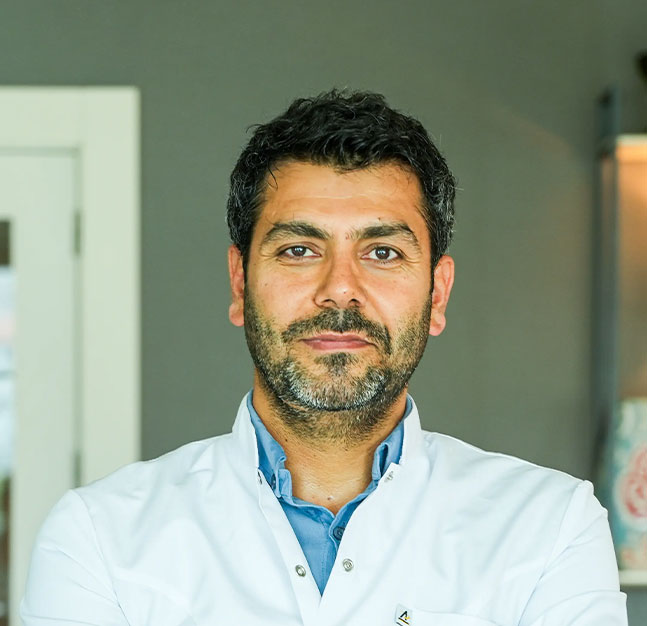
Turkey has become a leading destination for advanced endometriosis surgery, offering world-class expertise at a fraction of the cost found in the US or UK. At the clinic of Dr. Cengiz Andan in Istanbul, we specialize in the laparoscopic treatment of deep infiltrating endometriosis (DIE), providing relief to women who have been living with chronic pain and digestive distress.
More Than Just “Period Pain”: What is Bowel Endometriosis?
Endometriosis is not just a condition of the ovaries. In advanced stages (Deep Infiltrating Endometriosis – Stage 4), endometrial-like tissue can invade neighboring organs. The bowel is the most common site for this spread outside the reproductive system.
Bowel Endometriosis occurs when these nodules grow on the surface or infiltrate the walls of the intestines. The rectumand sigmoid colon are the most frequently affected areas due to their close proximity to the uterus. Statistics show that 5-12% of all endometriosis patients have bowel involvement, but this rate jumps to 35% in severe cases.
- Symptoms: Is It IBS or Endometriosis?
The symptoms of bowel endometriosis can be confusing because they mimic digestive disorders. The key differentiator is the timing: symptoms typically start a few days before your period and peak during menstruation.
If you experience the following, you may need an evaluation for bowel endometriosis:
- Dyschezia (Painful Bowel Movements): Sharp, knife-like pain while passing stool, especially during your period.
- Rectal Bleeding: Passing blood from the rectum during menstruation (often mistaken for hemorrhoids).
- Cyclical Digestive Issues: Alternating bouts of constipation and diarrhea, or a feeling of incomplete evacuation that worsens monthly.
- “Endo Belly”: Severe, painful bloating and gas that makes you look pregnant.
- Deep Dyspareunia: Pain during deep sexual intercourse, caused by nodules in the space between the uterus and the rectum (cul-de-sac).
- Diagnosis in Turkey: Advanced Imaging
Standard check-ups often miss bowel nodules. Accurate diagnosis requires a specialist’s eye. Dr. Cengiz Andan utilizes advanced non-invasive imaging techniques to “map” the disease before surgery.
- Transvaginal Ultrasound (Deep Endo Protocol): An expert scan can detect thickening of the bowel wall and nodules in the rectovaginal septum.
- Pelvic MRI: The gold standard for surgical planning. An MRI reveals how deep the nodule has penetrated the bowel wall, its size, and whether it is causing a blockage. This crucial step determines the surgical approach.
- Treatment: Medication vs. Surgery
Treatment plans are tailored to your age, pain severity, and fertility goals.
- Medical Management (Symptom Control):Hormonal treatments (birth control pills, progestins) suppress the menstrual cycle and reduce bleeding from bowel nodules. This can manage symptoms but does not cure the disease or remove the blockage. It is a temporary solution for those not ready for surgery.
- Laparoscopic Excision (The Gold Standard):For permanent relief and to prevent bowel obstruction, surgery is necessary. Bowel endometriosis surgery is one of the most complex gynecological procedures and requires a highly skilled surgeon. Dr. Cengiz Andan performs these surgeries via Minimally Invasive Laparoscopy, often collaborating with colorectal surgeons for the best outcome.
Surgical Techniques We Use:
- Shaving: For superficial nodules, the disease is “shaved” off the bowel surface without opening the intestine.
- Disc Resection: If the nodule is deeper but small, that specific area is removed like a patch, and the bowel is stitched closed.
- Segmental Resection: If the nodule wraps around the bowel or causes significant narrowing, a segment of the bowel (a few centimeters) is removed, and the healthy ends are reconnected.
- Fertility and Bowel Endometriosis
Bowel nodules create a toxic, inflammatory environment in the pelvis and often cause severe adhesions that distort anatomy. This can prevent natural conception and lower IVF success rates. Research shows that removing these nodules can improve spontaneous pregnancy rates. For patients traveling to Turkey for IVF, cleaning up this inflammation beforehand can improve embryo implantation chances.
- Recovery and Outcomes
Thanks to laparoscopic technology, recovery is faster than traditional open surgery.
- Hospital Stay: Typically 2-3 days in Istanbul.
- Diet: You will start with liquids and gradually return to a normal diet as bowel function returns.
- Pain Relief: 80-90% of patients report significant or complete relief from pain and digestive symptoms after surgery.
- Recurrence: With thorough excision (complete removal of nodules), the risk of recurrence is low.
Dr. Cengiz Andan offers comprehensive care for complex bowel endometriosis, combining gynecological expertise with advanced surgical skill to break the cycle of chronic pain.
Frequently Asked Questions (FAQ)
- Do I need a stoma (colostomy bag)?This is the biggest fear for patients. With modern techniques like shaving and disc resection, a temporary stoma is rarely needed (less than 1% of cases). It is only considered in extreme cases to allow the bowel to heal safely.
- Will the surgery cure my IBS?If your “IBS” symptoms are actually caused by endometriosis (worsening with your period), then yes, surgery often resolves the digestive distress.
- Can I fly home after surgery?International patients typically stay in Istanbul for 5-7 days after discharge for follow-up checks before flying home.
- Is the surgery risky?While complex, complication rates are low in the hands of an experienced endometriosis specialist. Dr. Andan prioritizes safety and organ preservation.
- Will it help me get pregnant?Yes. Removing deep infiltrating endometriosis reduces inflammation and restores normal anatomy, improving fertility outcomes both naturally and with IVF.