Endometrioma Came Back After Surgery — Now What?
The scan shows it again, in the same ovary, and the first feeling is that all of it was for nothing. It wasn't — but the next decision has new rules.
Short answer. First: recurrence is common and is not proof the surgery failed — the disease that made one cyst can make another. Second: the decision rules have changed. Repeat surgery on the same ovary spends reserve from an already reduced account, so the bar for operating again is deliberately higher — suppression to quiet the cyst, structured surveillance, and fertility-first sequencing all move up the list before a second cystectomy does.

Why recurrence happens — and what it does not mean
A cystectomy removes the cyst that exists; it does not remove the biology that built it. Microscopic disease in the remaining ovary and the hormonal engine that drives it are both still present after even excellent surgery — which is why a portion of women meet a new cyst within a few years, and why hormonal suppression after surgery meaningfully delays that reunion for women not immediately trying to conceive. Within honest chocolate cyst care, recurrence is a known property of the disease, not a verdict on the surgeon or on you.
Source: ESHRE — endometriosis guideline: recurrence after endometrioma surgery.
How the second decision differs from the first
Same cyst on the screen, different arithmetic underneath it.
| First surgery | Repeat surgery |
|---|---|
| Reserve account still largely intact | Spending from an account the first operation already drew on |
| Anatomy undisturbed | Scar tissue makes correct-plane excision harder and costlier |
| Diagnosis often part of the goal | The disease is already confirmed — certainty buys less |
| Default leans toward excision when indicated | Default leans toward suppression and surveillance unless triggers fire |
Learn more: How Often Do Endometriomas Come Back After Surgery?
Source: ACOG — management of recurrent ovarian endometrioma.
The realistic paths from here
Four paths exist, and the right one depends on what the recurrence is doing. Suppression — hormonal treatment quiets the new cyst and is the workhorse for women not currently trying to conceive. Surveillance — a small, typical, stable recurrence can be watched under the same disciplined rules as any monitored cyst. Fertility-first — when pregnancy is the goal, moving to treatment with the cyst in place often outranks operating again. And repeat surgery — reserved for the recurrences that are large, painful, growing or diagnostically unclear, performed as maximally reserve-sparing laparoscopic chocolate cyst surgery by hands experienced in reoperated ovaries.
| Path | When it leads |
|---|---|
| Hormonal suppression | Not trying to conceive; symptoms and cyst controllable medically |
| Structured surveillance | Small, typical, stable recurrence with tolerable symptoms |
| Fertility treatment with the cyst in place | Pregnancy is the goal and the cyst permits safe retrieval |
Patients also ask: Is a Second Laparoscopy for Endometriosis Worth It?
At our clinic in Türkiye, a recurrent cyst triggers a full recalculation — reserve retested, goals restated, the previous operative report on the table — before the word "surgery" re-enters the conversation.
Second opinion. If you are being offered a second operation and want an independent view on whether suppression or fertility-first sequencing serves you better, you can request an online second opinion for endometriosis.
What a second cystectomy costs and buys — measured
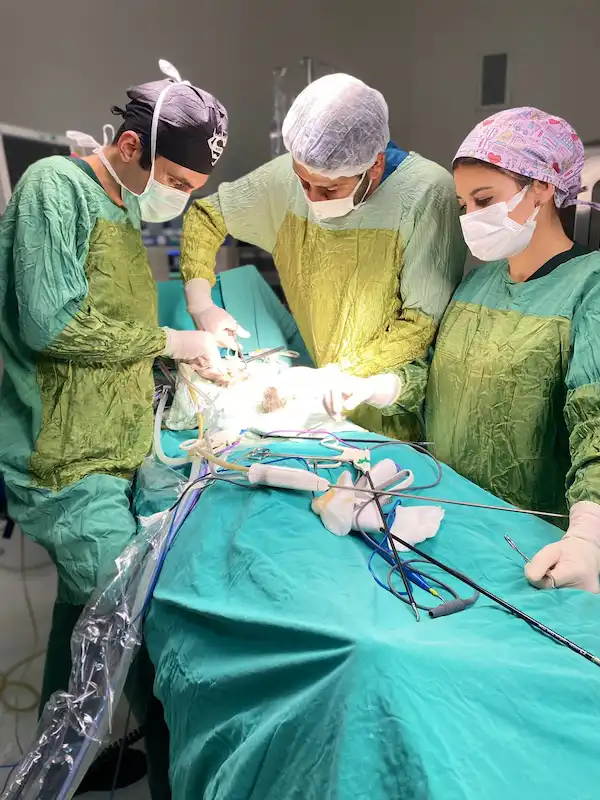
The second operation is measurably more expensive than the first in the currency that matters. Reserve losses from repeat surgery on a previously operated ovary run higher than first-operation figures, because the surgeon is peeling through scar rather than natural planes. And the fertility return is measurably smaller: for women trying to conceive with a recurrent cyst, studies repeatedly find that proceeding to IVF outperforms reoperating, in pregnancy achieved per unit of reserve spent. Neither fact forbids a second cystectomy — both explain why it must now argue for itself.
Your first operative report is the most useful document you own
Before deciding anything, read what actually happened last time. The operative report answers whether the wall was excised or the cyst merely drained or ablated — a "recurrence" after drainage is often the original cyst refilling, a different problem with a different answer. The pathology report confirms what the removed tissue was. And the described technique hints at how much healthy ovary the first operation likely spent. Ten minutes with these documents routinely changes the recommendation; request complete copies, not summaries.
The specific findings that justify operating again
Repeat surgery earns its place through concrete findings, not through frustration. A recurrence that is large or steadily enlarging across scans. Imaging features the first cyst never had — solid areas, abnormal blood flow — where diagnostic certainty overrides reserve caution. Pain that suppression cannot govern. Or a cyst physically obstructing a planned egg retrieval. Absent all four, the disciplined answer is usually suppression plus surveillance — and a recurrence meeting one of them deserves a surgeon experienced specifically in reoperated ovaries.
Frequently Asked Questions
Not necessarily — recurrence is a property of the disease even after excellent excision, though incomplete first operations do raise the odds. The operative and pathology reports from that surgery are what actually answer the question; request them.
New cysts appear across a wide window — some within a year or two, others after many quiet years. Earlier and unsuppressed recurrences are more common, which is why the maintenance plan after any cystectomy matters so much.
Repeat cystectomy spends reserve from an already reduced account and rarely earns "done" — the biology remains after every operation. It is reserved for defined triggers; otherwise suppression and surveillance protect you at far lower cost.
Very often, yes — naturally or through treatment, with the cyst monitored and retrieval planned around it. For recurrent cysts specifically, fertility-first sequencing frequently outperforms operating again first.
It typically quiets and can modestly shrink it — disappearance is uncommon. Its real job is holding the line: controlling symptoms and preventing growth while you pursue the goals that actually matter, on your timeline.
No — many stay small, typical and quiet for years under surveillance and never meet a scalpel. The triggers that would change that are defined in advance, which is what makes watchful management a plan rather than postponement.
The second cyst tests a different virtue than the first: restraint. My hand knows how to operate again — the discipline is in asking whether this ovary, with what it has already given, should be asked to pay twice.