
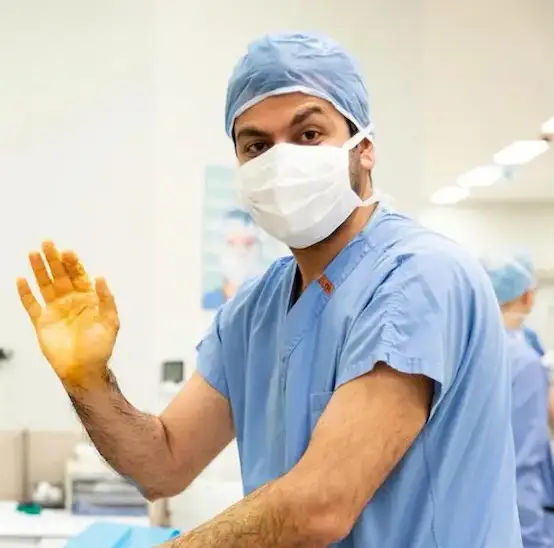

Doç. Dr. Cengiz ANDAN
Online
×What are uterine fibroids? Learn about symptoms like heavy bleeding and pain. Discover medical and surgical treatment options, including laparoscopic myomectomy, with Dr. Cengiz Andan in Istanbul.
Uterine fibroids (Leiomyomas), commonly referred to simply as fibroids, are benign tumors originating from the muscle layer of the uterus. They are the most frequently diagnosed condition in gynecology clinics. Statistics show that 1 in 4 women of reproductive age and nearly half of women over 40 have fibroids.
The word “tumor” often scares patients with thoughts of cancer. However, at Dr. Cengiz Andan’s Clinic, we reassure our patients immediately: Fibroids are non-cancerous growths. The risk of a fibroid turning into cancer (sarcoma) is extremely low (less than 0.5%).
However, just because they are not cancer doesn’t mean they are harmless. Depending on their location and size, they can cause serious bleeding, severe pain, and infertility. On this page, you will find information about the signals fibroids send to your body, when intervention is necessary, and modern, uterus-preserving treatment approaches.
Fibroids can grow silently or cause loud symptoms that disrupt your quality of life. Symptoms depend entirely on the fibroid’s location:
Diagnosis is usually straightforward with a simple gynecological exam and Ultrasound. We measure the size, number, and distance of the fibroid to the uterine lining. For multiple or complex fibroids, an MRI may be requested.
Dr. Andan’s fundamental rule is: “Treat the patient, not the fibroid.”
If a fibroid is small (e.g., 2-3 cm), not causing bleeding or pain, and not in a location that hinders pregnancy, surgery is not needed. These patients are monitored with ultrasound every 6 months. As estrogen levels drop approaching menopause, these fibroids are expected to shrink on their own.
However, treatment is mandatory if:
There is no “one size fits all” in fibroid treatment; planning is personalized.
Medical (Drug) Therapy:
There is no drug that completely eliminates fibroids. However, hormonal medications (GnRH analogues) or hormonal IUDs can be used to stop bleeding, manage pain, or shrink the fibroid temporarily before surgery. These offer temporary solutions.
Surgical Treatment:
The definitive solution is removal.
Dr. Cengiz Andan offers advanced diagnostic and surgical solutions for Adenomyosis in Istanbul, combining uterus-sparing techniques with world-class medical care for international patients.
Answer: Classic fibroids are benign and do not turn into cancer. However, a rare cancer called “Leiomyosarcoma” can mimic a fibroid. If a mass grows rapidly, especially in a menopausal woman, careful evaluation and surgery are required.
Answer: There is no medically proven herbal cure that destroys fibroids. In fact, some herbs with estrogen-like effects can make them grow larger. It is important not to waste time with unproven treatments without consulting your doctor, as this may allow the fibroid to grow beyond the limits of minimally invasive surgery.
Answer: Yes, many women conceive with fibroids. However, the location matters. Fibroids that distort the inner cavity increase the risk of miscarriage or infertility. Pre-pregnancy evaluation is highly recommended.
Answer: Dr. Cengiz Andan prioritizes “Organ-Preserving Surgery.” Our goal is always to perform a Myomectomy (removing only the fibroid) and leave the uterus in place. Hysterectomy is only considered for life-threatening bleeding or upon the patient’s request after childbearing is complete.
Answer: Fibroid formation has a genetic component. Even if existing fibroids are cleaned out, since the uterine tissue remains, there is a 10-20% chance of new fibroids developing within 5 years. This risk ends after menopause.
Fill out the form to request a free consultation to get preliminary information about your treatment process or learn about treatment methods tailored to your specific needs.